
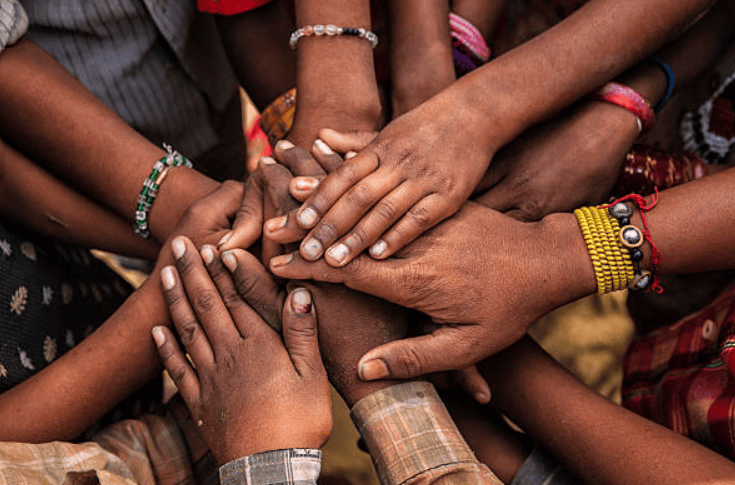
India has achieved one of the most significant poverty reductions in modern history, lifting nearly 500 million people out of poverty between 2011 and 2023. According to the World Bank, the country’s extreme poverty rate fell from 27.1% to just 2.6% during this period. However, behind this remarkable progress lies a more complicated economic picture, as income inequality, unemployment and unequal access to essential services continue to affect millions of people.
The achievement represents a major milestone for the world’s most populous country. Yet it also raises an important question: can India maintain its progress against poverty while ensuring that economic growth benefits a much larger share of its population?
India’s Poverty Reduction: What the World Bank Figures Reveal
The latest World Bank assessment highlights the scale of India’s transformation. Using a poverty threshold of $3 per person per day, the institution estimates that extreme poverty declined from 27.1% in 2011 to 2.6% in 2023.
The report also examined poverty using the lower-middle-income threshold of $4.20 per person per day. Under this measure, the proportion of Indians living below the poverty line dropped from 57.7% to 16.1%.
In total, approximately 496 million people moved above this poverty threshold over 12 years.
These figures represent an extraordinary development for a country with a population of approximately 1.4 billion. The World Bank described the reduction as one of the fastest declines in poverty worldwide.
Nevertheless, poverty statistics need careful interpretation. Moving above an international poverty threshold does not necessarily mean that households have achieved financial security. Many families remain vulnerable to rising living costs, unexpected medical expenses and unstable employment.
How India Managed to Lift Millions Out of Poverty
India’s progress did not result from a single government initiative. Instead, several decades of economic expansion, employment opportunities and social protection programmes contributed to the improvement.
Economic Growth and Rising Household Consumption
India’s economic liberalisation in the early 1990s created the foundations for decades of expansion. Reforms opened sectors of the economy to greater private investment, international trade and competition.
Over time, economic growth created new opportunities in manufacturing, services, technology and other industries.
The World Bank identifies stronger household consumption as one of the principal drivers behind declining poverty. As incomes and access to employment improved, more families gained the ability to afford essential goods and services.
However, economic growth alone cannot guarantee equal opportunities. The distribution of new jobs, wages and investment remains an important factor in determining how widely households benefit.
Government Welfare Schemes and Food Security
Social protection programmes have also played a significant role.
One important initiative was the rural employment guarantee programme introduced under former Prime Minister Manmohan Singh. It was designed to provide eligible rural households with up to 100 days of paid employment annually.
Subsequent administrations introduced or expanded additional welfare measures. These included direct financial transfers, housing assistance and subsidised food distribution.
Under Prime Minister Narendra Modi, the government significantly expanded its free food grain programme, which reaches approximately 800 million people.
These initiatives help households manage essential expenses, particularly when employment is irregular or agricultural incomes fluctuate.
Better Sanitation and Access to Drinking Water
Improvements in basic infrastructure have provided another important contribution.
India has expanded rural sanitation facilities and invested in household drinking water connections. Government figures indicate that access to piped drinking water in rural homes increased from less than 17% in August 2019 to approximately 82%.
These improvements matter because poverty involves more than household income.
Access to clean water and sanitation can reduce exposure to preventable illnesses, lower healthcare expenses and help people remain productive.
Economists have argued that better water access may therefore contribute indirectly to higher household earnings and improved living standards.
Why Falling Poverty Does Not Mean Inequality Is Disappearing
Although India’s poverty reduction is substantial, the benefits of economic expansion have not been distributed equally.
The 2026 World Inequality Report places India among the world’s most unequal economies. Its estimates indicate that the wealthiest 10% receive approximately 58% of national income, while the bottom 50% receive just 15%.
This imbalance highlights a major weakness in the country’s development model.
While millions have moved above extreme poverty thresholds, wealthy households have captured a disproportionately large share of economic gains.
The Growing Gap Between Rich and Poor
Several structural factors contribute to India’s persistent inequality.
Unequal ownership of land and other assets limits opportunities for lower-income households to build wealth. Historical caste-based disadvantages also continue to influence access to education, employment and economic resources.
Furthermore, differences in educational quality can determine whether young people secure well-paid positions or remain trapped in low-income work.
Public investment in healthcare and education is particularly important because these services can reduce the influence of family wealth on future opportunities.
Without adequate investment, children from disadvantaged households often face greater barriers to achieving economic security.
Youth Unemployment Adds Pressure to India’s Economy
Employment opportunities represent another major challenge.
Despite India’s economic growth, many young people struggle to find stable work that matches their qualifications.
Government figures cited in the report show that youth unemployment increased from 13.8% in April 2025 to 15.2% in March 2026.
Research from Azim Premji University also highlights particularly high unemployment among younger graduates. Approximately 40% of graduates aged 15 to 25 were unemployed, according to its State of Working India 2026 report.
This situation creates an important contradiction. India produces an increasingly educated workforce, yet the economy does not consistently generate enough suitable employment opportunities.
The challenge is not simply creating more jobs. It is also creating productive, secure positions that offer reasonable wages and opportunities for career development.
Economists warn that persistent unemployment and stagnant real wages could weaken the benefits of poverty reduction, particularly for younger generations.
Why Poverty Reduction Must Go Hand in Hand With Equality
Reducing extreme poverty is essential, but it represents only one measure of economic development.
Income inequality also influences people’s ability to access healthcare, education, housing and business opportunities.
When wealth becomes concentrated among a small proportion of the population, lower-income families may struggle to improve their circumstances even when the national economy expands.
There are also wider social and economic consequences.
High inequality can restrict consumer spending, weaken social mobility and increase dissatisfaction among younger generations. Concentrated wealth may also create opportunities for powerful economic groups to exert disproportionate influence over public policy.
India’s remaining poverty challenge is considerable. The World Bank report estimates that approximately 233 million people still live below the $4.20 daily poverty threshold.
This demonstrates why the decline in extreme poverty should be viewed as an important milestone rather than the completion of India’s development journey.
What India Needs to Do Next
Economists argue that India must combine continued economic growth with stronger investment in public services and policies that distribute opportunities more fairly.
Invest More in Healthcare and Education
Affordable, high-quality healthcare and education can help reduce both poverty and inequality.
India’s public healthcare spending remains relatively low compared with many international peers. Underfunded hospitals and substantial out-of-pocket medical expenses can push vulnerable households into debt.
Expanding access to reliable public hospitals, qualified medical professionals and quality schools would reduce these financial pressures.
It would also help disadvantaged communities compete for better employment opportunities.
Strengthen Employment and Rural Development
India needs a broader range of productive employment opportunities, particularly for young people and rural households.
Investment in agriculture, manufacturing and labour-intensive industries could help generate more stable incomes.
Improving agricultural productivity, expanding vocational training and supporting small businesses would also strengthen economic participation beyond major urban centres.
Introduce Fairer Taxation and Public Investment
Progressive taxation is another proposal raised by development economists.
A tax system that places a greater responsibility on those with higher incomes and greater financial resources could help fund essential public services.
The objective is not simply to redistribute income. It is to create a stronger foundation for long-term economic mobility.
Roads, transport networks and other infrastructure remain important. However, investment in human capital must receive equal attention if economic development is to benefit the wider population.
India’s Poverty Success Is Significant, But the Next Challenge Is Inclusion
India’s achievement in reducing extreme poverty is an important global development milestone. The World Bank estimates show that hundreds of millions of people have experienced improvements in their economic circumstances over little more than a decade.
Economic expansion, employment, food assistance, sanitation improvements and access to drinking water have all contributed to this progress.
However, the country’s remaining challenges cannot be ignored. Persistent income inequality, youth unemployment, inadequate public healthcare and unequal educational opportunities continue to limit economic mobility.
Ultimately, India’s next development challenge is not simply to reduce the number of people living below international poverty thresholds. It is to build an economy in which more people can access secure employment, quality public services and opportunities to improve their lives.
The real measure of India’s long-term success will be whether its economic growth creates prosperity that reaches beyond the wealthiest households and delivers lasting improvements for the wider population.












Comments are closed.