

Serbia’s student-backed opposition movement has secured a historic parliamentary election victory, bringing an end to 14 years of political dominance by Aleksandar Vučić’s Serbian Progressive Party (SNS) and opening a new chapter in the country’s political future.
The result follows nearly two years of anti-government protests sparked by a deadly railway station disaster in Novi Sad. What began as a student-led demand for accountability grew into a nationwide movement against corruption, political influence over public institutions and government negligence.
Celebrations erupted in Belgrade, Novi Sad and Niš after Vučić conceded defeat on election night. Supporters gathered in city centres and outside the movement’s headquarters, while the Student List declared on social media that “Serbia is free.”
One of the most symbolic moments came at Ćaciland, a pro-government tent camp established in central Belgrade near the Serbian parliament. Protesters tore down metal barriers as crowds chanted slogans calling for Vučić’s departure, reflecting the scale of the political shift.
From a Deadly Disaster to a National Movement
The movement’s origins date to 1 November 2024, when a concrete canopy collapsed at Novi Sad railway station, killing 16 people. The tragedy triggered public outrage and intensified longstanding concerns about corruption, public infrastructure and government accountability.
Critics connected the station’s renovation to broader questions about political oversight and alleged irregularities in public projects. For many Serbians, the disaster became a symbol of a system they believed had failed to protect its citizens.
The first demonstrations were organised by university students demanding justice and transparency. Over time, the protests expanded beyond campuses, attracting farmers, actors, academics, judges and other members of society.
By January 2025, mounting pressure had contributed to the resignation of Serbia’s prime minister, while a major demonstration in Belgrade in March drew enormous crowds. The student movement continued to organise through assemblies and plenums, developing a decentralised structure without a conventional political leader.
The movement’s ability to transform public anger into an organised electoral challenge proved crucial. Its representatives encouraged voters to protect the integrity of the vote, while the movement fielded candidates for all 250 seats in parliament.
The election became a wider referendum on Vučić’s leadership and the direction of the country, rather than simply a contest between established political parties.
A Student Movement Without Student Candidates
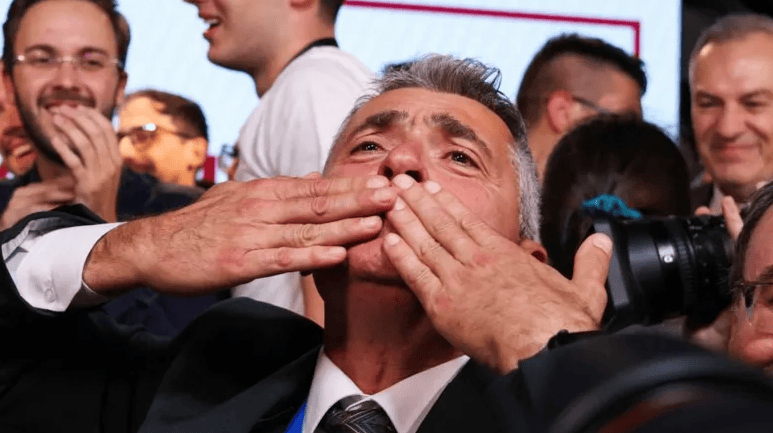
Despite its name and origins, the Student List did not put students forward as parliamentary candidates. Instead, it selected people from outside traditional party politics, including academics, medical professionals, cultural figures and other public personalities.
Cardiologist and professor Ilija Srdanović emerged as the list’s leading candidate, while its wider slate included former basketball star Dejan Bodiroga, actor Tihomir Stanić, opera singer Nikola Mikić and former National Bank of Serbia governor Dejan Šoškić.
According to projections by independent polling groups CeSID and Ipsos, the list secured 141 parliamentary seats, giving it a majority in the 250-member assembly.
The decision to nominate established professionals rather than students was a strategic one. While students drove the protests and built the movement’s public support, the candidates were selected to represent its demands within state institutions.
However, the movement now faces a difficult transition. It has successfully challenged a long-dominant governing party, but it must demonstrate that a decentralised protest movement can operate as an effective parliamentary force and form a functioning government.
Srdanović is not widely regarded as the most likely candidate for prime minister. Šoškić has also been mentioned as a possible contender, particularly because of his experience in economic policy, although the movement has not established an obvious leadership hierarchy.
What the Movement Wants to Change
The Student List campaigned on an 11-point programme focused on accountability, institutional reform and reducing political control over public life.
Its priorities include tackling corruption, establishing a police unit to pursue those responsible for corrupt practices and reviewing the conduct of officials involved in crackdowns on protesters. The programme also calls for removing officials linked to organised crime and reforming Serbia’s media landscape.
Another central demand is to end the appointment of ruling-party loyalists to leadership positions in state-owned companies. The movement also wants the public broadcaster to operate independently of political influence.
Its stated objective is to restore the rule of law and ensure public institutions serve citizens rather than political interests. The candidates have been tasked with carrying those demands from the streets into parliament.
Vučić and the SNS deny allegations of corruption and attempts to control the media. During the campaign, Vučić initially described the protesters as well-intentioned before accusing the movement of seeking to undermine Serbia. After conceding defeat, he alleged that unnamed European countries and what he called the American “deep state” had supported the movement, without providing evidence for the claim.
The new parliamentary majority will now face pressure to turn its promises into concrete reforms, particularly on corruption, public accountability and institutional independence.
Who Will Govern Serbia Now?
Although the student movement has won a parliamentary majority, its supporters will not directly take control of the government simply by virtue of the election result. The elected representatives must establish a governing arrangement and decide who will lead the next administration.
The lack of an established leader could complicate negotiations, particularly because many of the candidates have limited experience in national politics. At the same time, the movement’s diverse slate may help it appeal to voters who have become disillusioned with traditional political parties.
The students have described the elected representatives as people entrusted with carrying part of the struggle from the streets into state institutions. Their challenge will be to maintain public support while navigating the compromises and responsibilities of governing.
Vučić, meanwhile, has warned that the movement will fail and predicted it will be defeated sooner than its supporters expect. His comments underline the possibility of continued political confrontation even as the balance of power shifts in parliament.
The result also raises questions about the future of the SNS, which has dominated Serbian politics for 14 years. Its defeat leaves the party facing a major test of its influence and its ability to rebuild support outside government.
Serbia’s Foreign Policy Faces New Questions
The election could also influence Serbia’s position between the European Union and Russia. Under Vučić, the country has pursued EU membership while maintaining close relations with Moscow and refusing to join Western sanctions against Russia.
A new government will face pressure to clarify whether it intends to continue that balancing act or pursue a different foreign policy. The student movement’s immediate priorities centre on domestic reforms, but its decisions on international relations will shape Serbia’s broader political direction.
Russia has signalled an interest in maintaining cooperation with Serbia, while European officials have reiterated that the country’s path towards EU membership remains open. The election result is therefore being watched beyond the Western Balkans, particularly as Serbia weighs its democratic institutions, international partnerships and European ambitions.
A Historic Victory, With Governing Still Ahead
The student-led movement’s success marks one of the most significant challenges to Serbia’s established political order in more than a decade. It has turned a tragedy that provoked demands for accountability into a broad electoral campaign capable of defeating a powerful governing party.
Yet winning an election is only the beginning. The movement must now demonstrate that it can deliver on its anti-corruption promises, protect institutional independence and manage the competing expectations of the voters who supported it.
Its lack of conventional leadership may remain a defining feature, but it could also become a source of tension as decisions about government formation and policy become unavoidable.
For many supporters, the victory represents a chance to reshape Serbia’s political institutions after years of protests and frustration. Whether that optimism translates into lasting change will depend on what the new parliamentary majority does next.








Comments are closed.