
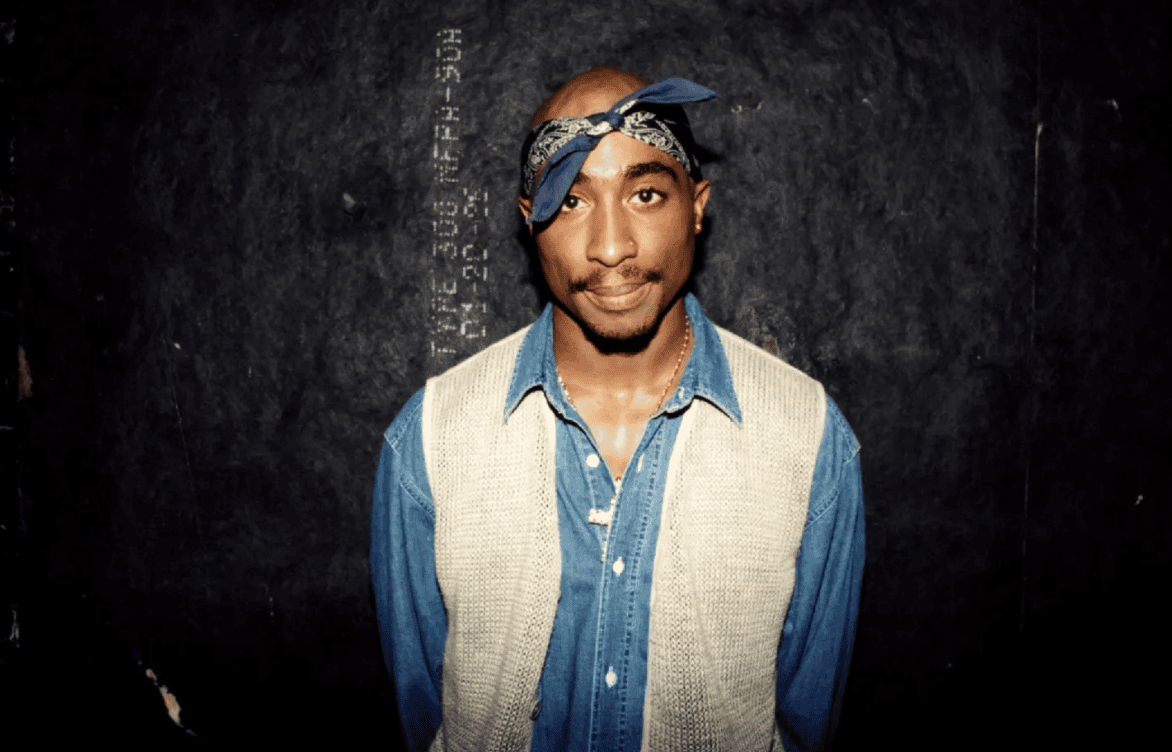
Nearly three decades after Tupac Shakur was killed in a drive-by shooting in Las Vegas, the case that haunted hip-hop history has reached a major turning point. Duane “Keffe D” Davis, a former gang leader convicted of orchestrating the rapper’s murder, has been sentenced to at least 40 years in prison, marking a landmark development in one of the most closely watched cold cases in American music history.
Davis, 63, was found guilty in September of one count of murder with a deadly weapon in connection with Shakur’s death on September 7, 1996. Although prosecutors argued that Davis did not personally fire the fatal shots, they maintained that he organized the attack and supplied the weapon used in the killing.
The conviction represents a significant moment for Shakur’s family, hip-hop fans and investigators who spent years pursuing answers. Davis, however, has said he intends to appeal the verdict, leaving another chapter ahead in a case that has captivated the public for nearly 30 years.
Why Duane Davis Received a 40-Year Sentence

Davis was sentenced in a Las Vegas murder case that remained unresolved for decades. During Tuesday’s sentencing hearing, Judge Carli Kierny addressed the consequences of taking Shakur’s life and the lasting impact of the crime.
“You don’t get to take a man from his family,” Kierny told Davis, emphasizing the future that had been taken from the young rapper and the people closest to him.
Prosecutors sought a substantial sentence, arguing that Davis had spent years publicly discussing his alleged involvement in the killing. Marc DiGiacomo, the prosecutor who addressed the court, said Davis had repeatedly boasted about his role in a crime whose consequences extended far beyond the immediate victims.
When the judge asked whether he wished to speak before sentencing, Davis responded that he was prepared to appeal the case.
The sentence closes one phase of the legal proceedings, but Davis’s stated intention to challenge the conviction means the case may continue through the appeals process.
The Prosecution’s Case Against Keffe D
Prosecutors identified Davis as the organizer of the attack rather than the person who pulled the trigger. According to their account, he supplied the gun and directed the group involved in the shooting.
They alleged that Davis’s nephew, Orlando Anderson, fired the shots from a white Cadillac carrying several men. Anderson, who denied involvement in Shakur’s murder, died in an unrelated shooting in 1998.
The prosecution relied heavily on Davis’s own statements over the years, including accounts in which he acknowledged being inside the vehicle from which the shots were fired.
His defense team argued that his public claims were unreliable, describing them as exaggerated stories intended to attract attention and generate income from books and media appearances.
Ultimately, jurors found Davis guilty after weighing the evidence presented during the trial.
How Tupac Shakur’s Murder Case Was Finally Solved
Shakur was shot in Las Vegas on September 7, 1996, following an evening that included a boxing match featuring Mike Tyson. He died six days later, on September 13, at the age of 25.
Despite his relatively short life, Shakur had become one of rap music’s most influential artists. His work combined personal storytelling, social commentary and confrontational lyrics, earning him a devoted following that extended far beyond the United States.
His death immediately became one of the most prominent unsolved cases in entertainment history.
For years, investigators struggled to establish a criminal case that could withstand scrutiny in court. The lack of a conviction fueled speculation, competing theories and documentaries examining the circumstances surrounding the shooting.
The breakthrough eventually came through Davis’s own accounts of the events.
The Police Interview That Changed the Investigation
In 2008, Davis spoke to authorities during a confidential police interview connected to the investigation into the killing of Christopher Wallace, better known as the Notorious B.I.G. Wallace was murdered in a separate shooting in Los Angeles in March 1997, just months after Shakur’s death.
According to the reporting on Davis’s case, he had received protection from criminal prosecution in exchange for providing information during the interview.
However, Davis later discussed his alleged role in Shakur’s killing more extensively in public. His 2019 memoir, Compton Street Legend, and subsequent media interviews brought renewed attention to his claims.
Those public disclosures ultimately undermined the protective arrangement he had relied upon. A judge later permitted the 2008 police interview to be used as evidence in the murder case.
The episode illustrates how statements made outside a courtroom can become consequential in criminal proceedings. Publicity may generate attention or financial opportunities, but it can also create legal exposure when an individual’s accounts become evidence in an investigation.
Tupac’s Family Speaks Out at the Sentencing
The sentencing hearing also gave Shakur’s family an opportunity to describe the personal consequences of his death.
His sister, Sekyiwa Shakur, told the court that losing her brother had severely affected the family. She described a young man who had ambitions beyond music and wanted to contribute positively to his community.
She urged the judge to impose the maximum sentence, emphasizing that the loss extended beyond her own grief to the wider world that had been deprived of Shakur’s future work.
Maurice Shakur, identified in the report as Tupac’s brother, also addressed the court and requested the longest possible sentence.
Their statements highlighted a dimension of the case that can become obscured by decades of public fascination: the lasting effect of a violent crime on the people who knew and loved the victim.
For Shakur’s relatives, the conviction represents more than a headline or a milestone in hip-hop history. It provides a measure of legal accountability after years of uncertainty, although no sentence can reverse the loss their family experienced.
Why Tupac Shakur’s Legacy Still Matters
Shakur’s continued cultural influence helps explain why his murder remained in the public consciousness for so long.
At the time of his death, he was 25 and at the height of his career. His recordings explored poverty, racial inequality, violence, family relationships and the contradictions of life in marginalized communities.
His ability to combine vulnerability with defiance helped distinguish him from many of his contemporaries. Decades later, his music continues to reach new audiences, while his image and lyrics remain central to discussions about rap’s history and influence.
Shakur has sold more than 75 million records worldwide, according to the report. His commercial success reflects the breadth of his appeal, but his legacy also rests on the cultural conversations his work continues to inspire.
The unresolved nature of his murder added another layer to that legacy. For years, theories about the shooting circulated across hip-hop communities and beyond, turning the case into a subject of persistent speculation.
Journalist Cathy Scott, who covered the murder in the 1990s and later wrote a book about it, said the combination of Shakur’s celebrity, the Las Vegas setting and the mystery surrounding the investigation helped sustain public interest.
The conviction of Davis has now provided a legal outcome that eluded investigators for almost three decades.
Could the Verdict Reopen the Notorious B.I.G. Murder Case?
The conviction has also renewed attention on the unsolved murder of the Notorious B.I.G., whose real name was Christopher Wallace.
Wallace was killed in Los Angeles in March 1997, approximately six months after Shakur’s death. The similarities in timing and the prominent place both men occupied in hip-hop history have long encouraged comparisons between the cases.
Davis’s 2008 interview took place in connection with the Wallace investigation, illustrating how the two cases have intersected over the years.
However, the conviction in Shakur’s murder does not automatically resolve Wallace’s killing. The cases involve separate investigations, evidence and legal questions.
Whether the verdict will produce meaningful new leads remains uncertain. Nevertheless, the outcome may encourage renewed scrutiny of existing evidence and further examination of information gathered during the long-running investigations.
For families, investigators and fans, the possibility of additional answers remains significant, even as the legal system moves forward with the result of the Shakur case.
A Major Turning Point in Hip-Hop History
Duane “Keffe D” Davis’s sentence marks a historic development in the investigation into Tupac Shakur’s murder. After years of uncertainty, a jury has found a person guilty of orchestrating the attack, and a judge has imposed a lengthy prison sentence.
The case also serves as a reminder of how evidence can emerge over time, particularly when individuals publicly discuss events they were once reluctant to address in formal investigations.
For Shakur’s family, the ruling acknowledges the devastating consequences of his death. For hip-hop, it closes an important chapter in a story that has shaped public understanding of one of rap’s most influential figures.
Davis has indicated that he will appeal, so further legal proceedings may follow. Even so, the conviction represents a major milestone in a case that remained unresolved for nearly 30 years.
Tupac Shakur’s life ended at just 25, but his music and cultural impact have endured. The verdict cannot restore what his family lost, yet it brings a long-awaited measure of accountability to one of the most consequential murder cases in music history.













Comments are closed.