
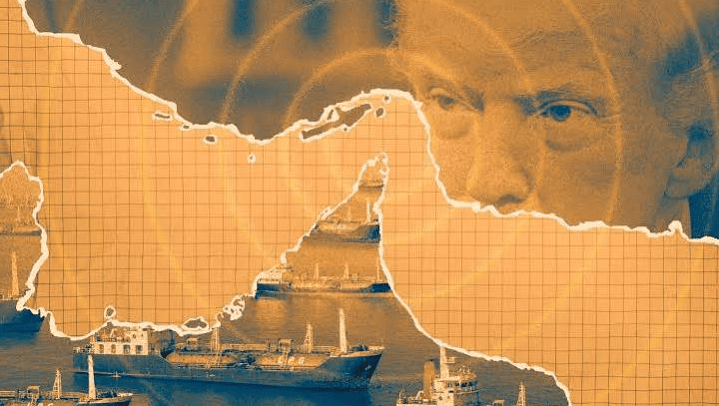
The US president claims American forces have removed or destroyed mines from the strategically vital waterway, as tensions with Iran continue to reshape global energy markets and regional security.
US President Donald Trump has claimed that the United States Navy has removed or detonated all mines from the Strait of Hormuz, escalating an already volatile confrontation with Iran over one of the world’s most strategically important maritime passages.
In a statement posted to his Truth Social platform, Trump warned Iran that any attempt to lay new mines in the waterway would result in an immediate American military response.
“Iran has been notified that any ship or boat placing new mines will be immediately and systematically destroyed,” Trump said.
Iran has yet to publicly respond to the claim.
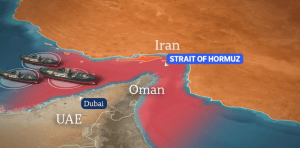
The development comes as the Strait of Hormuz remains at the centre of an increasingly complex geopolitical crisis involving the United States, Iran, Israel and the Gulf states. The waterway, which connects the Persian Gulf with the Gulf of Oman and the wider Arabian Sea, has become a critical pressure point in the conflict — with consequences extending far beyond the Middle East.
The Strait of Hormuz: A Global Energy Lifeline
The significance of the Strait of Hormuz is difficult to overstate.
Before the outbreak of the current war, approximately 20% of the world’s oil and liquefied natural gas supplies travelled through the narrow maritime corridor. Any sustained disruption therefore has immediate implications for energy prices, shipping costs and economies dependent on stable global fuel supplies.
Iran’s effective closure of the strait has already contributed to sharp fluctuations in international oil markets.
The crisis has also highlighted the vulnerability of global energy infrastructure to geopolitical conflict. A waterway only a few dozen kilometres wide has become capable of influencing markets thousands of kilometres away, demonstrating how closely interconnected modern economies remain with the security of strategically important maritime routes.
A Dangerous Contest Over Maritime Control
At the heart of the dispute is a fundamental disagreement over who should control the passage.
Iran has indicated that it wants greater control over navigation through the Strait of Hormuz, while the United States and many other countries maintain that the waterway constitutes international waters and that commercial shipping should remain free from obstruction.
The disagreement is not merely legal or diplomatic. Control of the strait represents considerable strategic leverage.
For Iran, the waterway provides a means of exerting pressure on its adversaries and demonstrating its influence over regional security. For Washington and its allies, maintaining freedom of navigation is closely tied to the uninterrupted movement of global energy supplies.
That tension has made mine clearance one of the most sensitive elements of the crisis.
Washington’s Warning to Tehran
Trump’s latest statement represents another escalation in the rhetoric between Washington and Tehran.
The US president has repeatedly asserted that American forces have control over the area, while Iran has fired on vessels it says attempted to pass through the strait without its permission.
The confrontation follows the collapse of a ceasefire intended to create space for negotiations between the United States and Iran.
Intermittent fighting has continued, while Washington has simultaneously intensified economic pressure on Tehran through a new package of sanctions.
US Treasury Secretary Scott Bessent has warned that countries and entities financially supporting Iran could face isolation, widening the potential economic consequences of the confrontation beyond the two countries directly involved.
Iran Faces a New Wave of Economic Pressure
Iran has lived under extensive international sanctions for much of the period since the Islamic Republic was established in 1979.
Tehran has nevertheless rejected the suggestion that additional American sanctions will force its government to capitulate.
Iranian Economy Minister Ali Madanizadeh has said the country is prepared for increased economic pressure and argued that Washington’s strategy would ultimately represent another failure for the United States.
The war, however, has already placed substantial pressure on the Iranian economy.
The disruption of maritime trade and the continuing blockade of Iranian ports have further complicated the country’s ability to maintain normal commercial activity.
For Tehran, the Strait of Hormuz is therefore both a strategic asset and a critical economic artery.
China Enters the Equation
The crisis is also becoming increasingly important beyond the Middle East.
China, the largest purchaser of Iranian oil, has strongly criticised the latest American sanctions, describing them as unilateral and illegal. Beijing has indicated that it will take measures to protect its economic interests.
That response introduces another layer of complexity.
The United States and China are already engaged in broader disputes over trade, technology and strategic resources. Beijing’s control over much of the world’s supply of rare earth elements and other critical minerals gives it significant leverage in any escalation of economic tensions with Washington.
The Strait of Hormuz crisis therefore intersects with a much larger contest over global trade and geopolitical influence.
With Trump and Chinese President Xi Jinping expected to meet next month, Washington will be closely watching Beijing’s response to the Iran sanctions.
Oman Attempts to Create a Temporary Corridor
Diplomatic efforts to restore some degree of maritime movement have not completely disappeared.
Oman, a longstanding US partner in the region, has been attempting to mediate between Washington and Tehran.
Omani Foreign Minister Badr Albusaidi has expressed hope that Oman and Iran can establish a temporary shipping corridor through the strait following talks in Tehran with Iranian Foreign Minister Abbas Araghchi.
The proposed arrangement would seek to restore a degree of safe commercial navigation while leaving the more contentious question of the waterway’s long-term management for later negotiations.
Iranian officials have confirmed discussions involving Oman and Pakistan, describing them as part of an effort to develop a regional solution.
But Tehran has made clear that it does not consider the proposed arrangement an unconditional reopening of the strait.
Iranian Deputy Foreign Minister Kazem Gharibabadi said the proposed corridor would be temporary and that only commercial vessels would be permitted to pass.
He also warned that if Iran’s demands were not met, the strait could once again be closed.
A Narrow Corridor With Global Consequences
The dispute over the Strait of Hormuz illustrates how geography can become geopolitical power.
A relatively narrow passage has become the focal point of competing military, economic and diplomatic interests. Its security affects not only the countries bordering the Persian Gulf but also energy markets, shipping companies, manufacturers and consumers across the world.
Every disruption raises the possibility of higher energy costs. Every military confrontation increases the risk to commercial shipping. And every diplomatic failure makes the prospect of a prolonged crisis more difficult to dismiss.
For the United States, keeping the waterway open is a matter of strategic credibility as well as economic security.
For Iran, control over the passage represents one of the most powerful forms of leverage available to Tehran.
And for the international economy, the stakes are measured in far more than kilometres of shipping lanes.
The Next Test for the Region
Trump’s claim that American forces have cleared the mines marks another significant moment in an already unstable confrontation, but it does not resolve the larger dispute surrounding the Strait of Hormuz.
The central questions remain unanswered: who controls the waterway, under what conditions can commercial vessels pass, and whether Washington and Tehran can return to meaningful negotiations before another escalation takes place.
For now, the world’s attention remains fixed on a narrow stretch of water connecting the Persian Gulf to the global economy.
The Strait of Hormuz has always been strategically important.
In the current crisis, it has become something more: a test of military power, diplomatic endurance and the resilience of the global energy system.









Comments are closed.