
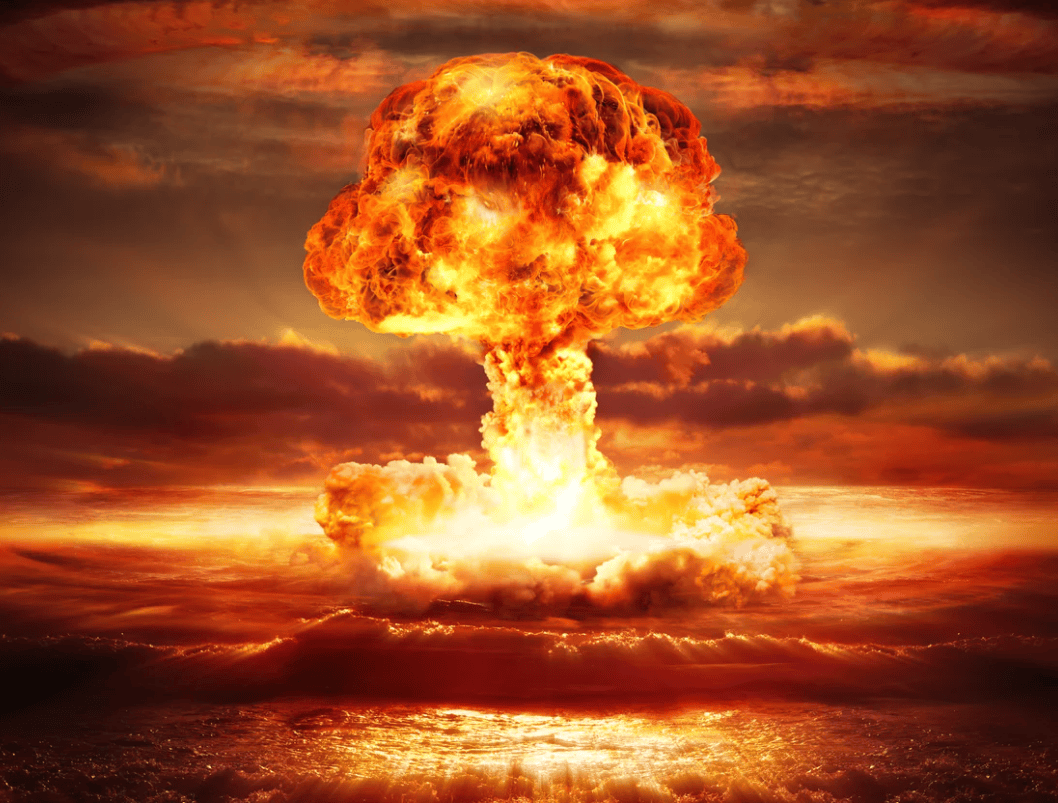
An AI prediction about when World War III could begin is drawing attention after suggesting that the period between 2028 and 2035 could bring an increased risk of a major international conflict. The speculative assessment even named October 1, 2030, as a possible date, but there is no reliable evidence that a third world war will begin then.
The prediction, reported by UNILAD on October 15, 2026, comes amid ongoing international tensions, active armed conflicts and concerns about nuclear weapons. However, the distinction between identifying genuine geopolitical risks and predicting a specific future event is crucial. Artificial intelligence can analyze scenarios and generate informed-sounding responses, but it cannot reliably determine the date of a future world war.
When Does AI Predict World War III Could Begin?
According to the response quoted by UNILAD, a global conflict involving several major powers was considered unlikely to begin within the next one or two years. Instead, the assessment identified 2028 to 2035 as a period in which a serious international confrontation could potentially escalate.
The response highlighted several possible flashpoints, including a direct military clash between Russia and NATO, a conflict between the United States and China over Taiwan, or a regional war that draws additional major powers into the fighting.
These scenarios reflect longstanding concerns in international security discussions. A confrontation between nuclear-armed countries could have consequences far beyond the battlefield, particularly if military escalation, miscommunication or political pressure limits opportunities for diplomacy.
However, the AI response did not provide a statistically validated forecasting model demonstrating that a world war would begin during this period. Its suggested timeframe should therefore be understood as speculation, not a formal prediction supported by measurable probabilities.
Why October 1, 2030, Was Mentioned
The most striking detail in the report was the proposed date of October 1, 2030. Yet the AI reportedly introduced that date with an explicit qualification: it was a guess offered only because it had been asked to select one.
That distinction matters. Naming a precise day can make a prediction appear more authoritative than a broad discussion of geopolitical risks, but precision alone does not establish accuracy.
No evidence presented in the report supports October 1, 2030, as a meaningful forecast date. There is also no established method for determining the exact day on which a complex international crisis might develop into a global war.
Political decisions, diplomatic negotiations, military incidents and unexpected changes in leadership can all alter international relations. Any credible assessment must account for that uncertainty rather than treating a generated date as a timetable for disaster.
What Could Trigger a Major Global Conflict?
Although the specific date is unsupported, the potential pathways to a wider conflict are serious subjects of international security research.
A Direct Clash Between Russia and NATO
The AI response identified a confrontation between Russia and NATO as one possible escalation scenario. A direct clash involving the military alliance and Russia could create a dangerous situation because NATO members include several nuclear-armed states.
The risk would depend on the circumstances of the confrontation, the decisions made by political and military leaders, and whether diplomatic channels could prevent further escalation.
An isolated incident would not automatically lead to a world war. Nevertheless, a sequence of retaliatory actions and miscalculations could make a crisis more difficult to contain.
Rising Tensions Between the United States and China
Another scenario involves a possible conflict over Taiwan, the self-governing island claimed by China. A military confrontation in the Taiwan Strait could draw the United States and regional partners into a wider security crisis.
The consequences would extend beyond military operations. Taiwan’s importance to global technology supply chains and the economic relationship between China and the United States mean that a prolonged confrontation could disrupt international trade and financial markets.
Still, heightened tensions do not make war inevitable. Diplomatic engagement, deterrence and the substantial economic costs of military conflict remain important factors in how governments assess their options.
Regional Wars That Draw in Other Powers
A third potential pathway is a regional conflict that expands as other countries become involved. This could happen through formal alliances, military assistance, retaliatory strikes or attacks that affect the interests of outside powers.
History shows that local disputes can develop wider consequences when multiple governments become involved. However, every conflict follows its own political and military dynamics, making it difficult to predict whether a regional war will remain contained or expand.
The important question is not simply whether conflicts exist, but whether governments can prevent them from escalating into direct confrontation between major powers.
What Do Security Experts Say About the Risk of World War III?
While the AI-generated date should not be treated as a forecast, concerns about nuclear weapons and international stability are supported by independent research.
The Stockholm International Peace Research Institute (SIPRI), which monitors global armaments and security developments, reported in its 2026 Yearbook assessment that nuclear-armed states continued modernizing their arsenals during 2025. Its findings also highlighted increasing reliance on nuclear weapons and heightened risks of escalation and miscalculation.
These developments provide important context for understanding international security concerns. However, they do not establish that a world war will occur within a particular year.
SIPRI has also examined how artificial intelligence could affect nuclear escalation. Its research identifies potential risks when AI-supported military systems compress decision-making timelines or influence leaders during a crisis. Under certain circumstances, these technologies could increase the possibility of mistakes or misinterpretations.
The distinction is important: researchers investigate how specific technologies and geopolitical conditions might increase risk, while an AI chatbot responding to a hypothetical question may simply generate a plausible scenario. Those are not equivalent forms of evidence.
Can Artificial Intelligence Actually Predict World War III?
Artificial intelligence can help organize information, identify patterns and explore hypothetical scenarios. However, predicting the exact timing of a world war presents a much greater challenge.
International conflicts involve human decisions, secret negotiations, changing alliances and events that may be impossible to anticipate. Even experts with access to intelligence assessments and historical data cannot reliably identify a precise date for a future global conflict.
AI systems also depend on the information and instructions they receive. When asked to speculate about an uncertain event, a chatbot may produce a confident-sounding answer without having a validated statistical basis for its conclusion.
That is why readers should distinguish between three different things:
- A scenario: An explanation of how a conflict might develop under certain conditions.
- A risk assessment: An analysis of factors that could make an event more or less likely.
- A prediction: A claim about what will happen, ideally supported by a transparent method and measurable evidence.
The date of October 1, 2030, belongs in the first category of unsupported speculation rather than the third. Without a reliable forecasting method, it should not be interpreted as a warning that a global war is scheduled to begin.
Why Global Tensions Still Deserve Attention
Rejecting an unreliable prediction does not mean dismissing the risks associated with international conflict. Nuclear deterrence, military modernization, strained diplomatic relationships and the possibility of accidental escalation remain legitimate areas of concern.
At the same time, governments have powerful incentives to avoid a direct war between major powers. The human cost, economic disruption and potential consequences of nuclear escalation would be immense.
Diplomacy, crisis communication, arms control and efforts to reduce misunderstandings can all influence how international disputes develop. These measures do not eliminate every danger, but they demonstrate why the future cannot be reduced to a single date generated by an AI system.
For readers following international affairs, credible assessments from established research institutions offer a more useful basis for understanding developments than viral predictions or sensational headlines.
AI’s World War III Prediction Is Not a Reliable Countdown
The AI response reported by UNILAD identified 2028 to 2035 as a potentially concerning period and named October 1, 2030, only as a speculative guess. It did not establish a scientifically reliable date for the outbreak of World War III.
Research from organizations such as SIPRI confirms that nuclear risks, military modernization and the possibility of escalation deserve serious attention. However, those concerns should not be confused with evidence that a global war is imminent or inevitable.
Ultimately, the most responsible approach is to examine the facts, follow credible security research and recognize the limits of AI-generated predictions. The future of international relations will depend on political choices, diplomatic efforts and events that no chatbot can reliably put on a calendar.






Comments are closed.