
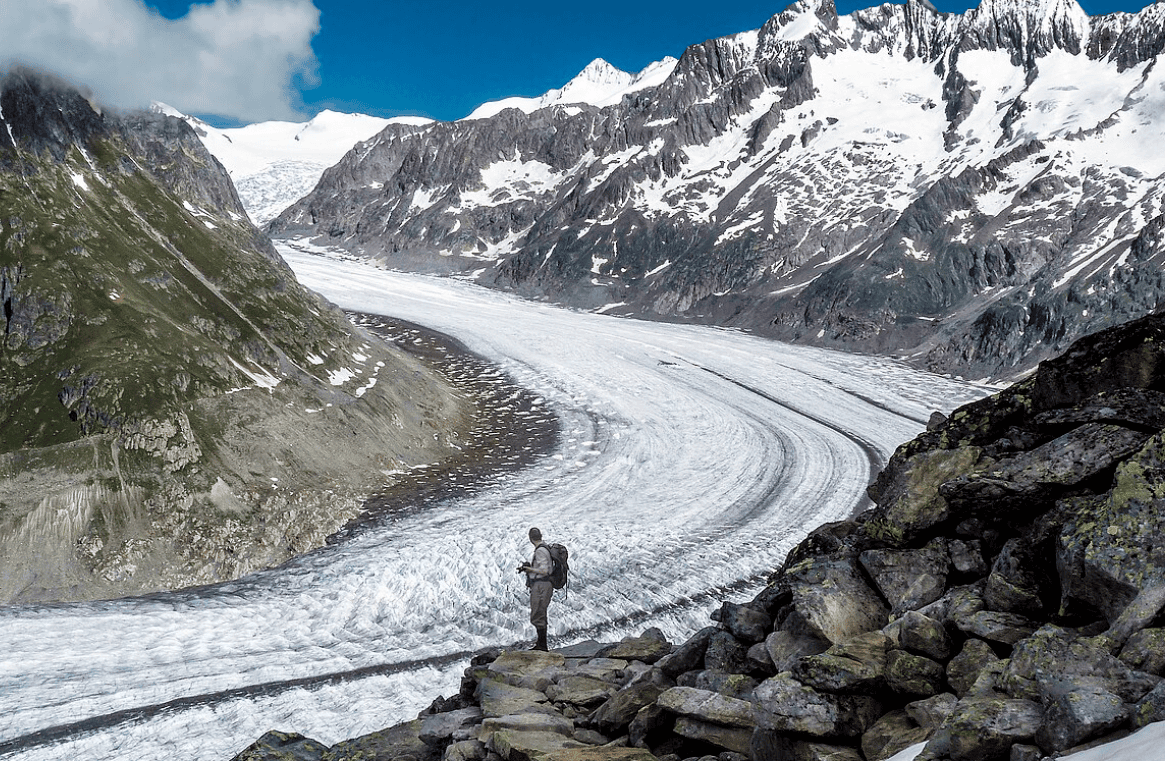
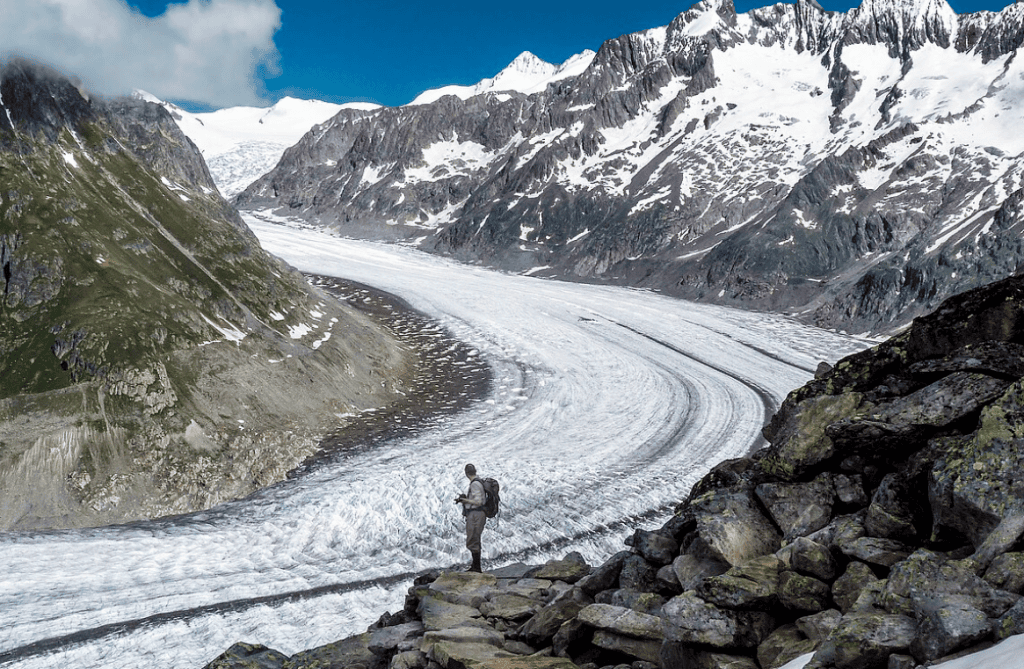
Switzerland’s glaciers are facing an extraordinary rate of ice loss in 2026, with Swiss glaciers losing an estimated 5.5% of their remaining ice in just one year. The dramatic decline is more than a warning about disappearing Alpine landscapes: of the loss as extraordinary, particularly because a yearly decline of around 2% was previously regarded by Alpine glaciologists as an it could affect water availability, hydropower, agriculture, transport and mountain safety in the years ahead.
Swiss Glaciers Suffer Extraordinary Ice Loss
The latest measurements from Glacier Monitoring Switzerland show that the country’s glaciers have endured one of their most severe years on record.
More than one-twentieth of Switzerland’s remaining glacier ice has disappeared over the past 12 months. Scientists describe the scale of the loss as extraordinary, particularly because a yearly decline of around 2% was previously regarded by Alpine glaciologists as an extreme event.
In 2026, the estimated loss reached 5.5%.
Dr Matthias Huss, director of Glacier Monitoring Switzerland, described the situation as disastrous. His assessment reflects a broader concern among researchers: the important development is not simply that glaciers are shrinking, but that the rate of shrinkage is accelerating.
The trend is closely linked to human-driven climate change, with fossil fuel emissions contributing to rising global temperatures and increasingly intense heat extremes.
Why 2026 Has Been So Severe for Swiss Glaciers
Swiss glaciers entered the summer already vulnerable.
A mild winter left the Alps with less snow than usual. Then, intense heatwaves in May and June rapidly removed much of the remaining snowpack.
That matters because fresh snow helps protect the glacier beneath it. Snow reflects a large proportion of incoming sunlight, while exposed glacier ice is darker and absorbs more solar energy.
Once the protective snow disappears, melting can accelerate.
This creates a damaging cycle. Early-season snow loss exposes more ice, which absorbs more heat. Later periods of hot weather can then cause even greater ice loss.
Glaciologist Fabien Maussion of the University of Bristol, who was not involved in the Swiss measurements, said the speed of the change would have been difficult to imagine a decade ago. At the same time, he noted that the development is consistent with what climate science has projected under continued warming.
Swiss Glaciers Are Losing Snow Even at High Elevations
Perhaps one of the most concerning observations came from some of the highest glacier measurement sites.
Researchers found areas with no remaining snow at elevations reaching around 3,500 metres above sea level. At some sites, scientists recorded approximately four metres of ice loss at locations that would normally remain protected beneath several metres of winter snow.
That has major implications for the future of Alpine ice.
Glaciers need snowfall at their higher elevations to replenish the ice lost through melting lower down. When summer removes virtually all of the seasonal snow, the glacier loses an important part of its natural mass balance.
Over time, continued losses mean the glacier becomes thinner and smaller.
Some smaller Alpine glaciers may no longer be able to survive the current climate. In eastern Switzerland, for example, the Plattalva Glacier has already disappeared.
Why Glacier Melt Matters for Water Supplies
The disappearance of glacier ice is not simply a visual change in the Alps. Glaciers act as long-term stores of frozen water.
During hot and dry periods, meltwater can contribute to rivers that support agriculture, hydropower and other human activities.
Between July and September, Swiss glaciers released an estimated 2.2 trillion litres of meltwater. That additional water helped reduce shortages during a difficult summer.
However, scientists warn that this temporary benefit comes with a serious long-term trade-off.
The water released from melting glacier ice is effectively water that has been stored for years, decades or even centuries. Once that ice is gone, it cannot continue providing the same reserve during future heatwaves.
In other words, accelerated melting can temporarily increase water availability while simultaneously reducing the natural water storage capacity of the mountains.
That distinction is crucial for understanding why glacier loss presents a long-term challenge.
Alpine Glacier Loss Could Affect Hydropower and Transport
Switzerland’s relationship with its glaciers extends beyond tourism and landscape.
Mountain water contributes to river systems and reservoirs used for electricity generation. During periods of high demand or limited rainfall, changes in the timing and volume of meltwater can therefore affect water management and hydropower planning.
Transport can also be affected by increasingly low river levels.
The Rhine, one of Europe’s major waterways, experienced record-low levels in some locations during the summer. Low water can restrict shipping capacity and increase the cost of moving goods.
Glacier melt is only one factor influencing river levels, and researchers caution against attributing individual low-water events to glacier loss alone. Still, the broader decline of Alpine ice changes how much stored water is available during future hot and dry periods.
Melting Glaciers Also Increase Mountain Hazards
There is another concern beyond water resources: mountain stability.
As glaciers retreat and permanently frozen ground, known as permafrost, thaws, parts of high mountain terrain can become less stable. This can contribute to rockfalls, landslides and, under certain circumstances, sudden flooding.
Recent disasters in mountainous regions have demonstrated how multiple factors can combine to produce dangerous events. Glacier or bedrock collapse may trigger rapid movement of water and debris, while long-term warming can increase the underlying vulnerability of mountain environments.
That does not mean every glacier retreat will produce a landslide or flood. Instead, scientists are watching for changes in conditions that could increase risks in particular locations.
What Swiss Glacier Loss Means for the Future
The rapid decline of Swiss glaciers is part of a much larger global pattern.
The Alps contain a relatively small share of the world’s total ice compared with the enormous ice masses of Antarctica and Greenland. Yet Alpine glaciers are particularly important as indicators of climate change because their response to warming can be observed over comparatively short periods.
Their retreat also affects communities that depend on mountain water.
The situation is serious, but scientists stress that the future is not completely predetermined. Reducing greenhouse gas emissions can limit further warming and therefore reduce the amount of additional ice that is lost.
The potential benefits extend far beyond Switzerland. Large ice masses in the Himalayas and polar regions contain enormous quantities of frozen water. Limiting global warming can help preserve more of these systems and reduce the long-term contribution of melting land ice to sea-level rise.
The 2026 Glacier Crisis Is a Warning About Water Security
The latest measurements from Swiss glaciers show how quickly a warming climate can transform an environment that once appeared relatively stable.
A 5.5% annual loss is not simply a statistic. It represents the disappearance of water that had accumulated naturally over many years and the weakening of a system that has helped regulate Alpine rivers.
For Switzerland, the consequences could reach agriculture, hydropower, transport and mountain safety. Globally, the lesson is even broader: glaciers are not only frozen landscapes. They are part of the planet’s water system and climate record.
The 2026 melt therefore offers a stark reminder of what sustained warming can mean for both natural ecosystems and the communities that depend on them.














Comments are closed.