
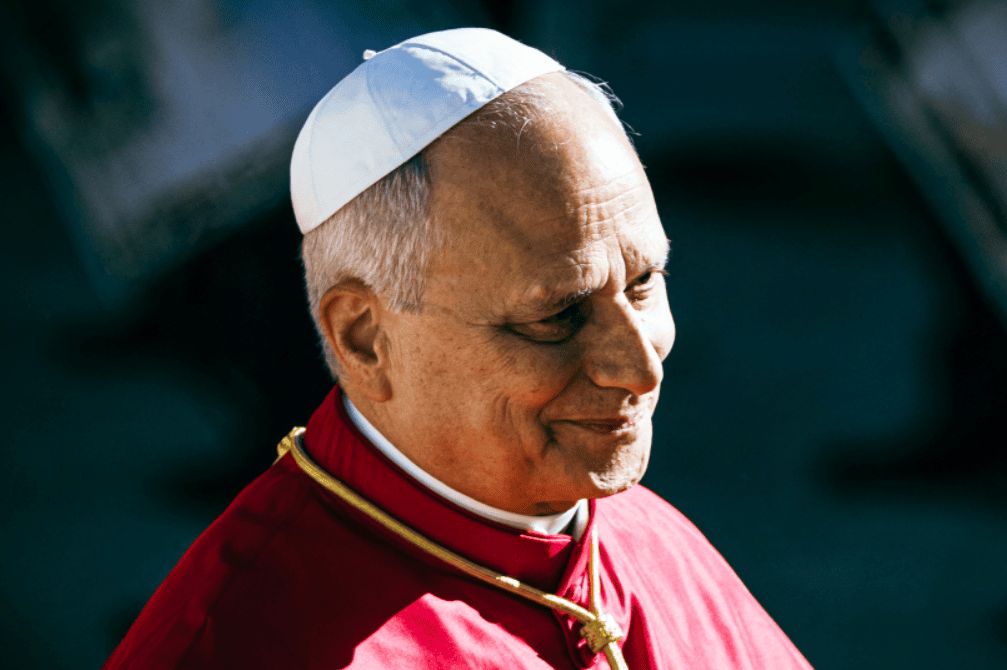
Pope Leo XIV’s lung cancer diagnosis has raised questions about his recovery, the extent of the disease and the future of his public engagements. The Vatican confirmed on October 13, 2026, that tissue removed during surgery at Rome’s Gemelli Hospital showed lung adenocarcinoma, a common form of lung cancer. Although doctors reported that the procedure went well, important details about the pontiff’s prognosis and potential need for further treatment remain unknown.
Pope Leo XIV’s Lung Cancer Diagnosis Confirmed After Surgery
The Vatican announced the diagnosis following an operation to remove the lower lobe of the Pope’s right lung. According to the medical information released by his doctors, laboratory examination of the removed tissue confirmed an earlier suspicion of lung adenocarcinoma.
The procedure took place at Agostino Gemelli University Hospital in Rome, a facility that has treated several recent popes. The operation lasted approximately 90 minutes and was completed without reported complications.
Following surgery, Pope Leo regained consciousness normally and returned to his hospital room after a period of observation. The Vatican indicated that he would remain under medical supervision while recovering.
The pontiff’s public engagements have been suspended through at least October 20. However, the Vatican has not provided a complete timeline for his return to official duties.
While the successful completion of surgery is encouraging, it does not, by itself, establish whether the cancer has been completely eliminated or whether additional treatment will be necessary.
What Is Lung Adenocarcinoma?
Lung adenocarcinoma is a type of non-small cell lung cancer. It develops in cells that produce substances such as mucus and commonly originates in the outer regions of the lungs.
According to the Lung Cancer Foundation of America, adenocarcinoma accounts for approximately 40% of lung cancer cases in the United States, making it the most common lung cancer subtype in the country.
How Serious Is Lung Adenocarcinoma?
The seriousness of the diagnosis depends on several factors, including the tumor’s size, its location and whether cancer cells have spread beyond the original site.
Some lung adenocarcinomas are detected while still localized. In those cases, surgery may offer a potentially curative treatment, particularly when doctors can remove the tumor completely and there is no evidence of cancer in nearby lymph nodes or distant organs.
However, the outlook can be less favorable if the disease has spread. Depending on the stage and the patient’s overall health, treatment may involve surgery, chemotherapy, targeted medicines, immunotherapy or a combination of approaches.
Importantly, the specific diagnosis announced by the Vatican does not reveal which of these circumstances applies to Pope Leo XIV.
His medical team has not publicly disclosed the tumor’s dimensions, the status of nearby lymph nodes or whether imaging and other tests have identified cancer elsewhere.
These details will be essential to understanding the pontiff’s prognosis and determining the next steps in his care.
Why the Cancer Stage Matters for Pope Leo XIV’s Recovery
Cancer staging describes how extensively a disease has developed and whether it has spread from its original location. For lung cancer, doctors generally assess the primary tumor, nearby lymph nodes and possible spread to other parts of the body.
Lung cancer specialist Dr. Stephen Liu of Georgetown University, speaking to Benzinga, emphasized that the absence of publicly available staging information makes it difficult to evaluate the Pope’s outlook.
If the cancer is confined to the lung and has been fully removed, surgery could potentially provide a cure. If further examination reveals lymph node involvement or more extensive disease, the medical team may recommend additional treatment.
Removing the lower lobe of the right lung is known as a lobectomy. This operation removes an entire anatomical section of the lung rather than only the visible tumor. It is an established surgical approach for certain lung cancers, although its suitability depends on the disease and the patient’s ability to tolerate the procedure.
Recovery varies from one person to another. Doctors typically monitor breathing, pain, mobility and the risk of complications before determining when a patient can resume normal activities.
For a pope whose responsibilities include public appearances, meetings, travel and lengthy ceremonies, recovery planning will also need to account for the physical demands of his office.
At present, there is insufficient public medical information to predict how quickly Leo will recover or whether he will require treatment beyond surgery.
Pope Leo XIV’s Health and Medical Background
Born in Chicago, Leo XIV was elected pope in May 2025. Before becoming head of the Catholic Church, he spent decades working as a missionary and church leader in Peru, developing a particularly strong connection to the South American country.
At 71, he remains physically active. Reports have described his interest in tennis and horseback riding, activities that reflect an active lifestyle but do not, on their own, determine how well someone will recover from cancer surgery.
The Pope has not been widely known as a smoker. Nevertheless, lung cancer can develop in people who have never smoked, and the absence of a known smoking history does not rule out the disease.
Family history has also drawn attention following the Vatican’s announcement. NPR reported that Leo’s mother, Mildred, died of cancer in 1990. His older brother, Louis, was also reported to be hospitalized with a form of cancer at the time of the Pope’s diagnosis.
However, these family circumstances do not establish a hereditary cause for the pontiff’s lung cancer. Determining individual risk requires more detailed medical information than is publicly available.
For now, the Vatican’s updates remain the principal source of information about the Pope’s condition, and further conclusions should await additional medical details.
November South America Tour Faces Uncertainty
Pope Leo XIV is scheduled to visit Uruguay, Argentina and Peru from November 6 to 17, 2026. The planned 11-day journey would represent a significant international commitment only weeks after his lung surgery.
The trip carries particular significance because of Leo’s long-standing ties to Peru, where he spent much of his earlier ministry. A visit to the region would provide an opportunity to reconnect with communities that played an important role in his life before his election.
Nevertheless, the schedule may depend on how his recovery progresses over the coming weeks.
International papal visits require extensive preparation and can involve long flights, crowded events, public addresses and demanding daily itineraries. Even when surgery proceeds successfully, doctors may advise patients to limit travel and strenuous activity during recovery.
As of October 14, the Vatican has not confirmed whether the Pope will proceed with the tour, modify its schedule or postpone it.
The immediate priority is likely to remain his recovery and the medical assessments needed to determine whether further treatment is required.
What Happens Next for Pope Leo XIV?
The next important developments will be updates on the Pope’s postoperative recovery, the final assessment of his cancer and any recommendations from his medical team.
Several questions remain unanswered:
- Cancer stage: Has the disease remained confined to the lung, or has it spread to lymph nodes or other organs?
- Further treatment: Will surgery be sufficient, or will doctors recommend additional therapy?
- Recovery timeline: When can the Pope safely resume public appearances and his regular responsibilities?
- International travel: Will his medical condition allow him to undertake the planned November visit to South America?
Until these details become available, assessments of his long-term outlook should remain cautious.
The Vatican has reported that the operation was successful, providing an encouraging initial development. However, the full significance of that outcome will depend on the results of further medical evaluation and the pontiff’s recovery.
Conclusion
Pope Leo XIV’s lung cancer diagnosis marks a significant health development for the leader of the Catholic Church, but many crucial details remain unknown. Doctors successfully removed the lower lobe of his right lung, and tissue analysis confirmed lung adenocarcinoma. The cancer’s stage, the possibility of additional treatment and the timing of his return to public duties have not been established.
For now, the most important indicators will be official medical updates and evidence of his recovery. His planned November journey to South America remains uncertain, and any decision about travel will likely depend on medical advice and his progress over the coming weeks.
As more information emerges, the focus will remain on the Pope’s health, his treatment options and the implications for his responsibilities as pontiff.










Comments are closed.