
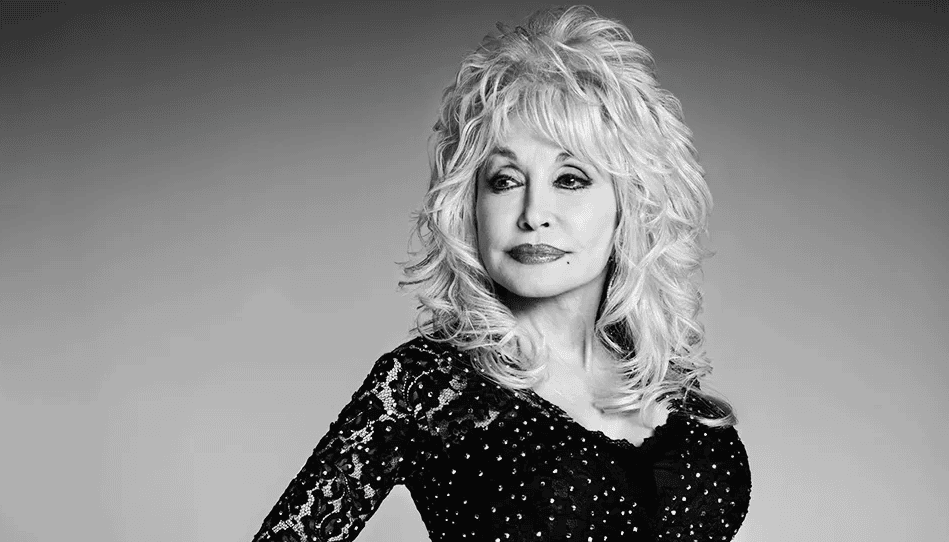
From humble Appalachian beginnings to global superstardom, Dolly Parton built a seven-decade career defined by songwriting, resilience, business instinct and an unmistakable cultural presence.
Dolly Parton’s life was never simply a story about becoming a country music star. It was a story about authorship — of songs, of image, of business, and ultimately of her own place in American culture.
Across a career spanning more than seven decades, Parton became one of the most recognizable figures in popular music, transforming intimate stories of family, hardship, ambition and love into songs that travelled far beyond the Appalachian world in which she was raised.
Her family has announced her death at the age of 80, bringing to a close an extraordinary chapter in the history of country music.
Parton leaves behind a catalogue of more than 3,000 songs, worldwide record sales exceeding 100 million, 10 Grammy Awards and an influence that reaches well beyond music. She was a songwriter, performer, actress, entrepreneur and philanthropist — but above all, she remained deeply committed to the craft of songwriting.
“It’s my way of expressing myself. It’s my therapy.”
For Parton, songwriting was never merely a profession. It was a language through which she understood the world.
From the Tennessee Mountains to the World Stage
Born into a large family in rural Tennessee, Parton grew up in circumstances far removed from the glamour that would eventually surround her name. Her Appalachian upbringing became one of the defining sources of her artistic identity, providing both the imagery and emotional vocabulary that would shape her songwriting.
Those early experiences never disappeared from her music.
Instead, poverty, family, faith, romance, heartbreak and aspiration became recurring themes in a body of work that managed to remain deeply personal while reaching an enormous international audience.
Parton understood early that a compelling song could travel further than its author. Her talent for turning ordinary experiences into memorable narratives became one of the foundations of her career.
By the time she established herself in Nashville, she was already developing a reputation not simply as a performer but as a formidable writer.
A Songwriter Before Everything Else
Parton consistently described herself as a songwriter first.
That distinction is essential to understanding her legacy.
While her voice, appearance and stage personality became instantly recognizable, her songwriting gave her career its lasting substance. She wrote with a directness that allowed seemingly personal stories to become universal.
Songs such as “Jolene”, “9 to 5” and “I Will Always Love You” demonstrated her remarkable ability to combine emotional clarity with unforgettable melodies.
“I Will Always Love You,” originally written and recorded by Parton, became one of the most commercially successful songs in modern popular music when Whitney Houston recorded her own version for The Bodyguard.
The transformation was significant: a song rooted in Parton’s own experience was reinterpreted for an entirely different generation and audience, demonstrating the extraordinary durability of her songwriting.
Her catalogue became a bridge between country, pop and mainstream American culture.
The Art of Reinvention
Parton’s career was also an exercise in reinvention.
She moved effortlessly between music, film and television, establishing herself as a performer whose appeal extended far beyond the traditional boundaries of country music.
Her role in 9 to 5 further cemented her mainstream popularity, while the film’s title song became another defining moment in her musical career.
Yet Parton never abandoned the country tradition from which she emerged.
Instead, she expanded its vocabulary.
Her distinctive voice, rhinestone aesthetic, humour and unmistakable Southern charm became part of an image that was both highly recognizable and carefully controlled. She understood the power of celebrity long before the modern entertainment industry made personal branding a central part of an artist’s career.
Dolly Parton, the Businesswoman
Behind the rhinestones and warmth was an astute business mind.
Parton understood that longevity in entertainment required more than talent. She took an active role in shaping her professional life, making decisions that allowed her to retain control over her work and expand her influence beyond recording and performance.
Her career became a model for artists seeking greater ownership over their identities and commercial futures.
That entrepreneurial instinct eventually extended into entertainment, publishing, tourism and philanthropy.
Her success was not accidental. Parton approached her public image as deliberately as she approached her songwriting — with a clear understanding of what made her distinctive and an ability to turn that identity into a lasting institution.
More Than a Country Music Star
Perhaps the most remarkable aspect of Parton’s legacy is the breadth of her cultural influence.
She became an emblem of the American South while simultaneously becoming an international celebrity. She could represent traditional country music without being confined by it.
Her music reached generations of listeners, while her public persona became a reference point in fashion, entertainment and popular culture.
Parton’s distinctive appearance was never incidental to her success. Big hair, sparkling costumes, vivid colours and an exuberant aesthetic became inseparable from her identity.
Yet beneath the visual spectacle was an artist who understood the importance of humour and self-awareness.
She frequently played with the assumptions audiences made about her, turning her appearance and public persona into tools rather than limitations.
A Legacy Built on Resilience
Parton’s career also offers a broader lesson about longevity.
She entered an entertainment industry in which women — particularly women working in country music — were often expected to operate within narrow boundaries. Rather than allowing those expectations to define her, she expanded them.
Her career demonstrated that commercial success and artistic authorship could coexist, and that an artist could remain connected to their origins while continually reaching new audiences.
She also became known for philanthropy and educational initiatives, reinforcing an image of generosity that became as important to her public identity as her music.
The result was something rare: a celebrity whose cultural significance continued to grow long after her greatest commercial successes.
The End of an Era
Dolly Parton’s death marks the passing of one of the defining figures of American popular culture.
But her influence is unlikely to be measured simply by record sales, awards or chart positions.
Her greatest legacy may be the extraordinary number of lives touched by her songs — and the generations of artists who learned from her example.
She demonstrated that a songwriter could become a global icon without abandoning the stories that made them who they were.
She showed that femininity could be theatrical without sacrificing authority, that humour could coexist with ambition, and that commercial intelligence could strengthen rather than diminish artistic identity.
Above all, Dolly Parton understood the enduring power of a good story.
For more than 70 years, she told those stories in songs about love and loss, work and aspiration, family and freedom. In doing so, she transformed the details of one life into a cultural legacy shared by millions.
Dolly Parton was never simply the woman behind the songs.
She became part of the American musical vocabulary itself.






Comments are closed.