
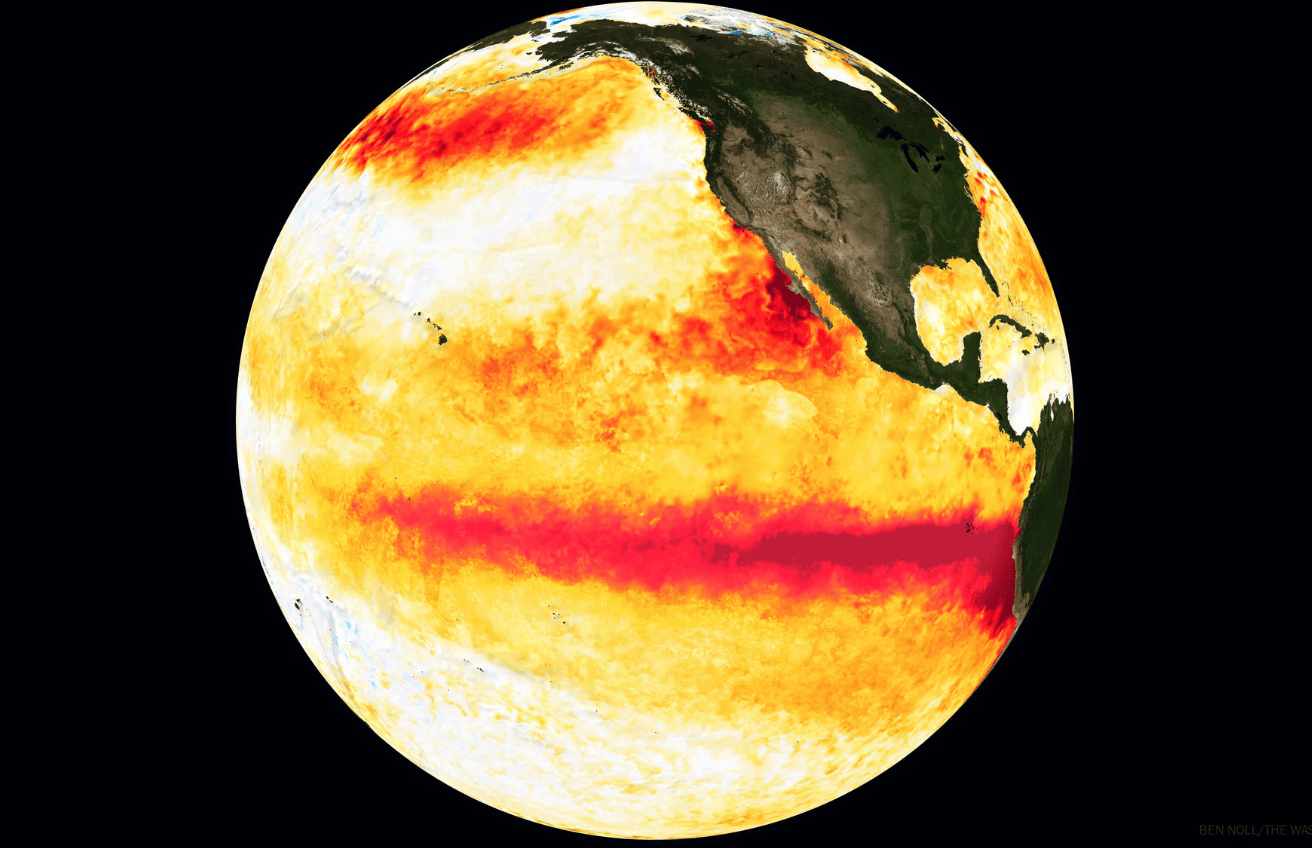
A powerful El Nino developing across the Pacific could contribute to more than 450,000 additional heat-related deaths worldwide over the next six months, according to a new research projection. The warning highlights how a natural climate pattern can become a severe public health threat, particularly in countries already facing extreme heat, limited healthcare resources, water shortages, and food insecurity.
The projection comes from the University of Chicago’s Climate Impact Lab and covers the period through February 2027. Researchers compared expected heat-related deaths during the current El Nino with the number that might occur during a typical year.
Their findings point to a stark global imbalance. While higher-income countries generally have greater access to cooling, reliable water supplies, and medical services, poorer and already-hot regions are expected to face a much heavier burden.
El Nino Could Bring A Major Increase In Extreme Heat
El Nino is a naturally occurring climate pattern that develops when unusually warm ocean temperatures in the central and eastern tropical Pacific influence weather around the world.
Its effects vary by region. Some areas can experience heavier rainfall, while others face drought, heat, or changing seasonal weather patterns. The current event, however, is expected to be unusually strong.
Researchers estimate that global land temperatures could rise by about 1.2 degrees Celsius, or 2.1 degrees Fahrenheit, compared with typical conditions. They also project that extremely hot days could occur 44 percent more frequently than in an average year.
That increase matters because heat exposure can place significant stress on the human body. The risks are particularly serious for older people, outdoor workers, people with limited access to cooling, and communities where healthcare systems are already under pressure.
Why El Nino Heat Risk Is Unequal
The projected health impact is not expected to be evenly distributed.
According to the Climate Impact Lab research, the African Sahel could record roughly 66,800 additional deaths associated with the extra heat. Nigeria alone accounts for an estimated 31,400 deaths in the projection.
Other countries facing substantial projected impacts include Indonesia, with about 19,300 additional deaths, and Sudan, with approximately 17,600.
Researchers also estimate around 19,400 additional deaths across the Philippines, Vietnam, Thailand, and Cambodia combined. India is projected to see about 15,800 additional deaths, while Brazil could experience approximately 13,300.
These numbers are projections rather than confirmed death counts. They represent an estimate of how many additional deaths could occur if the projected heat conditions materialize and are compared with expected mortality in a typical year.
The Biggest Risk Falls On Already-Hot Regions
Michael Greenstone, co-founder of the Climate Impact Lab and a co-author of the research, said the findings illustrate why extreme heat can become especially dangerous in poorer, hotter parts of the world.
Communities that already experience high temperatures have less room for additional warming before heat becomes dangerous. At the same time, households with limited financial resources may have fewer options for air conditioning, reliable electricity, clean water, medical care, or other forms of protection.
This creates a major difference in vulnerability.
A temperature increase that might be manageable for someone with reliable indoor cooling and access to healthcare can present a far greater risk for someone working outside, living without dependable electricity, or lacking access to sufficient water.
The issue is therefore not simply how hot temperatures become. Exposure, infrastructure, income, healthcare access, and preparedness all influence how extreme heat affects communities.
Heat Threats Could Continue After El Nino
One of the most important aspects of the research is its warning that the health effects may not end when El Nino itself weakens.
The current event began developing in June 2026. In early September, the United Nations weather agency reported a 100 percent likelihood that El Nino would continue through February 2027.
However, researchers say some consequences could persist beyond the event itself, potentially extending into the middle of 2027.
That longer timeline matters for governments and health authorities. Preparing only for the peak of an extreme weather event may not be enough if elevated temperatures, disrupted agriculture, water shortages, or strained health services continue afterward.
El Nino And Climate Change Are Increasing The Pressure
El Nino is a natural climate phenomenon, but scientists have increasingly examined how its effects interact with a warming planet.
The current event has been described by experts as unusually strong, while climate change is increasing the baseline temperature from which extreme heat events occur.
This distinction is important. El Nino itself is not the same thing as human-caused climate change. Instead, the two can interact, creating conditions in which an existing natural climate pattern produces more severe heat impacts against a warmer global background.
That combination can complicate disaster planning. Communities must prepare for both short-term climate variability and longer-term changes in average temperatures.
Preparedness Matters Beyond Heat Warnings
The projected death toll also raises questions about how governments respond to extreme heat.
Heat alerts can help people understand when conditions become dangerous. However, warnings are only one part of an effective response.
Authorities may also need systems that help vulnerable people access cooling spaces, water, healthcare, transportation, and timely information. Public health agencies can use heat forecasts to prepare hospitals and emergency services for increased demand.
Abhiyant Tiwari, a heat specialist at the Natural Resources Defense Council in India, told The Associated Press that the effectiveness of preparedness should be measured by whether it actually reduces preventable deaths.
That distinction is particularly important in countries where heat action plans already exist but implementation can be limited by funding, infrastructure, staffing, or access to services.
Extreme Heat Can Also Affect Food And Water Security
The consequences of a strong El Nino extend beyond direct health risks.
Changes in rainfall and temperature can affect agriculture, water availability, energy demand, and food prices. Farmers facing drought or excessive heat may struggle to maintain crop yields, while communities already experiencing food insecurity can become even more vulnerable.
This creates a chain of risks. Extreme heat can increase demand for electricity and water while simultaneously putting pressure on agricultural production and household budgets.
For lower-income communities, those pressures can compound existing problems rather than occurring independently.
What The El Nino Projection Means For 2027
The projected figure of more than 450,000 additional deaths is a warning about potential health impacts, not a prediction that this exact number of people will die.
Actual outcomes will depend on temperatures, regional weather conditions, public health interventions, access to cooling and water, healthcare capacity, and other factors.
Even so, the scale of the projection demonstrates why extreme heat is increasingly treated as a major public health concern rather than simply a weather inconvenience.
As the current El Nino continues into 2027, governments and communities will face the challenge of protecting people from heat while dealing with the wider effects of drought, water stress, food insecurity, and pressure on essential services.
Conclusion
The latest research on El Nino highlights the potentially severe human cost of extreme heat. More than 450,000 additional heat-related deaths are projected through February 2027, with poorer and already-hot regions expected to experience some of the greatest impacts.
The figures remain estimates, but they underline a broader lesson: effective heat preparedness requires more than issuing warnings. Access to water, healthcare, cooling, reliable infrastructure, and targeted support for vulnerable communities can all influence how safely people navigate increasingly dangerous heat conditions.








Comments are closed.