
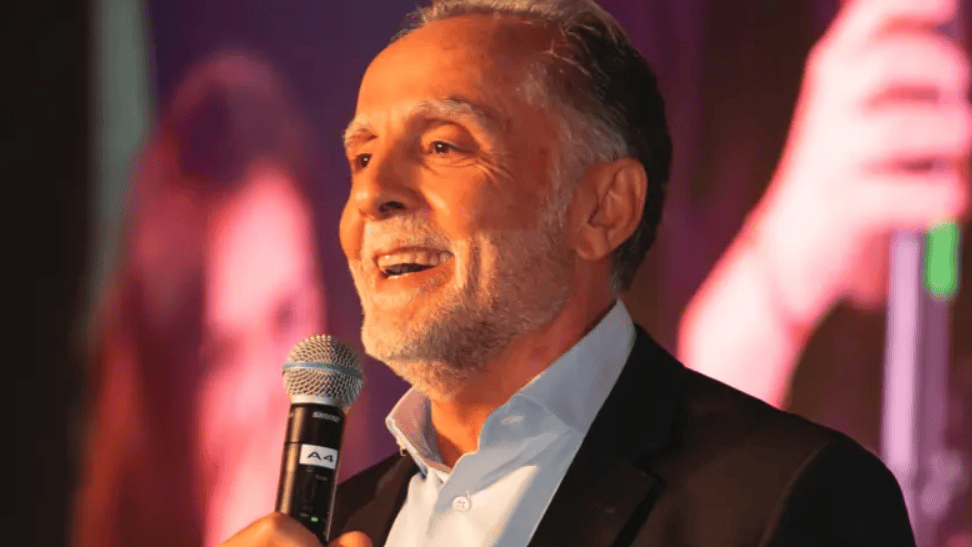
Some entrepreneurs build successful companies. Others create businesses that change how an entire region participates in the global economy.
Fadi Ghandour belongs to the second category.
As the co-founder of Aramex, Ghandour helped transform a regional courier business into an international logistics company. He also became one of the most influential figures in Middle Eastern entrepreneurship, supporting emerging businesses, investing in technology and promoting social development across the region.
His entrepreneurial journey began in 1982, when global logistics was dominated by established international companies and reliable delivery networks remained limited across much of the Middle East. Rather than accepting those limitations, Ghandour saw an opportunity to build a business around the region’s growing need for dependable transportation and delivery services.
More than four decades later, his influence extends far beyond the logistics industry. Through investments, mentorship and social initiatives, he has helped create opportunities for a new generation of entrepreneurs.
For October 2026, Camel Move Magazine’s Entrepreneur of the Month is Fadi Ghandour, a businessman whose career demonstrates how regional knowledge, calculated risk-taking and long-term thinking can turn a local opportunity into an international business story.
Before Aramex: The Early Influences Behind an Entrepreneur
Fadi Ghandour was born in Beirut, Lebanon, in 1959. His early life and education helped shape the international outlook that would later influence his business career.
He studied political science at George Washington University in the United States, graduating in 1981. His education exposed him to different political, economic and cultural perspectives at a time when international trade and global business relationships were becoming increasingly important.
However, Ghandour did not follow a conventional corporate career path.
Instead, he became interested in the practical challenges facing businesses in the Middle East. He recognised that international commerce depended on more than producing and selling goods. Companies also needed reliable ways to move documents, packages and products across borders.
At the time, established international courier companies had limited direct infrastructure in several regional markets. Local postal services often struggled to meet the requirements of businesses operating internationally.
This created a commercial opportunity.
Ghandour recognised that the Middle East needed better connections with international delivery networks. More importantly, he believed a regional company could understand local markets while working with major international operators.
That idea would become the foundation of Aramex.
The Idea Behind Aramex
In 1982, Fadi Ghandour and American entrepreneur Bill Kingson co-founded Arab American Express, which later became known as Aramex.
The original business focused on providing express courier services between North America and the Middle East. Rather than immediately competing with the largest international delivery companies, Aramex developed relationships with established courier operators and helped connect their services to regional markets.
It was a practical approach to entering a competitive industry.
The founders understood that building an international delivery network required substantial resources, infrastructure and local knowledge. Instead of attempting to replicate everything established competitors had already developed, they concentrated on creating value within a market they understood.
Aramex gradually developed its regional capabilities and strengthened its position in the transportation and logistics sector.
The company was not simply moving parcels.
It was helping businesses overcome the geographical and operational barriers that limited international trade.
For Ghandour, the opportunity was much bigger than delivering packages. He was building a business that could connect the Middle East with the wider commercial world.
From Regional Startup to International Logistics Company
Building Aramex was not an overnight success.
The company entered an industry dominated by established international competitors with greater financial resources and larger operational networks.
To survive, Aramex needed a clear strategy.
Ghandour focused on identifying markets where the company could offer something different. Its understanding of regional business conditions became an important advantage.
The company developed relationships with international courier operators while strengthening its own delivery capabilities across the Middle East and neighbouring markets.
This approach allowed Aramex to expand without immediately taking on the enormous costs associated with building a traditional global transportation network.
However, the business also needed to keep adapting.
International trade was changing, customer expectations were rising and companies increasingly required more sophisticated logistics solutions.
Aramex responded by expanding beyond basic courier services.
Its operations gradually developed to include freight forwarding, supply chain management, express delivery and other logistics services.
Technology also became an important part of the company’s development.
The ability to track shipments, coordinate deliveries and manage international transportation networks became increasingly important as customers demanded greater visibility and reliability.
Aramex understood that successful logistics depended not only on moving goods but also on managing information efficiently.
That approach helped the company compete in an industry where operational performance and customer trust were essential.
A Historic Achievement: Aramex Lists on Nasdaq
One of the defining moments in Fadi Ghandour’s entrepreneurial career came in 1997.
That year, Aramex became the first Arab-based company to list on the Nasdaq stock exchange.
The achievement carried significance beyond the company’s financial performance.
At a time when relatively few businesses from the Arab world attracted international attention in major financial markets, Aramex demonstrated that a company built in the Middle East could compete on a global stage.
The Nasdaq listing also provided international visibility and marked an important milestone for regional entrepreneurship.
However, the company’s corporate journey did not end there.
In 2002, Aramex returned to private ownership through a management buyout. Three years later, in 2005, it listed on the Dubai Financial Market.
The move reflected another important stage in the company’s development and its relationship with regional capital markets.
For Ghandour, the experience demonstrated that building a successful company involves more than launching a product or attracting customers.
It also requires understanding capital, ownership structures, investor expectations and the different stages of business growth.
Aramex’s journey became an example of how an emerging-market company could establish itself internationally while maintaining strong regional foundations.
The Entrepreneurial Philosophy Behind Ghandour’s Success
Fadi Ghandour’s approach to entrepreneurship has been shaped by practical experience rather than a rigid business formula.
His career demonstrates the importance of recognising opportunities that larger competitors may overlook.
When Aramex started, the founders did not have the same resources as established international logistics companies. They therefore needed to identify a market where their understanding of regional conditions could provide a competitive advantage.
This required patience, experimentation and a willingness to learn.
Ghandour has spoken about the importance of recognising opportunities, building relationships and developing the right people around a business.
He has also emphasised that successful entrepreneurship is rarely the achievement of one individual.
Although founders provide direction, employees, partners and customers contribute to the company’s long-term development.
That perspective became particularly important as Aramex expanded across different countries and markets.
Managing an international company requires more than a strong original idea. It demands the ability to build teams, establish systems and adapt to different commercial environments.
For Ghandour, entrepreneurship was a continuous process of learning and improvement.
Beyond Logistics: Investing in the Next Generation
After spending approximately three decades leading Aramex, Ghandour increasingly turned his attention towards another major opportunity: developing the Middle East’s entrepreneurial ecosystem.
He recognised that the region had talented founders, innovative ideas and growing consumer markets.
However, many promising businesses struggled to obtain the investment, mentorship and professional networks required to grow.
Access to early-stage funding remained a challenge. Entrepreneurs also needed guidance on business strategy, market expansion, recruitment and international competition.
Ghandour believed that experienced business leaders could play an important role in addressing these gaps.
His involvement in technology investments and startup development became an important part of his next entrepreneurial chapter.
One notable example was his early investment in Maktoob, an Arabic-English internet portal founded by Samih Toukan and Hussam Khoury.
Ghandour became a founding investor in the company, recognising the potential of internet services designed for Arabic-speaking audiences.
In 2009, Yahoo acquired Maktoob in a landmark transaction that brought international attention to the region’s emerging technology sector.
The acquisition demonstrated that Middle Eastern technology businesses could attract major international companies and investors.
It also reinforced Ghandour’s belief that the region’s next generation of successful businesses would increasingly emerge from technology and innovation.
Building Wamda: Supporting Middle Eastern Entrepreneurs
Ghandour’s commitment to entrepreneurship developed further through Wamda.
Wamda grew into a platform focused on supporting entrepreneurs and strengthening startup ecosystems across the Middle East and North Africa.
Its activities include investment, business development, research and initiatives designed to connect founders with the resources they need to grow.
Through Wamda and its investment activities, Ghandour has supported the development of a more connected regional business environment.
The underlying idea is straightforward.
A successful entrepreneurial ecosystem needs more than individual business owners with good ideas.
It also requires investors, experienced mentors, skilled employees, supportive institutions and access to international markets.
When these elements work together, startups have a better opportunity to develop into sustainable businesses.
This is particularly important in the Middle East, where entrepreneurs operate across markets with different regulatory systems, consumer behaviours and economic conditions.
Wamda’s work reflects Ghandour’s belief that building the next generation of successful companies requires a long-term commitment to the people and institutions behind them.
Rather than focusing exclusively on individual investments, the broader objective is to strengthen the environment in which entrepreneurs operate.
Ruwwad: Connecting Entrepreneurship With Social Impact
Another important chapter in Ghandour’s career is his involvement in social entrepreneurship.
In 2005, he helped establish Ruwwad for Development, a community development initiative that uses private-sector experience and resources to address social challenges.
The organisation focuses on education, youth development, community participation and opportunities for disadvantaged groups.
Its work extends across several countries in the Middle East, including Jordan, Lebanon, Egypt and Palestine.
Ruwwad operates on an important principle: communities should participate directly in identifying their challenges and developing solutions.
Education plays a central role in this approach.
By supporting young people and encouraging community involvement, the organisation seeks to create opportunities that can have lasting effects beyond individual projects.
This reflects a broader understanding of entrepreneurship.
Business experience can contribute to society in ways that go beyond creating commercial value.
The same skills used to build companies, organise teams and manage resources can also help address social problems.
For Ghandour, supporting communities is not separate from his entrepreneurial interests. It forms part of his wider belief that sustainable economic development depends on stronger societies and greater access to opportunity.
A Different Understanding of Business Success
Traditional business performance is often measured through revenue, market share, profitability and shareholder value.
These indicators remain important. However, Ghandour’s career illustrates a broader perspective.
A company can create value through employment, technology, international trade and the development of local business capabilities.
Similarly, an investment can produce benefits beyond its financial return when it helps an emerging entrepreneur establish a sustainable business.
This perspective has become increasingly relevant across the Middle East.
The region faces significant economic and social challenges, but it also has a growing population of young people, expanding digital markets and entrepreneurs looking to build businesses that serve both regional and international customers.
Creating the conditions for those businesses to succeed requires collaboration between the private sector, investors, educational institutions and governments.
Ghandour’s work across Aramex, Wamda and Ruwwad demonstrates three different ways business leadership can contribute to that process.
One builds commercial infrastructure.
Another supports innovation and investment.
The third focuses on community development and social opportunity.
Together, they represent a wider vision of entrepreneurship.
The Middle Eastern Advantage
One of the most important lessons from Ghandour’s career is the value of understanding the market in which a business operates.
Aramex did not succeed by simply copying the operating model of international competitors.
It developed around the specific needs of businesses in the Middle East and used that regional understanding as a foundation for international growth.
This is an important lesson for entrepreneurs today.
Many founders believe that successful businesses must begin by targeting the largest possible market.
However, a more effective strategy can involve identifying a specific problem in a market they understand particularly well.
A company that solves that problem effectively can then explore opportunities in other countries.
The Middle East offers considerable potential for businesses operating in logistics, financial technology, e-commerce, education, healthcare and digital services.
However, regional expansion requires careful planning.
Differences in regulation, infrastructure, consumer behaviour and purchasing power can influence how a business performs in each market.
Ghandour’s experience demonstrates why local knowledge should not be treated as a limitation.
When combined with international ambition, it can become a powerful competitive advantage.
What Entrepreneurs Can Learn From Fadi Ghandour
Fadi Ghandour’s career offers several practical lessons for anyone looking to establish or grow a business.
1. Identify a Real Market Problem
Aramex began by addressing a genuine weakness in regional delivery services.
Rather than creating a product simply because it was commercially interesting, Ghandour focused on a problem that businesses already experienced.
Entrepreneurs should begin by understanding what customers need and where existing services fall short.
A strong business idea usually starts with a problem worth solving.
2. Use Your Competitive Advantage
Aramex could not initially compete with the largest international courier companies on financial resources or infrastructure.
Instead, it used its knowledge of the Middle East to develop a position in an underserved market.
This demonstrates why entrepreneurs should understand their own strengths before entering a competitive industry.
Those strengths may include local knowledge, specialist expertise, customer relationships or a better understanding of a particular audience.
3. Build Relationships That Support Growth
International business depends on trust and cooperation.
Aramex developed through relationships with courier operators, business customers and partners.
These connections helped the company expand its capabilities and reach new markets.
For startups, building a strong professional network can be just as important as securing initial funding.
4. Think Beyond the First Business
Ghandour’s career did not end with Aramex.
He continued to explore opportunities through technology investments, venture capital and social entrepreneurship.
His experience shows that entrepreneurial thinking can be applied across different industries and stages of business development.
A founder’s experience can become a valuable resource for other companies and future generations of entrepreneurs.
5. Invest in People and Innovation
Companies cannot grow sustainably without capable employees, effective leadership and continuous improvement.
Aramex’s expansion required people who understood local markets and could manage increasingly complex operations.
Likewise, the development of startup ecosystems depends on experienced mentors, skilled teams and investors willing to support promising ideas.
6. Understand the Wider Impact of Business
Commercial success creates opportunities, but business leaders also influence the communities in which they operate.
Ghandour’s work with Ruwwad demonstrates how private-sector experience can contribute to education, community development and social inclusion.
Entrepreneurs should consider not only what their companies produce but also the wider effects of their decisions.
The Road Ahead: A New Generation of Middle Eastern Entrepreneurs
The Middle East’s entrepreneurial environment continues to evolve.
Digital transformation, artificial intelligence, e-commerce, financial technology and changing consumer habits are creating new opportunities for businesses across the region.
At the same time, founders face familiar challenges.
Access to capital, regulatory differences, competition for skilled employees and the difficulty of expanding across borders remain important obstacles.
The next generation of regional entrepreneurs will need to combine technological knowledge with commercial discipline.
They will also need to understand international markets and develop businesses capable of adapting to changing economic conditions.
Ghandour’s continued involvement in Wamda reflects the importance of creating stronger connections between founders, investors and the wider business community.
His experience offers a useful perspective for entrepreneurs navigating this changing environment.
The challenge is not simply to launch more startups.
It is to build companies that solve meaningful problems, create employment, attract investment and remain competitive over time.
That requires patience, sound management and a willingness to learn from experience.
It also requires an ecosystem that gives talented founders a genuine opportunity to succeed.
The Entrepreneur of October
Fadi Ghandour’s entrepreneurial story is ultimately about building connections.
He began by identifying a gap in the Middle Eastern logistics market and turned that opportunity into Aramex, an international business that challenged established industry leaders.
He then used his experience to support emerging technology companies, invest in entrepreneurs and strengthen the regional startup ecosystem.
Through Wamda, he has helped connect founders with investment and business expertise. Through Ruwwad, he has demonstrated how entrepreneurship and private-sector leadership can contribute to community development.
His career also highlights an important distinction between building a successful company and building a lasting entrepreneurial legacy.
The first requires identifying an opportunity and executing a business plan.
The second involves sharing knowledge, supporting other people and creating opportunities that continue beyond the original business.
For Camel Move Magazine’s October 2026 Entrepreneur of the Month, Fadi Ghandour represents a generation of Middle Eastern business leaders who have looked beyond traditional market boundaries.
His journey shows that international success does not always begin in the world’s largest economies or established business centres.
Sometimes, it starts with recognising a problem that others have overlooked.
From a regional courier startup to an international logistics business, and from private investment to community development, Ghandour’s career demonstrates how one entrepreneurial vision can influence several industries.
His contribution is not limited to the company he helped build.
It also lies in the opportunities he has helped create for others.
Fadi Ghandour’s story is a reminder that great entrepreneurship is not only about building a successful business. It is also about creating the conditions for others to succeed.











Comments are closed.