
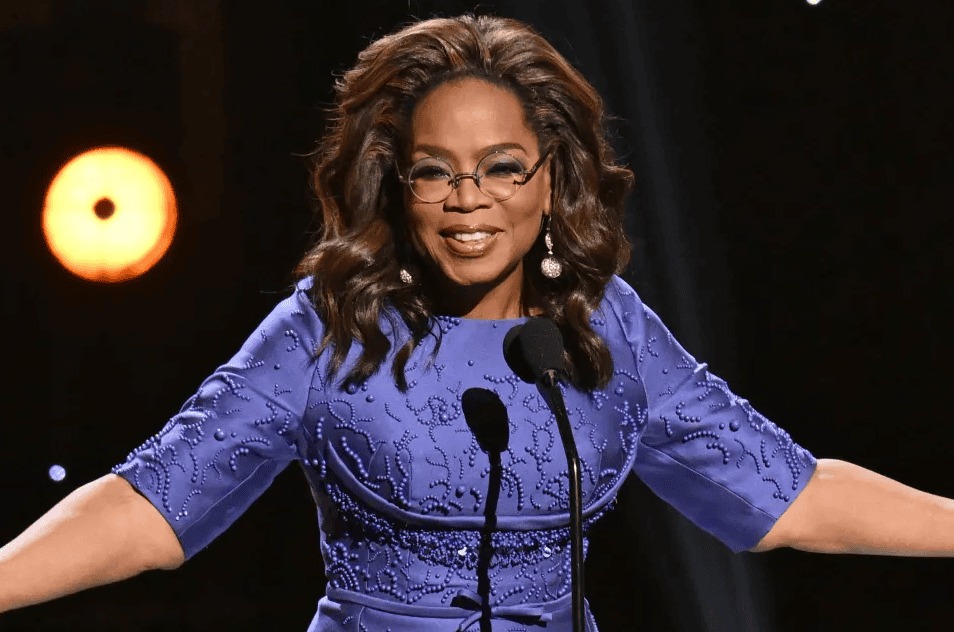
Few entrepreneurs have transformed personal storytelling into a global business empire as successfully as Oprah Winfrey. What began with a career in local television evolved into one of the most influential media brands in modern history, spanning television, film, publishing, production, and philanthropy.
As the creator of The Oprah Winfrey Show and founder of Harpo Productions, Winfrey did more than become one of television’s most recognizable personalities. She changed the relationship between audiences and media—and built an extraordinary business around that connection.
From Television Host to Cultural Force
Oprah Winfrey’s rise was anything but conventional. After beginning her broadcasting career at a young age, she eventually moved into television in Chicago, where she took over a struggling talk show.
Under her leadership, the program was transformed into The Oprah Winfrey Show. What initially appeared to be another daytime talk program became a cultural phenomenon, attracting millions of viewers and running for 25 years.
Winfrey’s greatest advantage was her ability to connect with people. She understood that audiences did not simply want information—they wanted stories, empathy, honesty, and conversations that reflected their own lives.
That insight became the foundation of her business empire.
Building Harpo Productions
In 1986, Winfrey founded Harpo Productions, giving herself greater creative and financial control over the content associated with her name.
The decision represented a turning point in her career. Rather than remaining simply the face of a successful television program, Winfrey became the entrepreneur behind the business.
Harpo went on to produce television programs, films, and other media projects, allowing Winfrey to expand her influence beyond the talk-show format.
This move demonstrated one of the defining principles of her career: owning the platform can be just as important as being the star of it.
The Oprah Effect
Winfrey’s influence eventually became so powerful that her recommendations could transform the fortunes of books, products, films, and businesses.
The phenomenon became known as the “Oprah Effect.” A book selected for her famous book club could become a bestseller almost overnight, while products featured on her program could experience extraordinary increases in consumer demand.
This was more than celebrity influence. Winfrey had built something extremely valuable: trust.
Her audience believed in her judgment, creating a relationship between personality and consumer behavior that would later become a defining feature of modern influencer and creator economies.
Expanding the Empire
Winfrey continued to diversify her business interests across media and entertainment.
She became involved in film and television production, launched O, The Oprah Magazine, and later co-founded the television network OWN — Oprah Winfrey Network with Discovery.
Through these ventures, Winfrey demonstrated how a personal brand could evolve into a complete media ecosystem.
Her strategy was remarkably ahead of its time. Long before creators and influencers began building businesses across multiple platforms, Winfrey was already turning her audience, storytelling ability, and reputation into a diversified global enterprise.
Entrepreneurship Built on Authenticity
Perhaps the most important lesson from Winfrey’s career is that her business success was closely connected to authenticity.
She did not attempt to separate her personality from her companies. Instead, her values, interests, and communication style became part of the brand itself.
This created an unusually strong connection with audiences and helped distinguish her media empire in an increasingly competitive industry.
For modern entrepreneurs, Winfrey’s career offers a powerful example of how trust and authenticity can become valuable business assets when combined with ownership and strategic thinking.
Beyond Media
Winfrey’s influence extends far beyond entertainment.
Through the Oprah Winfrey Foundation, educational initiatives, and numerous philanthropic efforts, she has invested significant resources in causes including education, women’s empowerment, and community development.
Her philanthropic work demonstrates another dimension of modern entrepreneurship: the ability to use business success as a platform for broader social impact.
Challenges and Reinvention
Building a media empire across decades has required constant adaptation. The television industry has experienced enormous changes, from the decline of traditional daytime television to the rise of streaming, social media, and on-demand content.
Rather than allowing these changes to define her relevance, Winfrey repeatedly reinvented her approach.
Her career demonstrates that long-term entrepreneurial success is not simply about creating something successful once. It is about recognizing when the environment is changing—and having the courage to change with it.
A Blueprint for Modern Media Entrepreneurs
Today, personal brands are among the most powerful assets in the digital economy. Influencers launch companies, creators produce their own shows, and entrepreneurs communicate directly with millions of followers.
In many ways, Oprah Winfrey pioneered this model decades before social media existed.
She demonstrated that an individual could become the center of a media ecosystem, maintain direct audience trust, own intellectual property, and turn cultural influence into sustainable businesses.
Looking Ahead
Oprah Winfrey’s legacy is no longer defined by one television show. It is defined by an entrepreneurial philosophy built around storytelling, ownership, authenticity, and influence.
From daytime television to global media, she transformed her voice into an empire—and in the process, changed what it meant to be a media entrepreneur.
As Camel Move Magazine’s Entrepreneur of the Month for August, Oprah Winfrey represents the extraordinary power of turning a personal talent into a lasting institution. Her story is a reminder that the strongest businesses are not always built around products alone—they can be built around ideas, trust, and the ability to make people feel heard.















Comments are closed.