
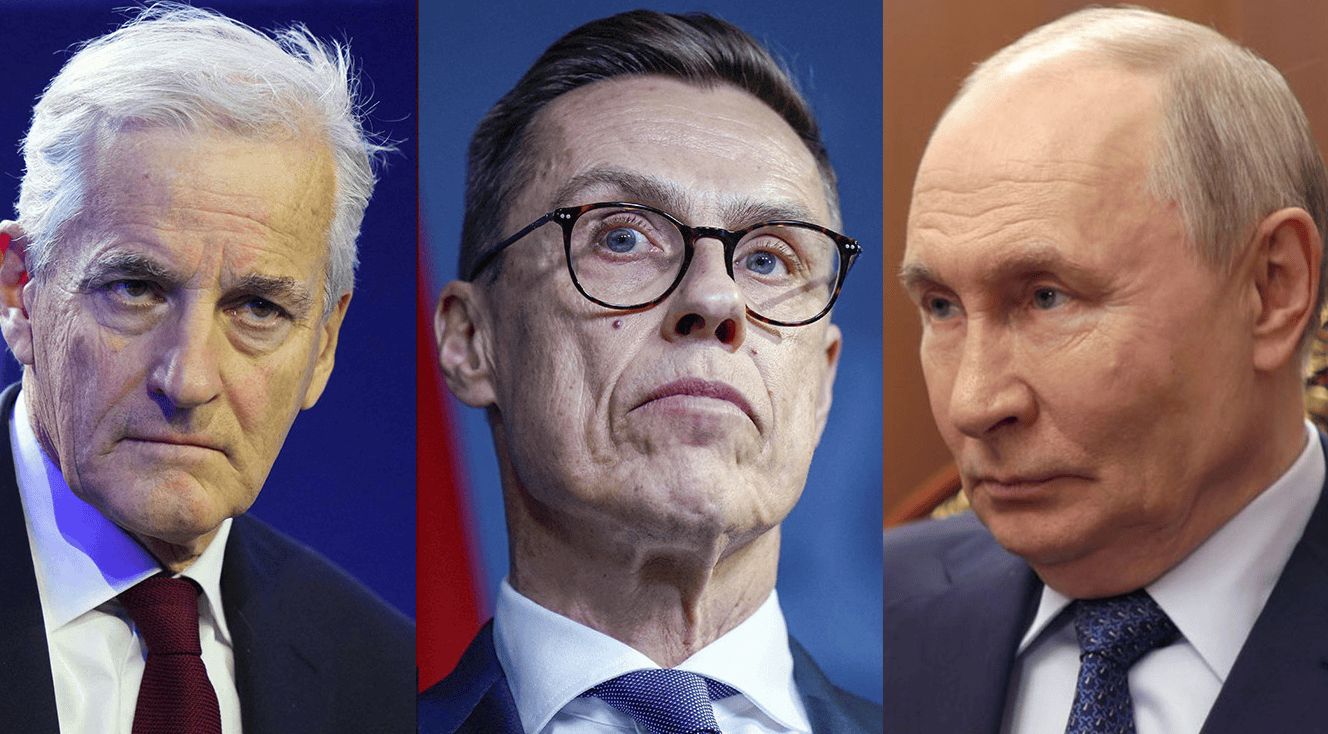
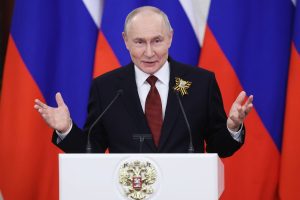
Finland’s President Alexander Stubb and Norway’s Prime Minister Jonas Gahr Støre have held a rare joint call with Russian President Vladimir Putin, seeking to convey messages directly ahead of potential new negotiations to end the war in Ukraine.
The leaders of Finland and Norway have held a 90-minute telephone conversation with Vladimir Putin in an effort to advance diplomatic efforts to end Russia’s war against Ukraine.
The call marks an unusual instance of direct engagement between the Russian president and European leaders, as diplomatic efforts intensify ahead of proposed peace negotiations involving Russia, Ukraine and the United States.
Stubb and Støre said their objective was to communicate directly with Putin about the prospects for future negotiations. Both stressed, however, that they were acting in their national capacities rather than representing Europe as a whole.
“An end to the conflict in Ukraine will not be achieved through silence,” Stubb said, describing his conversation with Putin as frank and substantive.
Støre acknowledged that significant disagreements remained, saying the leaders continued to have “big differences in views” with the Russian president.
Neither side indicated that the conversation had produced a breakthrough toward ending the war, which began with Russia’s full-scale invasion of Ukraine in February 2022.
Nordic Leaders Seek Direct Contact With Moscow
Finland and Norway initiated the call to discuss Russia’s war against Ukraine and diplomatic efforts to promote peace and stability in Europe.
Both countries share borders with Russia, placing them at the centre of the region’s security concerns. Their geographical proximity, the leaders said, was an important reason for pursuing direct communication with Moscow.
Stubb and Støre emphasised that they had not been appointed to negotiate on behalf of other European governments.
“We’ve not set out to speak on behalf of anyone other than ourselves,” Støre said.
Stubb added that the conversation had been prepared in consultation with Ukraine and the United States following a meeting in Oslo the previous week involving Ukrainian President Volodymyr Zelensky, the Nordic leaders and US special envoy Steve Witkoff.
The initiative reflects growing interest among some European governments in restoring direct communication channels with the Kremlin as diplomatic discussions over Ukraine continue.
Putin Repeats Russia’s Conditions for Peace
According to the Kremlin, Putin told the Nordic leaders that a lasting peace agreement would require Russia’s interests to be fully taken into account.
The Russian president reiterated what Moscow describes as the “root causes” of the conflict, a formulation frequently used by the Kremlin to justify its demands concerning Ukraine’s security arrangements and political future.
Putin maintained that a fair and lasting settlement would only be possible if Russia’s stated interests were addressed.
Ukraine and its European partners have repeatedly challenged Moscow’s justification for the invasion and defended Ukraine’s sovereignty and territorial integrity.
The statements following the call suggest that the fundamental disagreements between Russia and Ukraine remain unresolved, despite renewed diplomatic activity.
Zelensky Welcomes the Initiative
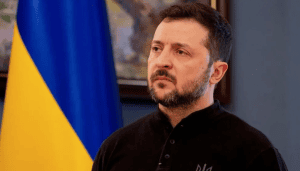
Zelensky confirmed that Stubb and Støre briefed him following their conversation with Putin.
The Ukrainian president expressed gratitude for their continued support, while Foreign Minister Andrii Sybiha described the decision to engage directly with Moscow as the right approach.
Ukraine’s involvement in the preparations was significant, given Kyiv’s insistence that negotiations about the country’s future must include Ukrainian representatives.
The Nordic leaders’ initiative did not replace Ukraine’s own diplomatic efforts or establish a new negotiating framework. Instead, it provided an additional channel through which messages could be communicated directly to the Kremlin.
Proposed US-Ukraine-Russia Talks in Abu Dhabi
The phone call comes as preparations continue for potential trilateral negotiations involving the United States, Ukraine and Russia.
The first such talks since the beginning of the year are tentatively planned for early November in Abu Dhabi, although the timing and details remain subject to confirmation.
Stubb reportedly informed Polish Prime Minister Donald Tusk that Europe’s assessment of the upcoming discussions was moderately optimistic.
However, expectations remain cautious, given the continuing disagreements over the conditions required to end the war.
The proposed talks could provide an opportunity to address those differences, but no agreement has yet been announced that would guarantee a cessation of hostilities.
Europe Divided Over Direct Engagement With Putin
The Nordic leaders’ call has also exposed differing views among European governments over how best to approach Moscow.
There was no official European Union reaction to the conversation, and the initiative had not been coordinated with all European leaders.
Swedish Prime Minister Ulf Kristersson expressed reservations about separate diplomatic initiatives, arguing that European governments should maintain a united position rather than pursue individual approaches.
Other European leaders have increasingly argued that the continent needs to restore direct communication with Russia to ensure it has a role in decisions affecting European security.
The debate has intensified as the United States pursues its own diplomatic approach and European governments seek to maintain influence over negotiations concerning Ukraine.
Russia has frequently criticised European countries for supplying weapons to Ukraine, accusing them of prolonging the conflict. At the same time, the Kremlin has recently indicated that including a European representative in peace negotiations could be beneficial.
Kremlin spokesman Dmitry Peskov described the discussions between Putin and the Nordic leaders as constructive and practical, while noting that Moscow did not consider the two leaders representatives of Europe as a whole.
A Rare Diplomatic Opening, With Major Obstacles Remaining
Stubb and Støre were the first European leaders to contact Putin directly since French President Emmanuel Macron spoke with the Russian president in July 2025.
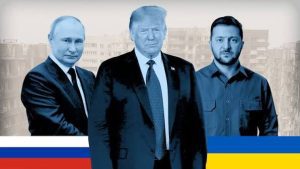
That earlier conversation was followed by Putin’s summit with US President Donald Trump in Alaska, after which European governments faced concerns about being sidelined in discussions over Ukraine’s future.
The latest call suggests that some European leaders are seeking to re-establish direct channels to Moscow as negotiations regain momentum.
Nevertheless, the conversation has not resolved the central disputes over territory, security guarantees and the conditions for a lasting settlement.
For Finland and Norway, the initiative represents an attempt to use direct diplomacy to address a conflict with significant consequences for their regional security.
Whether the renewed communication leads to substantive negotiations will depend on the willingness of Russia, Ukraine and their international partners to move beyond exchanging positions and agree on concrete terms.
For now, the call represents a rare diplomatic contact rather than a breakthrough, with the prospects for peace still uncertain.


Comments are closed.