
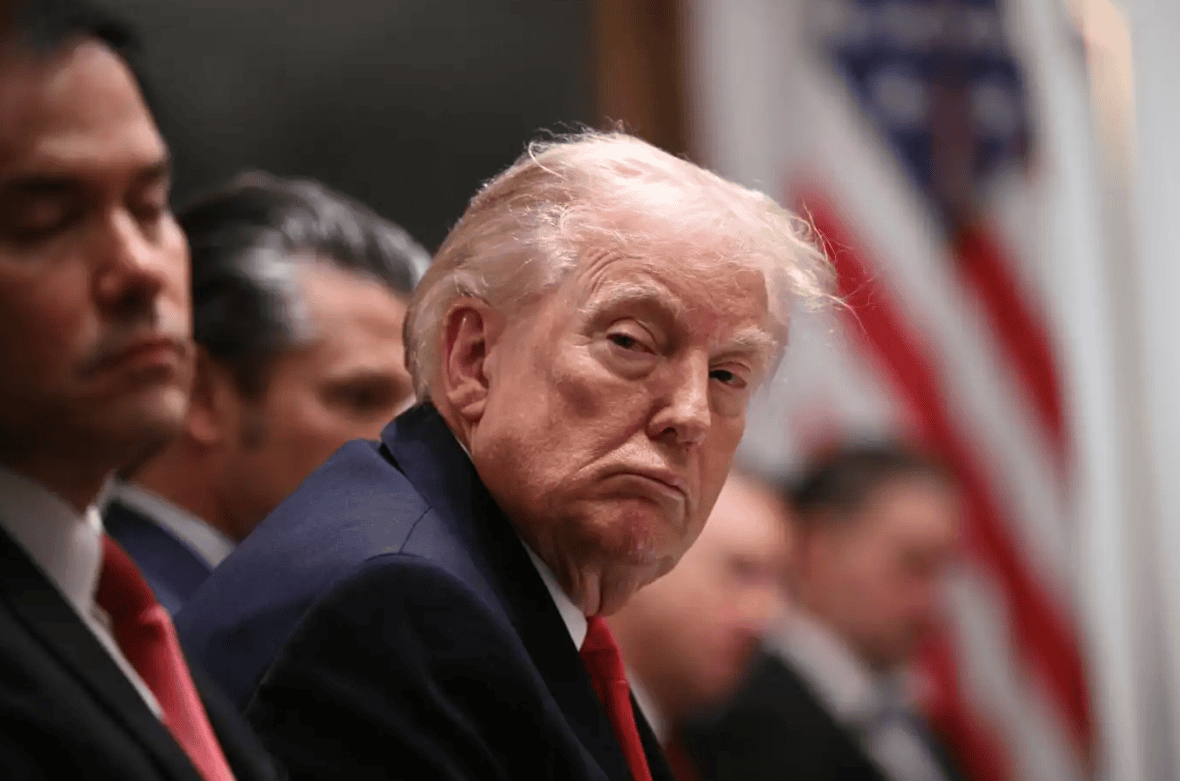
Donald Trump has sparked widespread criticism following a controversial exchange about his personal fortune during a televised interview with CBS News. Asked about reports that his net worth had increased by approximately $3 billion since returning to the White House, the US president offered a brief response that quickly attracted attention online: “Well, so did everyone’s.”
The exchange took place during an interview with 60 Minutes correspondent Ross Douthat, who questioned Trump about the reported growth in his wealth. When Douthat pointed out that his own net worth had not increased by anything close to that amount, Trump responded: “You should have had stock.”
The comments quickly generated criticism across social media, with several users describing the president’s response as disconnected from the financial pressures facing ordinary Americans. The controversy has also renewed attention on Trump’s business interests, cryptocurrency ventures and the significant increase in his reported personal wealth during his second presidential term.
Trump Responds to Questions About His $3 Billion Wealth Increase
During the 60 Minutes interview, Ross Douthat raised a Forbes report estimating that Trump’s net worth had increased by around $3 billion since his return to the presidency.
Trump initially appeared to dismiss the significance of the figure, suggesting that other people’s wealth had increased by similar amounts.
However, Douthat quickly challenged that suggestion, pointing out that his own financial position had not experienced anything comparable.
“Well, you should have had stock,” Trump replied.
The brief exchange became one of the most widely discussed moments from the interview, particularly because of the contrast between the president’s reported financial gains and the economic concerns affecting many American households.
When Douthat continued questioning him about the increase, Trump said he devoted almost no time to monitoring his personal fortune. He also explained that one of his sons oversees his finances.
The exchange has since become a talking point in discussions about presidential wealth, financial transparency and the relationship between political leadership and private business interests.
How Did Trump’s Net Worth Increase by $3 Billion?
The figures discussed during the interview relate to estimates of Trump’s growing personal fortune since returning to the White House in January 2025.
According to Forbes estimates, his net worth increased from approximately $4.3 billion in 2024 to around $7.3 billion in September 2025. However, the sources behind that growth are more complicated than Trump’s brief reference to stock market investments suggested.
A November 2026 PolitiFact analysis examined the president’s financial disclosures and found that cryptocurrency-related ventures accounted for a substantial proportion of his reported financial gains.
The analysis identified approximately $1.4 billion connected to cryptocurrency businesses, including World Liberty Financial and cryptocurrency tokens associated with the Trump family.
Other reported earnings came from real estate, licensing agreements, branded merchandise and legal settlements.
Forbes editor Dan Alexander also challenged the suggestion that stock market investments explained most of the increase. His analysis indicated that stock holdings represented only a relatively small portion of Trump’s financial gains.
This distinction is important because the president’s response appeared to suggest that ordinary investors could have experienced comparable increases simply by owning stocks.
In reality, the reported growth involved several different business activities and financial interests.
Social Media Users Criticize Trump’s ‘You Should Have Had Stock’ Remark
Following the broadcast, clips of the exchange circulated widely across social media, attracting criticism from users who questioned the president’s understanding of the financial challenges facing everyday Americans.
Some commentators described the response as particularly insensitive at a time when households continue to deal with expenses involving groceries, housing, healthcare and other essential costs.
One social media user described the exchange as potentially one of the most out-of-touch moments in American political history.
Another highlighted the contrast between Trump’s reported wealth increase and the financial difficulties experienced by ordinary families, questioning the suggestion that simply owning stocks could produce comparable results.
Others drew comparisons with the famous phrase “Let them eat cake”, using it to criticize what they viewed as a lack of awareness about economic inequality.
The reactions reflected broader concerns about the gap between wealthy individuals and households struggling to manage everyday expenses.
However, the criticism was not limited to the president’s choice of words. Trump’s explanation of how his fortune increased also attracted attention, particularly following questions about the role of cryptocurrency ventures in his financial activities.
Trump’s Business Interests Face Renewed Scrutiny
The interview has brought renewed attention to the relationship between Trump’s presidency and his family’s business interests.
His financial activities have attracted considerable scrutiny, particularly because of the family’s involvement in cryptocurrency ventures and other commercial operations.
World Liberty Financial, a cryptocurrency business connected to the Trump family, has been among the most discussed examples.
Financial disclosures and independent reporting have raised questions about the scale of revenue generated through these ventures and the potential implications of a sitting president maintaining connections to private commercial interests.
During the interview, Trump said he paid little attention to his personal finances and that his son managed the money. However, his comments did little to end questions about the sources of his growing fortune.
The issue is particularly significant because presidential financial interests can raise questions about transparency, potential conflicts of interest and public accountability.
These concerns have become an increasingly prominent part of the political discussion surrounding Trump’s second administration.
Republicans Face Additional Political Pressure After Midterm Losses
The controversy arrives during a difficult political period for Republicans following the 2026 midterm elections.
Democrats secured control of both the House of Representatives and the Senate, creating a significantly different political environment for the remainder of Trump’s presidency.
The change in congressional control gives Democrats greater opportunities to investigate administration decisions, challenge legislation and exercise oversight through congressional committees.
It has also renewed discussion about impeachment, although any such effort would face its own political and constitutional challenges.
Trump’s latest comments have therefore attracted attention beyond the immediate discussion about his personal fortune.
For critics, the exchange represents another opportunity to question the administration’s economic messaging and its connection with voters concerned about living costs.
Meanwhile, the president’s supporters may view the criticism as another example of political opponents focusing on his personal wealth rather than his broader economic agenda.
Trump’s Wealth and the Cost of Living Debate
The wider significance of the interview extends beyond one controversial television exchange.
For many Americans, the cost of living remains a central political concern. Housing expenses, grocery prices, healthcare costs and household bills continue to shape discussions about economic policy and financial security.
Against that background, a reported multibillion-dollar increase in a president’s personal fortune naturally attracts public attention.
The distinction between personal investment gains and the financial circumstances of ordinary households is also important. While stock ownership can contribute to long-term wealth accumulation, access to investment opportunities varies considerably depending on income, savings and financial circumstances.
Trump’s suggestion that Douthat should have owned stocks therefore became a particularly memorable moment in an interview already focused on the president’s growing fortune.
Ultimately, the reaction demonstrates how personal wealth, financial transparency and economic inequality remain closely connected to public perceptions of political leadership.
As scrutiny of the administration continues following the midterm elections, Trump’s financial interests are likely to remain part of the wider national conversation.















Comments are closed.