
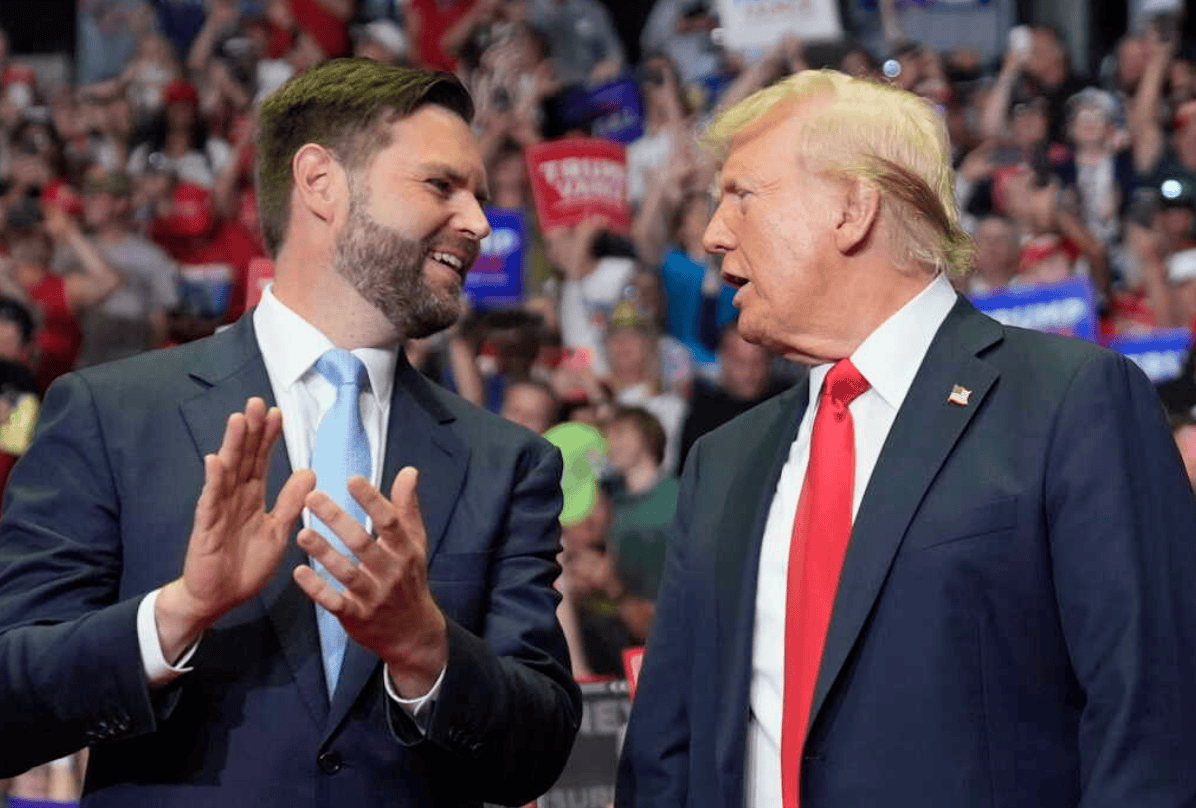
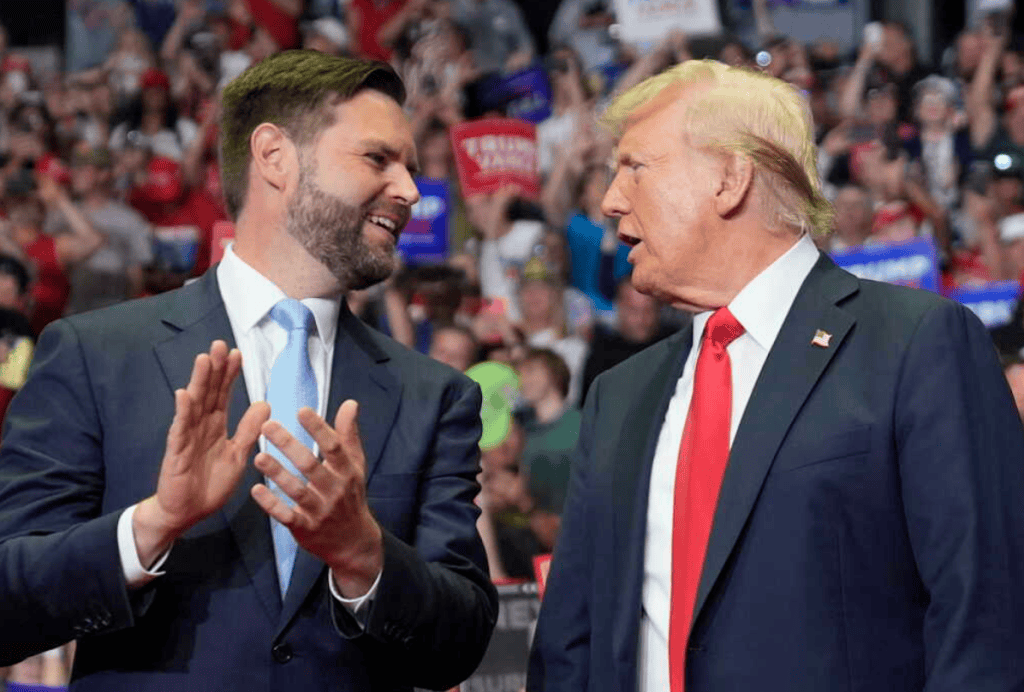
Donald Trump has offered a fresh glimpse into the uncertainty surrounding the 2028 presidential election, making unexpected comments about whether Vice President JD Vance will eventually enter the race. Speaking just after Republicans suffered significant setbacks in the 2026 midterm elections, Trump suggested that Vance’s political future remains far from settled.
The president was asked about a potential Vance campaign during an interview at the White House on November 4. Although Trump acknowledged that he regularly discusses various matters with his vice president, he stopped short of suggesting that a presidential run was inevitable.
His comments have added another layer of uncertainty to the emerging Republican succession debate, particularly as questions grow about who could lead the party after Trump’s presidency.
Trump Raises Questions About JD Vance Running in 2028
During his November 4 conversation with C-SPAN, Trump was asked whether he had spoken with Vance about the possibility of running for president in 2028.
Rather than confirming that discussions had taken place, the president gave an open-ended response that suggested no decision had been reached.
“I speak to him about a lot of things, but I mean, we’ll see what happens,” Trump said.
He continued by acknowledging that several potential candidates could emerge before the next presidential election.
“Maybe he won’t run, I don’t know who’s gonna run,” the president added.
The remarks were notable because Vance has frequently been discussed as one of the strongest potential Republican contenders for the next election. However, Trump’s response indicated that even someone serving as vice president should not automatically be considered the party’s future presidential nominee.
For now, neither man appears to be treating a 2028 campaign as a settled matter.
Why JD Vance Is Facing Questions About His Presidential Ambitions
Vance’s position as vice president naturally places him at the center of conversations about Republican leadership beyond Trump’s current administration.
Nevertheless, he has repeatedly avoided making a firm commitment about his political plans.
During a CBS News town hall on October 18, Vance acknowledged that there was a possibility he would not pursue the presidency.
“Of course there’s a chance,” he said when asked whether he might decide against running.
He also addressed the subject during an interview aboard Air Force Two with journalist Mark Halperin of 2WAY.
Vance made it clear that he had not reached a final decision, explaining: “I really have not made up my mind about what to do in 2028.”
These comments suggest that the vice president is keeping his options open rather than rushing into an early campaign.
There are several factors that could influence his eventual decision, including the political climate, the Republican Party’s direction and whether he believes he has sufficient support to secure the nomination.
Importantly, his immediate responsibilities as vice president also mean that a presidential campaign is not necessarily his priority.
Vance Previously Suggested Trump Would Endorse Him
Although Vance has been cautious about confirming his ambitions, he has previously expressed confidence in Trump’s potential support.
During the 2WAY interview, he was asked whether he expected the president to endorse him if he decided to run.
“Look, I think if I run, the president will endorse me, sure,” Vance responded.
However, he also acknowledged that the two had not discussed the possibility directly.
This distinction matters because an expectation of presidential backing is not the same as an official endorsement.
Trump has praised Vance publicly, but he has yet to formally commit to supporting him as the Republican candidate for 2028.
Did Trump’s Comments Follow Republican Midterm Losses?
The timing of Trump’s latest remarks is particularly significant because they came shortly after Republicans experienced substantial losses in the 2026 midterm elections.
The results have prompted questions about the administration’s political strategy and the issues that influenced voters.
Vance addressed the disappointing performance in a lengthy statement published on X on November 4.
In his assessment, he pointed to concerns surrounding the war in Iran and its economic consequences, including higher gasoline prices.
The vice president suggested that the conflict had contributed to voter dissatisfaction and created additional challenges for Republican candidates.
Trump was subsequently asked about Vance’s explanation during an interview with Sky News.
The president appeared to agree with much of the assessment, acknowledging that the conflict had affected fuel prices.
“I think it’s largely true because it drove the gasoline up a little bit, short term…” Trump said.
His response indicated that he accepted at least part of Vance’s argument about the economic consequences of the conflict.
The exchange also highlighted how foreign policy and domestic economic concerns can become closely connected during election campaigns.
For Republicans, the midterm results may provide an important indication of which issues need greater attention before the next presidential contest.
Has Trump Officially Endorsed JD Vance for 2028?
Despite repeatedly speaking positively about his vice president, Trump has not formally endorsed Vance for the 2028 presidential election.
The question was raised directly in the Oval Office on October 20, following Vance’s interview with Halperin.
Trump responded by suggesting that it was too early to make such a commitment.
According to PBS NewsHour, the president also questioned whether the two had ever seriously discussed the subject.
“I don’t think we’ve ever talked about it. You know, who would believe that?” Trump said.
Nevertheless, his comments about Vance were complimentary.
He described the vice president as a “very talented person” and a “very good person”, making it clear that he held a positive view of his political partner.
Trump’s position reflects the delicate balance surrounding the Republican succession question.
While publicly praising Vance, he has avoided closing the door on other potential candidates.
Marco Rubio Is Also Part of the Republican Succession Conversation
Another name frequently mentioned in discussions about the Republican Party’s future is Secretary of State Marco Rubio.
Trump has previously encouraged political competition between Rubio and Vance, keeping speculation alive about which figure might eventually emerge as the leading candidate.
Both politicians hold influential positions within the administration, although their responsibilities and political backgrounds differ.
Vance has the advantage of serving as vice president, a position that traditionally provides considerable national visibility.
Rubio, meanwhile, brings extensive experience in foreign policy and years of involvement in national politics.
Trump has previously described Vance as his most likely successor. However, that description should not be confused with an official endorsement or a guarantee of nomination.
Ultimately, the Republican primary process will determine who represents the party in 2028.
What Happens Next in the 2028 Presidential Election Race?
Although the next presidential election remains some distance away, conversations about potential candidates are already becoming an important part of American political coverage.
The 2026 midterm results could also influence how Republican leaders approach the next two years.
For Vance, the immediate challenge is balancing his responsibilities as vice president with growing expectations about his political future.
His decision could depend on several developments, including public approval, the administration’s performance and the level of support he receives from influential Republican figures.
Trump’s position will also attract attention. An endorsement from the president could carry significant political weight within a party where his influence remains substantial.
However, the president’s latest comments suggest that he is not ready to make that decision.
For now, JD Vance remains a prominent potential contender rather than a confirmed Republican presidential candidate.
Trump’s 2028 Comments Leave the Door Open
Trump’s latest remarks have made one thing clear: the Republican Party’s plans for 2028 are still taking shape.
While JD Vance has emerged as a major figure in conversations about the party’s future, he has not committed to running, and Trump has not officially endorsed him.
The possibility of a contest involving Marco Rubio also means that the Republican succession debate could become increasingly competitive.
With the 2026 midterm results raising fresh questions about the party’s electoral strategy, the coming months may prove important for its future direction.
Whether Vance ultimately decides to run remains uncertain. For now, Trump’s message is straightforward: there is still plenty of time before the next presidential race, and the eventual list of candidates is far from decided.







Comments are closed.