
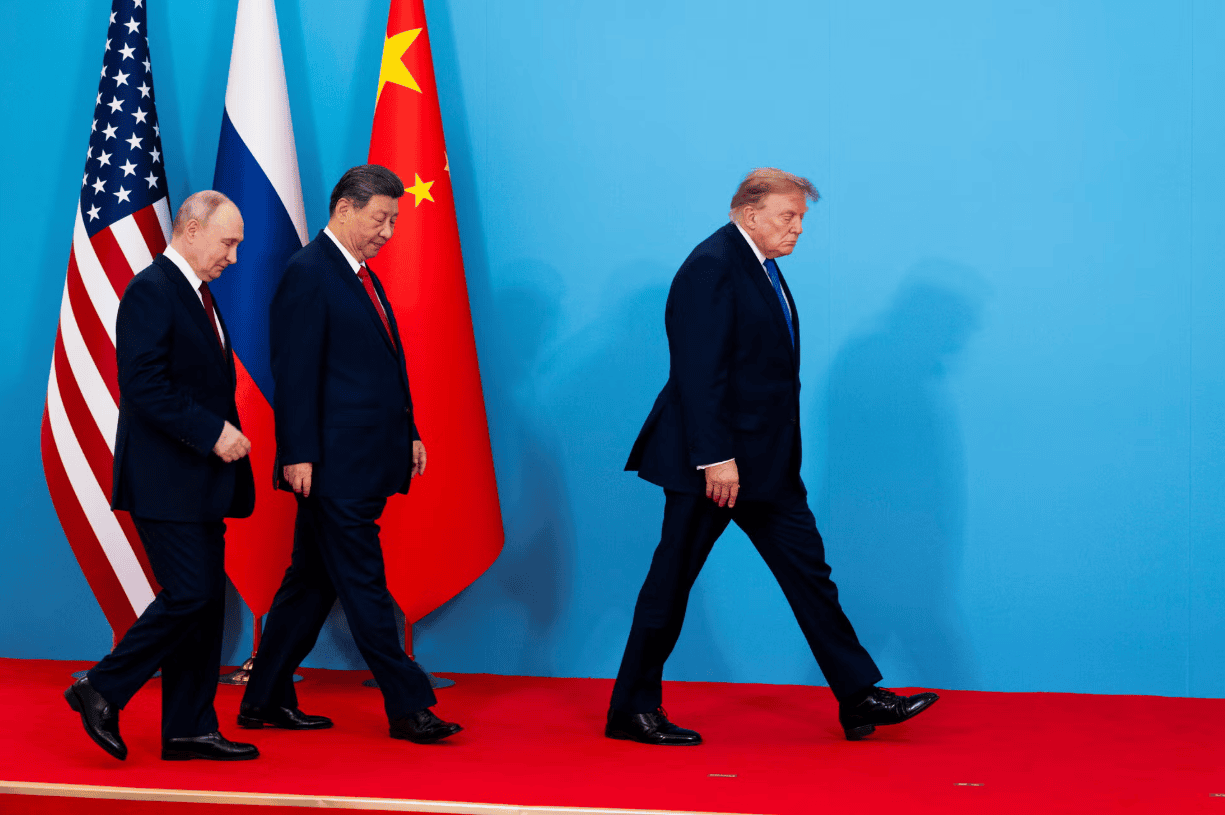
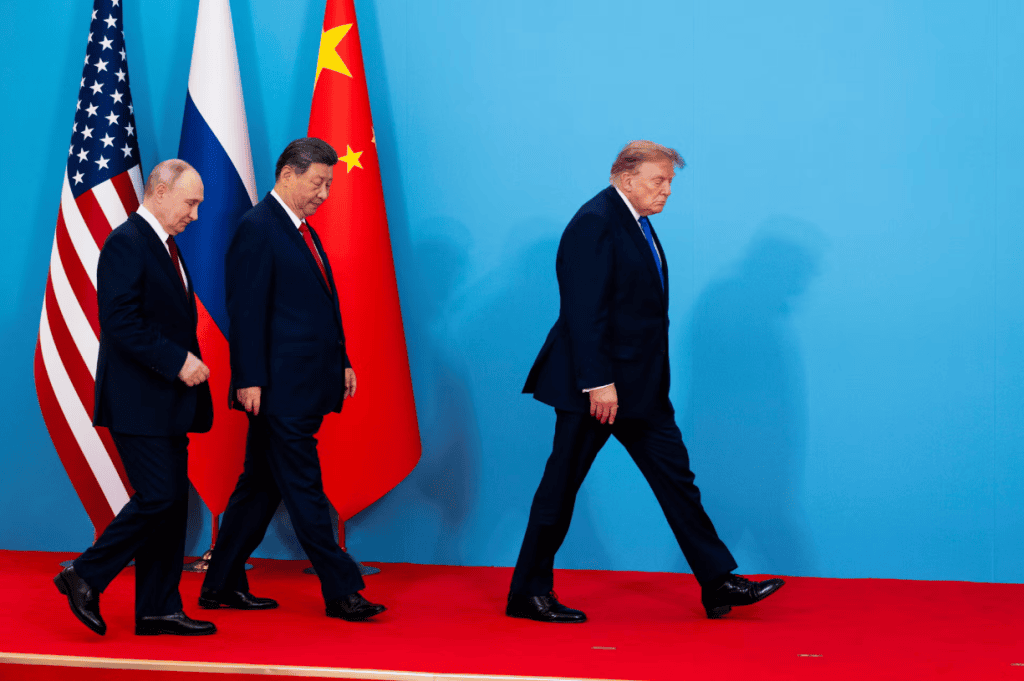
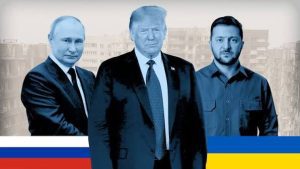
Donald Trump, Vladimir Putin, and Xi Jinping have reached a four-point joint agreement following an unprecedented meeting in China, bringing three of the world’s most powerful leaders together for discussions on global security, energy supplies, international institutions, and nuclear weapons. However, despite the diplomatic language surrounding the meeting, the gathering did little to ease tensions over Ukraine, with Putin issuing a fresh warning to Kyiv shortly afterward.
The three leaders met on November 19, 2026, in Shenzhen, on the sidelines of the Asia-Pacific Economic Cooperation (APEC) summit. Their discussions produced a joint declaration outlining areas of cooperation between the United States, Russia, and China.
While the announcement was presented as an important diplomatic development, it is worth distinguishing the declaration from an actual Ukraine peace agreement. The document establishes broad commitments between the three governments but does not set out a ceasefire, territorial settlement, or detailed plan to end the war.
Instead, the meeting highlighted both the opportunities and challenges involved in cooperation between the world’s three major nuclear powers. Putin’s subsequent comments about Ukraine made those differences particularly clear.
What Are the Four Points in the Trump, Xi and Putin Agreement?
The joint declaration focuses on four major areas: United Nations reform, energy production, the immunity of state officials, and nuclear security.
Although the commitments are broad, each carries significant implications for international relations.
1. United Nations Reform and International Security
The first point concerns the future of the United Nations.
As permanent members of the UN Security Council, the United States, Russia, and China have considerable influence over international security decisions.
The three governments reaffirmed their commitment to supporting reforms that would make the organization more effective at responding to global challenges.
They also emphasized the importance of strengthening the UN’s original mission of maintaining international peace and security.
However, the declaration does not specify exactly what reforms the countries intend to pursue or how they would implement them.
2. Increasing Refined Petroleum Production and Energy Supplies
Energy cooperation forms the second part of the agreement.
The three leaders expressed their intention to increase the production and supply of refined petroleum products for the benefit of countries worldwide.
They also reaffirmed the importance of maintaining stable energy flows.
This commitment is particularly significant given ongoing geopolitical tensions, international sanctions, and concerns about disruptions to global energy markets.
Russia remains an important energy producer, while China and the United States are major players in the international energy economy.
However, the declaration does not provide specific production targets, timelines, or details about how the proposed cooperation would work alongside existing sanctions on Russian energy exports.
3. Immunity of State Officials and International Criminal Court Concerns
The third point addresses the legal immunity of government officials.
Trump, Putin, and Xi emphasized the importance of national consent and respect for the immunity of state officials. They also argued that the International Criminal Court (ICC) and similar institutions must not abuse their jurisdiction.
This section carries particular political significance because Putin is the subject of an ICC arrest warrant issued in March 2023 over alleged war crimes involving the unlawful deportation and transfer of Ukrainian children from occupied Ukrainian territory to Russia.
The ICC has stated that its jurisdiction and legal proceedings are based on its founding statute and applicable international law.
Consequently, the three leaders’ position on international legal institutions is likely to remain a contentious issue among governments and international observers.
4. Preventing Nuclear War and Reducing Global Risks
The final point focuses on nuclear weapons and the dangers of escalation between major powers.
Trump, Xi, and Putin reaffirmed that a nuclear war cannot be won and must never be fought.
They also committed to conducting dialogue aimed at reducing nuclear risks and preventing the proliferation of nuclear weapons.
The issue was particularly relevant given that the United States, Russia, and China possess the world’s largest nuclear arsenals.
However, the declaration does not introduce specific disarmament targets or a new nuclear arms reduction treaty.
Instead, it establishes a commitment to further discussions about preventing nuclear conflict and maintaining strategic stability.
Putin Issues Warning to Ukraine Following the China Summit
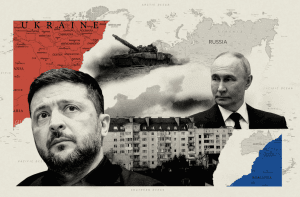
Despite the diplomatic atmosphere surrounding the meeting, Putin delivered a considerably more confrontational message when addressing the situation in Ukraine.
His comments followed Ukrainian strikes against the Kerch Bridge, also known as the Crimean Bridge, which connects Russia’s mainland with the Crimean Peninsula.
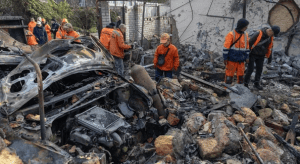
The attacks reportedly damaged the bridge’s road infrastructure and disrupted rail operations, making the structure a renewed focus of tensions between Moscow and Kyiv.
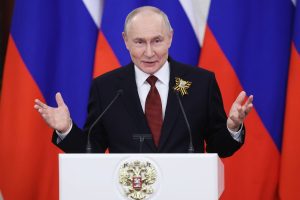
Putin said Russia would no longer pursue negotiations over limited ceasefire arrangements following the strikes.
He also warned that Moscow’s response would be significantly more painful than the damage inflicted on the bridge.
According to the Russian president, he had previously asked members of Russia’s Security Council to consider proposals for limited agreements involving energy infrastructure and maritime operations.
However, he indicated that the Ukrainian attacks had changed his position.
Putin’s comments raised further concerns about the possibility of renewed escalation, particularly as diplomatic efforts to end the wider conflict continue.
Why the Kerch Bridge Is So Important to Russia
The Kerch Bridge has become one of the most recognizable symbols of Russia’s control over Crimea.
Stretching approximately 19 kilometres (12 miles), the structure was opened in 2018, following Russia’s annexation of the peninsula in 2014.
The project cost approximately $3.6 billion and was heavily promoted by the Kremlin as a major infrastructure connection between Crimea and mainland Russia.
However, the bridge also has strategic importance.
Ukraine has repeatedly argued that the structure supports Russian military logistics, including the movement of supplies and equipment connected to the war.
Moscow, meanwhile, has maintained that the bridge is used for civilian purposes.
This disagreement has made the crossing a significant point of contention throughout the conflict.
Putin has promised that Russia will restore the damaged sections, while his latest comments suggest the attacks could have wider consequences for any potential negotiations.
Putin Rejects Certain European and NATO Arrangements for Ukraine
The Russian president also addressed the possibility of Ukraine developing closer security relationships with European countries.
Putin indicated that Moscow would not accept future arrangements involving Ukraine’s integration with European security structures through the European Union or NATO.
He also expressed opposition to the deployment of foreign troops in Ukraine.
These positions remain major obstacles to discussions about a possible postwar settlement.
Ukraine has consistently argued that meaningful security guarantees are essential to prevent another Russian invasion. European governments have also discussed potential arrangements involving international security commitments and support for Kyiv.
Putin, however, has maintained that Russia must have a say in the future security architecture of the region.
Despite his objections, he left open the possibility of discussions with European leaders.
However, he suggested that European representatives should travel to Moscow before deciding on the format of any subsequent negotiations.
The proposal adds another complication to diplomatic efforts, particularly as European governments continue to insist that they must have a meaningful role in decisions affecting Ukraine’s future.
Xi Jinping Calls for Cooperation Between Major Global Powers
Chinese President Xi Jinping opened the trilateral meeting by emphasizing the importance of cooperation between the three countries.
He argued that the United States, Russia, and China share responsibilities in addressing international challenges and maintaining global stability.
Putin also described the meeting as an important diplomatic moment, highlighting the historical responsibilities of the countries that emerged as major powers following the Second World War.
Before the three-way discussion, Trump and Putin held separate talks, during which the American president described the Russian leader as a friend.
Trump subsequently met Xi for bilateral discussions and a working lunch.
Their separate conversation reportedly covered trade relations, Iran, energy security, and efforts to reduce fentanyl shipments into the United States.
Trump also highlighted the importance of maintaining energy flows through the Strait of Hormuz and preventing Iran from developing nuclear weapons.
These discussions demonstrated that the summit extended well beyond the conflict in Ukraine, touching on several issues with consequences for international security and the global economy.
Does the Four-Point Agreement Bring the Ukraine War Closer to Peace?
Despite the historic nature of the meeting, the four-point declaration should not be confused with a comprehensive peace agreement.
The document establishes shared positions on several international issues, but it does not resolve the central disagreements surrounding Russia’s invasion of Ukraine.
In particular, questions involving territorial control, security guarantees, NATO membership, sanctions, and the future presence of foreign forces remain unresolved.
The contrasting messages emerging from Shenzhen illustrate the difficulty of translating diplomatic engagement into concrete progress.
While Trump, Xi, and Putin publicly emphasized cooperation and nuclear stability, Putin’s subsequent warning to Kyiv demonstrated that tensions surrounding the war remain serious.
For now, the summit represents an important diplomatic development rather than a breakthrough capable of ending the conflict.
Whether the three countries can turn their four-point declaration into practical cooperation remains to be seen. Meanwhile, Ukraine and its European partners face continued uncertainty as negotiations, military developments, and competing security demands shape the next stage of the conflict.







Comments are closed.