
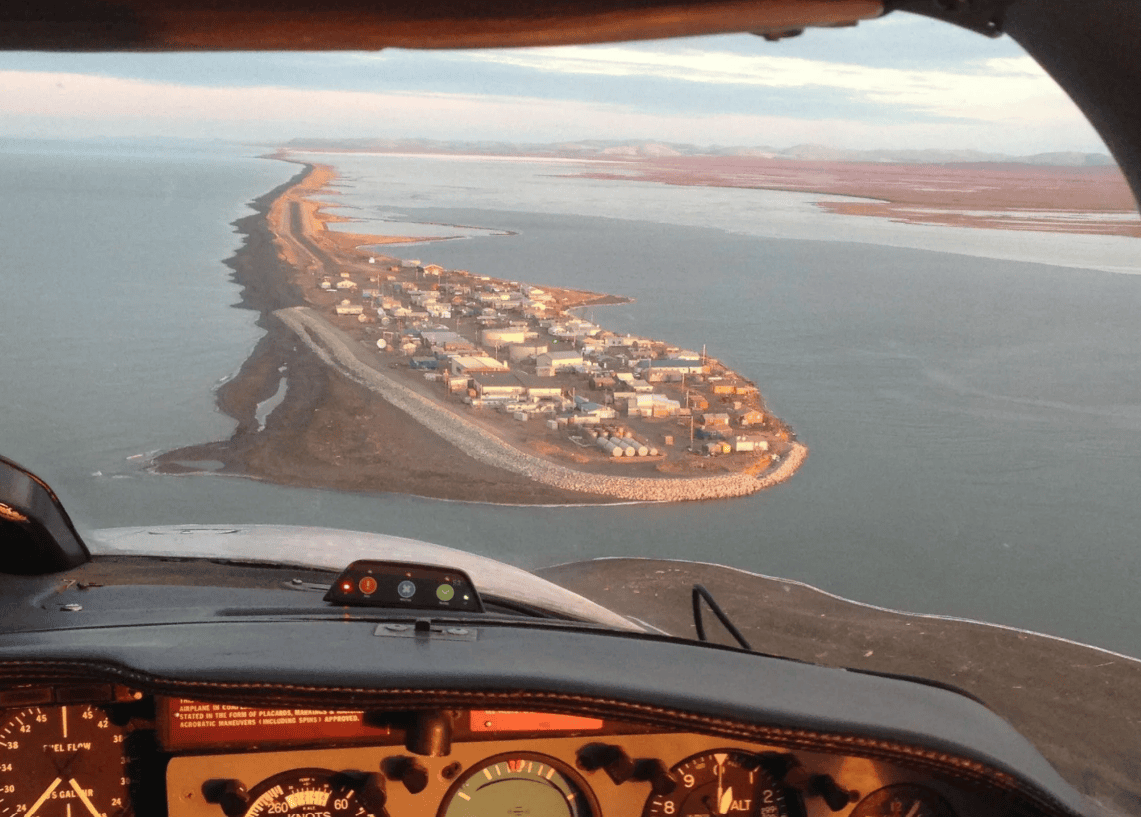
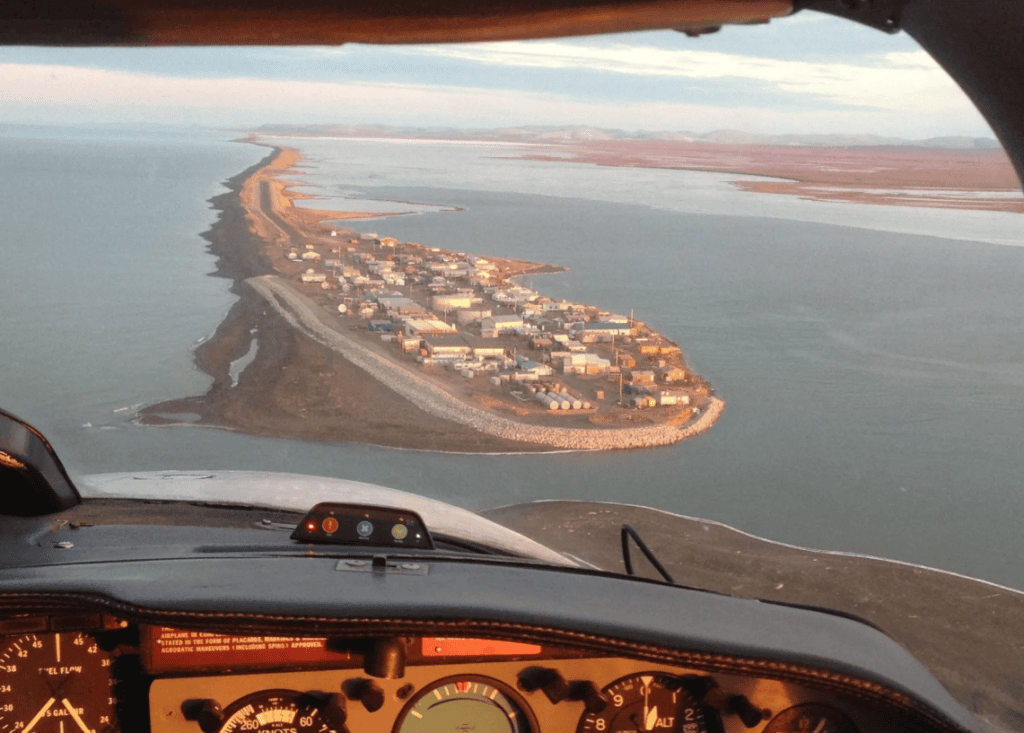
The Alaska village of Kivalina is facing an increasingly uncertain future as rising sea levels, coastal erosion, and powerful storms threaten the homes and livelihoods of its residents. For generations, families have called this remote Arctic community home. Now, however, many are confronting the possibility that they may have to leave everything behind as the ocean continues to reshape the land beneath their feet.
Located in northwestern Alaska, Kivalina is a small community built on a narrow barrier island between Kivalina Lagoon and the Chukchi Sea. With approximately 400 residents recorded in 2020, the village has become one of the most prominent examples of how climate change is affecting vulnerable Arctic communities.
Despite years of warnings and increasingly visible coastal damage, some residents are determined to remain. Others recognize that relocating may eventually become unavoidable.
Kivalina, Alaska, Faces a Growing Threat From Coastal Erosion
Kivalina’s geographical position has always made it vulnerable to the forces of the Arctic Ocean. Its narrow barrier island offers limited protection against powerful waves, particularly during severe storms.
Historically, thick winter sea ice helped shield the coastline by reducing the impact of waves. However, changing Arctic conditions and periods of reduced sea ice have left the community increasingly exposed.
As a result, storms can now cause significant damage to the shoreline, threatening houses, roads, and essential infrastructure.
The problem is not entirely new. Residents have witnessed the coastline gradually disappear for decades. However, the scale and urgency of the threat have become increasingly difficult to ignore.
According to the US Army Corps of Engineers, Kivalina was expected to reach a critical level of uninhabitability by 2025. Although the village remains inhabited in 2026, the prediction highlights how little time residents may have to secure a sustainable future.
Residents Share Their Experiences as They Prepare for an Uncertain Future
The human impact of coastal erosion has become particularly clear following a recent visit by the YouTube channel Yes Theory.
The creators, Thomas and Stefan, spent three days in Kivalina, speaking with residents and documenting what everyday life looks like in a community facing the possibility of relocation.
Among those interviewed was Janet, a lifelong resident who described how the situation began becoming more serious decades ago.
She recalled that 1989 marked a turning point when erosion became increasingly noticeable.
At the time, residents attempted to protect the shoreline using sandbags. Unfortunately, the measures proved ineffective as the water continued washing them away.
Janet explained that the experience made it clear that the community was facing a serious problem.
She also recalled the warning from the Army Corps of Engineers, which had identified 2025 as a critical deadline for the village.
Now that the predicted year has passed, the reality is becoming harder to avoid.
For residents like Janet, the challenge is not simply about finding somewhere else to live. It involves leaving behind familiar surroundings, family connections, traditions, and a community that has shaped their entire lives.
Not Everyone Is Ready to Leave Kivalina
Despite the growing danger, relocating is not an easy decision for everyone.
Janet’s brother, Reppi, expressed his determination to remain in the village, even as the threat from the ocean becomes more serious.
His response reflects a wider emotional struggle within communities facing climate-related displacement.
Moving to higher ground might appear to be the obvious solution from an outside perspective. However, relocation involves much more than transporting belongings to another location.
Residents must consider access to schools, employment, healthcare, traditional food sources, and the social networks that make a community function.
There are also concerns about the suitability of potential relocation sites. Reppi pointed out that some higher ground near the school is marshy and affected by mosquitoes.
These practical challenges demonstrate why moving an entire Arctic community is considerably more complicated than simply finding a safer piece of land.
Powerful Storms Have Already Changed the Village’s Landscape
Kivalina’s vulnerability became particularly apparent during a major storm in 2004.
According to the Yes Theory documentary, some sections of the shoreline lost more than 12 metres of land during a single storm.
That scale of erosion illustrates how quickly severe weather can transform a coastal environment.
Further storms in subsequent years continued threatening homes and critical infrastructure. Residents were left facing the difficult task of protecting their community against increasingly powerful natural forces.
The damage also demonstrates why coastal erosion is such a serious concern in Arctic Alaska.
Unlike gradual changes that unfold over generations, individual storms can remove substantial sections of shoreline in a matter of hours.
When homes, public buildings, and essential infrastructure sit close to the water, even one major weather event can have lasting consequences.
The Measures Designed to Protect Kivalina From the Ocean
Although the situation remains serious, several major infrastructure projects have helped Kivalina withstand the threat for longer.
One of the most significant developments was the construction of a substantial rock seawall.
Designed to reduce the impact of waves and protect the coastline, the barrier represents an important investment in the village’s immediate safety.
However, seawalls are not a permanent solution to every coastal erosion problem. They can reduce damage in protected areas, but they cannot eliminate the wider environmental pressures affecting a vulnerable barrier island.
Another important improvement arrived in 2020, when a new road and bridge connected Kivalina to higher ground on the mainland.
This development provided residents with a permanent evacuation route, addressing a major concern for a community that had previously faced limited options during emergencies.
The connection also offers greater flexibility when residents need to reach safer areas during dangerous weather conditions.
Nevertheless, these projects should be viewed as protective measures rather than a guarantee that Kivalina can remain permanently inhabited.
Why Climate Change Is Making Arctic Communities More Vulnerable
Kivalina’s situation reflects a broader environmental challenge affecting communities throughout the Arctic.
The region is warming rapidly, contributing to changes in sea ice, weather patterns, and coastal conditions.
One particularly important factor is the loss of protective sea ice.
During winter, sea ice traditionally acts as a natural barrier that limits the force of ocean waves reaching exposed shorelines. When ice forms later, disappears earlier, or covers smaller areas, coastal communities can experience greater exposure to storms.
Rising sea levels also increase the potential for coastal flooding and erosion.
In addition, thawing permafrost can weaken the ground beneath buildings and infrastructure. Permafrost is permanently frozen soil that supports much of the Arctic landscape. As temperatures rise, the ground can become unstable, creating further challenges for communities and construction projects.
These environmental pressures can combine, making places like Kivalina particularly vulnerable.
Importantly, the consequences extend beyond physical damage. For Indigenous communities and other long-established Arctic populations, environmental changes can also threaten traditional ways of life, cultural heritage, and access to familiar hunting and fishing areas.
What Happens Next for the Residents of Kivalina?
The future of Kivalina remains uncertain.
Although protective infrastructure has helped the village withstand repeated storms, the underlying environmental challenges have not disappeared.
Relocating an entire community requires substantial funding, careful planning, suitable land, and agreement among residents. It also requires decisions about how to preserve community identity and maintain access to essential services.
For families who have spent their entire lives in Kivalina, the prospect of starting again somewhere else carries an enormous emotional cost.
At the same time, remaining in a location increasingly exposed to severe weather presents serious safety concerns.
There is no simple solution that satisfies every resident.
Kivalina’s Story Highlights the Human Cost of Climate Change
Kivalina is more than a remote Alaskan village facing coastal erosion. It is a community of families, traditions, and people who want to preserve the place they call home.
The seawall and mainland road have provided valuable protection, but they cannot guarantee the island’s long-term future.
As climate change continues reshaping Arctic environments, Kivalina’s experience offers an important reminder that environmental damage is not just about melting ice or rising water levels. It is also about real people facing difficult decisions about where they can safely live.
For residents like Janet and Reppi, the question is deeply personal: how do you leave behind a home that has been part of your family for generations?
Their experiences highlight why protecting vulnerable communities and planning for climate-related displacement must become increasingly important priorities.









Comments are closed.