

The world’s oceans have reached their highest recorded average surface temperature, with scientists warning that accelerating human-caused warming combined with a strengthening El Niño could push temperatures even higher in the months ahead.
According to data from the European Copernicus Climate Change Service, global sea-surface temperatures outside the polar regions reached 21.1°C on Saturday, narrowly surpassing the previous record of 21.09°C recorded in March 2024.
Although the difference is small and global temperature estimates carry a degree of uncertainty, the timing has raised particular concern among climate scientists. Ocean temperatures typically reach their annual peak in March or April, meaning the latest record has arrived several months earlier than expected.
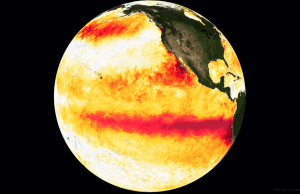
The development is unfolding as El Niño strengthens across the tropical Pacific, adding further heat to an ocean system already transformed by decades of greenhouse-gas-driven warming.
A warming ocean under mounting pressure
El Niño occurs when unusually warm waters rise to the surface across the central and eastern tropical Pacific. The phenomenon can temporarily push global temperatures higher and influence weather patterns around the world.
Scientists expect the current El Niño to continue intensifying towards the end of 2026, potentially becoming one of the strongest on record. Some researchers therefore warn that ocean temperatures could climb further, with another global record possible during the usual seasonal peak in early 2027.
But the extraordinary warmth is not confined to the Pacific.
Marine heatwaves have also affected waters around Europe and the United Kingdom. The western English Channel, for example, has experienced almost continuous marine heatwave conditions for more than three years, with temperatures reaching approximately 7°C above average in July, according to Plymouth Marine Laboratory.
Researchers describe the scale and persistence of the warming as unprecedented.
Why record ocean temperatures matter
The oceans absorb more than 90% of the excess heat trapped by human greenhouse-gas emissions. As that heat accumulates, the consequences extend far beyond the marine environment.
Warmer seas can provide storms with additional moisture and energy, increasing the potential for more intense extreme weather. Higher ocean temperatures can also contribute to severe heatwaves on land, particularly in coastal areas where warmer seas reduce the cooling influence of sea breezes.
The physical effects are equally significant. As seawater warms, it expands, contributing to rising sea levels and increasing the risk of coastal flooding.
Marine ecosystems are also increasingly exposed to prolonged heat stress. Coral reefs, fisheries and other sensitive habitats can be severely damaged when marine heatwaves persist, placing additional pressure on communities whose livelihoods depend on healthy oceans.
Climate change and El Niño collide
The emergence of a record ocean temperature during a strengthening El Niño highlights the increasingly complex interaction between natural climate variability and long-term human-driven warming.
El Niño is a natural phenomenon, but scientists stress that it is developing on top of an ocean that has already absorbed decades of additional heat from rising greenhouse-gas concentrations.
The result is a climate system in which natural fluctuations can amplify conditions that are already becoming more extreme.
As El Niño approaches its expected peak, scientists will be watching closely to determine whether the current record is merely a temporary milestone or another indication of a longer-term acceleration in ocean warming.
The latest data offer another stark reminder that the world’s oceans are not simply responding to climate change — they are absorbing its consequences, storing its heat and increasingly reshaping the conditions that govern life on the planet.















Comments are closed.