
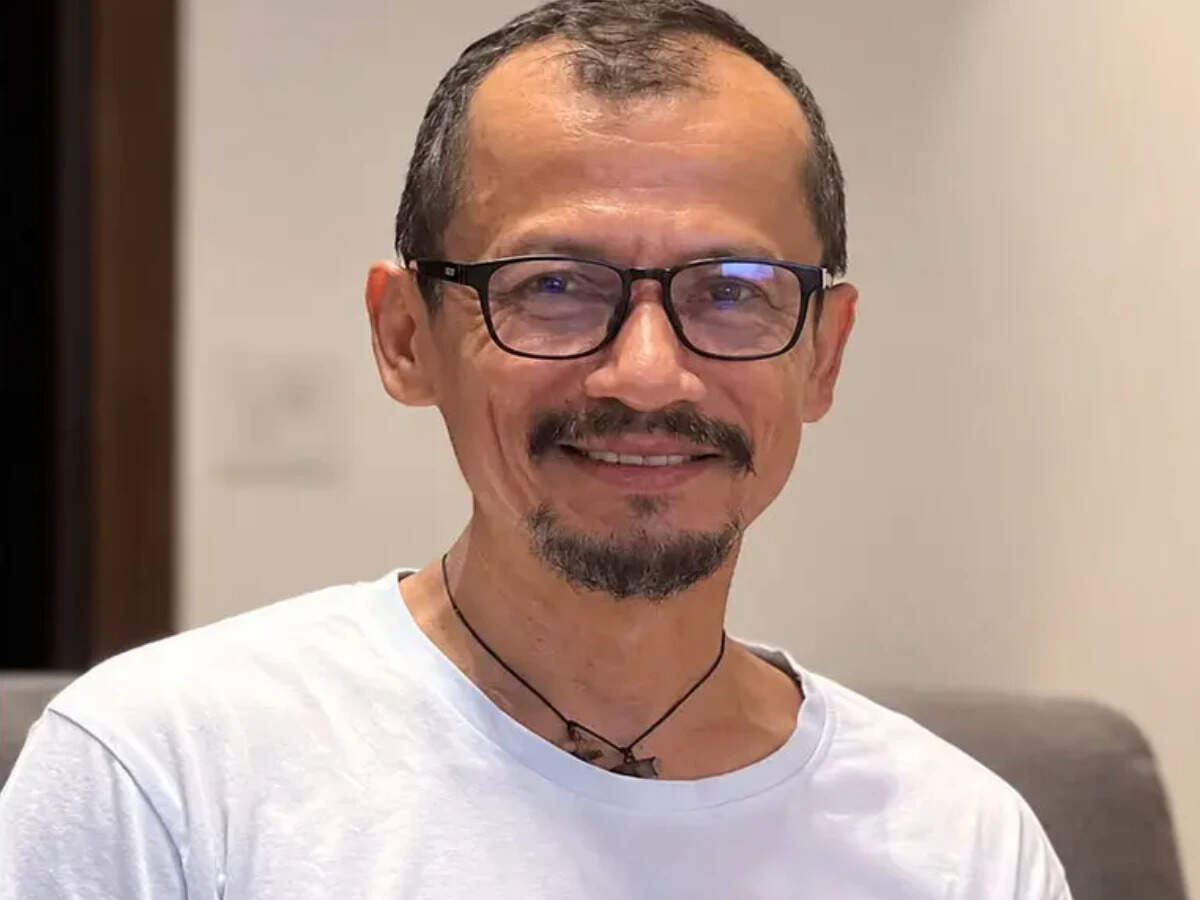
The death of celebrated guitarist Chongtham Vikram Singh in New Delhi has renewed scrutiny of the discrimination and marginalisation faced by people from India’s northeastern states.
New Delhi, India — The death of a celebrated musician from Manipur has once again brought India’s long-running struggle with racial discrimination into the national spotlight.
Chongtham Vikram Singh, a 54-year-old guitarist and music teacher, died after being attacked outside his home in New Delhi on Monday. According to accounts from people familiar with the incident, Singh had gone downstairs after being disturbed by loud noises outside his apartment.
An argument reportedly followed with a group of men. Singh was chased back towards the third floor of the building and was later found unconscious on the stairs.
He was taken to a nearby hospital, where he died from his injuries.
Delhi police have arrested eight people, including a minor, on murder charges. Authorities have not publicly established a motive for the attack.
For Singh’s friends, students and admirers, however, the tragedy has raised a deeply troubling question: whether racism and discrimination played a role in yet another violent incident involving someone from India’s northeast.
A Musician Who Became a Generation’s Inspiration
For decades, Singh was far more than a guitarist.
In Manipur, he was regarded as one of the pioneers of the region’s rock music scene, having begun his career in the early 1980s. He later became known as the guitarist of Eastern Dark, a socially conscious rock band whose name itself reflected the political and social marginalisation experienced by people in India’s northeastern states.
The band’s music emerged from a region shaped by political unrest, armed rebellion and competing struggles over identity and autonomy.
Singh eventually moved to New Delhi, where he spent around two decades teaching music and helping younger musicians establish themselves.
Friends remember him not only for his technical ability but for his generosity.
Manipuri singer and lyricist Akhu Chingangbam described Singh as an exceptional guitarist and a warm, charismatic person whose laughter could fill a room.
For younger musicians from Manipur, Singh represented something even larger: an early gateway into rock music and a figure who showed that a career in music was possible.
“He was our first exposure to rock,” said Laishram Kangleinganba, president of the Manipur Students’ Association in Delhi.
From a War-Torn Homeland to Delhi
Singh’s death has particular resonance because of the circumstances surrounding his birthplace.
Manipur has endured decades of armed conflict and political instability, while a devastating ethnic conflict in recent years has displaced tens of thousands of people.
For many Manipuris, moving to other parts of India has traditionally represented an opportunity to pursue education, employment and a more secure future.
Singh made that journey himself.
He moved to Delhi roughly two decades ago in search of greater opportunities as a musician.
But according to friends and community representatives, leaving Manipur did not necessarily mean leaving discrimination behind.
Instead, many people from the northeast say they encounter prejudice in everyday life across India’s major cities.
Singh’s killing has therefore become more than an individual tragedy for the community.
It has become another reminder of a problem many say has persisted for generations.
India’s Long History of Discrimination
Concerns over racism against people from India’s northeastern states are not new.
In 2014, the death of 19-year-old Nido Taniam from Arunachal Pradesh after an altercation in Delhi triggered widespread protests and renewed national attention on racial discrimination.
The incident prompted the government to establish a committee to examine the experiences of northeastern communities living in major Indian cities.
The committee found that approximately 86 percent of more than 200,000 northeastern migrants surveyed had experienced some form of racial discrimination in Delhi.
Other major cities, including Mumbai, Hyderabad and Chennai, also reported significant concerns.
Among the recommendations was the creation of a dedicated anti-racism law, including stronger penalties, faster investigations and expedited trials.
Those recommendations were not adopted.
More than a decade later, activists and members of northeastern communities argue that many of the underlying problems remain unresolved.
Racism Beyond the Headlines
Deepak Kumar, an assistant professor at the University of Hyderabad who researches India’s northeastern states, traces some of the prejudice to the colonial period.
British administrators classified many people from the northeast using racial categories that portrayed them as fundamentally different from communities elsewhere in India.
Those distinctions survived in different forms after independence, particularly as political power became increasingly centralised in New Delhi.
Economic liberalisation and greater migration from the northeast subsequently brought more people from the region into India’s largest cities.
The result, Kumar argues, was greater cultural interaction — but also greater visibility of existing prejudices.
Singh’s death represents what Kumar describes as the most visible form of racism.
But he argues that the more persistent problem exists in everyday interactions: people being overcharged, stared at, stereotyped or treated as outsiders simply because of their appearance or background.
That form of discrimination rarely makes headlines.
Yet for many northeastern migrants, it can shape daily life.
“Here We Go Again”
The reaction to Singh’s death has been swift.
Rahul Gandhi, India’s opposition leader, criticised the government over what he described as growing lawlessness and violence affecting people from the northeast.
In a post on X, Gandhi questioned whether families from the region could feel safe living in Delhi after repeated incidents.
For northeastern students and residents in the capital, the response has been more personal.
Laishram Kangleinganba said the speed with which police arrested suspects has not eliminated concerns about whether the case will ultimately deliver justice.
He described the attack as vicious and unprovoked and said the reaction within the community was one of painful familiarity.
“Here we go again,” he said.
For young people who grew up listening to Singh’s music, his death has also carried a profound sense of loss.
He was not simply a musician they admired. He was part of their cultural memory.
Remembering the Musician, Not the Violence
For Akhu Chingangbam, Singh’s final legacy should not be defined by the violence that ended his life.
Instead, it should be remembered through the music he created, the musicians he encouraged and the generations he inspired.
Singh spent decades building a life around music in Delhi, while maintaining the cultural identity of his home state.
His story reflected the aspirations of countless people from India’s northeast who have moved to the country’s major cities in search of opportunities.
His death has now forced many of those same communities to confront an uncomfortable reality: escaping conflict at home does not necessarily mean escaping discrimination elsewhere.
Singh’s friends say his memory will live through the musicians he influenced and the music he helped bring to a wider audience.
For a community that considers him a legend, that legacy matters.
But so does the question his death has left behind — how many more people must suffer before racism against India’s northeastern communities is treated not as an occasional controversy, but as a systemic problem requiring lasting change?










Comments are closed.