
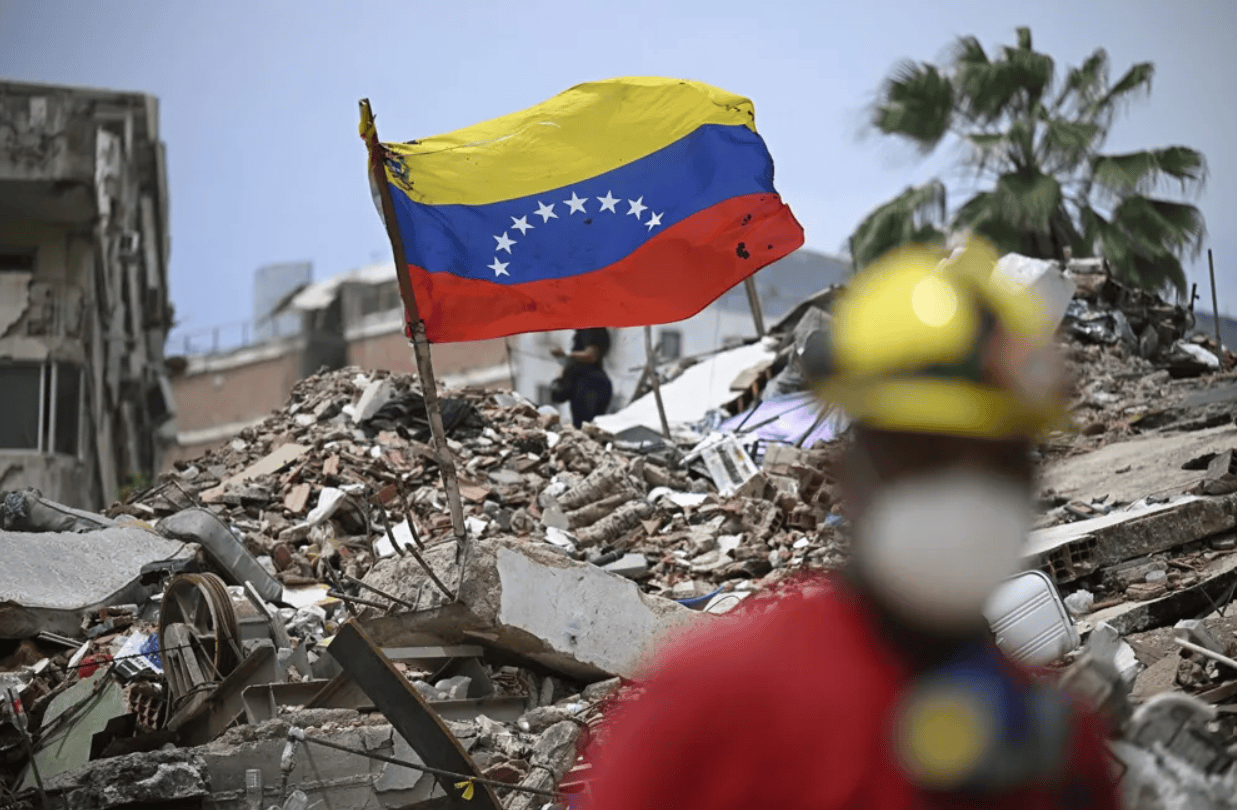
A month after devastating twin earthquakes struck Venezuela’s northern coastline, thousands of families are still searching through mountains of rubble for missing relatives. While rescue efforts continue in some of the hardest-hit communities, hope has increasingly given way to grief, frustration, and demands for answers about how such widespread destruction could occur.
The disaster has already claimed more than 5,300 confirmed lives and injured over 16,500 people. However, the true scale of the tragedy remains uncertain, with officials yet to release an official figure for those still missing. For many survivors, the nightmare is far from over as recovery efforts continue amid shattered communities and growing concerns about rebuilding.
Venezuela earthquake aftermath leaves families searching for closure
Thirty days after the earthquakes, search teams and volunteers are still recovering victims from collapsed buildings across La Guaira state, one of the regions worst affected by the disaster.
Among those living through unimaginable loss is fisherman Victor Calderón. He was at sea when the earthquakes struck and learned over the radio that the apartment building where his family lived had collapsed.
When he finally returned to shore, he discovered that 26 members of his family had been killed or remained missing.
The victims included sisters, cousins, grandchildren, children, and his stepfather, ranging in age from toddlers to elderly relatives.
Despite the overwhelming loss, Calderón says he has not allowed himself to fully grieve because several loved ones are still missing beneath the rubble.
His surviving daughter and granddaughter now live with him in a temporary tent settlement after losing their home.
Ground Zero of the disaster
Caraballeda remains one of the hardest-hit communities
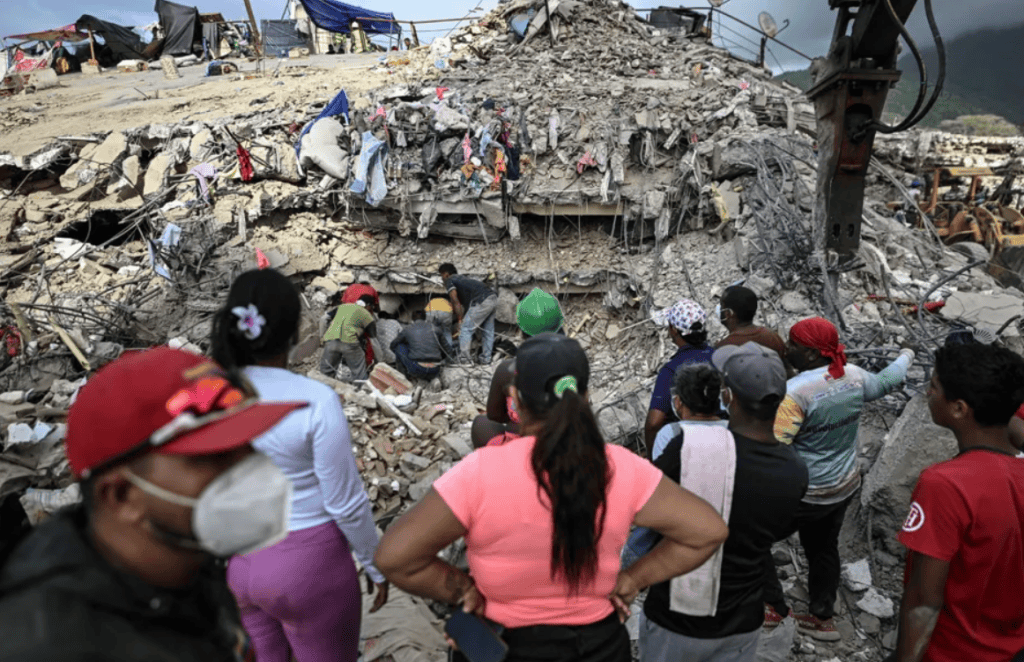
The coastal town of Caraballeda has become the symbol of the earthquake’s devastation.
Entire apartment complexes collapsed within seconds, leaving rescue teams searching through twisted concrete and steel weeks after the disaster.
At one residential complex, bodies continue to be recovered as families gather nearby hoping for answers.
In one particularly heartbreaking recovery operation, rescuers located the body of an 11-year-old girl after her family had searched for an entire month.
Her father’s emotional reaction reflected the pain shared by countless families still waiting for news of missing relatives.
Rescue workers, many visibly emotional themselves, paused their work to pay their respects before continuing the difficult recovery effort.
Rescue workers face an emotional toll
The psychological impact has extended beyond survivors.
Emergency personnel working at collapse sites describe the daily recovery operations as emotionally exhausting. Many have spent weeks searching unstable buildings while witnessing the grief of families waiting nearby.
As international rescue teams gradually conclude their missions and return home, local responders and volunteers continue much of the work with fewer resources.
For many communities, the recovery phase has become slower and increasingly difficult.
Growing questions over collapsed buildings
Survivors demand accountability
Alongside grief, frustration has become increasingly visible among residents.
Many survivors are asking why so many residential buildings collapsed during the earthquakes. Questions have emerged about construction standards, building materials, engineering practices, and whether negligence may have contributed to the scale of destruction.
Residents of several housing complexes have openly questioned whether stronger construction could have prevented some of the losses.
Government officials, however, reject claims that poor construction alone explains the disaster.
Public Works Minister Juan José Ramírez has defended the integrity of the affected buildings, arguing that the country experienced two powerful earthquakes almost simultaneously, with seismic forces moving in different directions.
According to the minister, both public and private buildings suffered extensive damage, demonstrating the extraordinary strength of the earthquakes rather than evidence of systemic construction failures.
Extraordinary rescues offered rare moments of hope
Although much of the past month has been marked by tragedy, there have also been remarkable survival stories.
One of the most celebrated rescues involved security guard Hernán Gil, who was pulled alive from the underground parking area of a collapsed apartment building eight days after the earthquakes.
His rescue briefly lifted the nation’s spirits and demonstrated the determination of emergency crews working under dangerous conditions.
However, not every family has received such hope.
Many continue searching for loved ones believed to remain trapped beneath collapsed structures, even as heavy equipment is reassigned to other disaster sites.
Humanitarian aid continues as thousands remain displaced
Temporary shelters have become home for thousands of displaced residents across the affected region.
Organizations providing humanitarian assistance continue distributing hot meals, bottled water, and essential supplies to families who lost everything during the disaster.
While emergency aid remains vital, housing has become one of the country’s greatest challenges.
The Venezuelan government has announced the donation of 200 homes for affected families. Nevertheless, the need is believed to be vastly greater, with thousands of households still without permanent accommodation.
Many survivors continue living in tents, uncertain about when reconstruction will begin.
Rebuilding Venezuela will take years
The earthquakes caused destruction on an enormous scale.
According to estimates from the World Bank, the twin disasters resulted in approximately $19.6 billion in economic damage, making reconstruction one of the country’s largest infrastructure challenges in recent history.
The rebuilding effort also unfolds during a period of political uncertainty following major changes in Venezuela’s national leadership and broader international involvement in the country’s economy.
These factors add further complexity to what is already expected to be a long and costly recovery process.
A nation coping with unimaginable loss
Beyond the statistics lies a deeply personal tragedy experienced by thousands of Venezuelan families.
Homes vanished in less than a minute. Personal belongings remain scattered beneath collapsed buildings, serving as painful reminders of lives interrupted without warning.
Families continue searching for missing relatives while trying to rebuild their futures under extraordinarily difficult circumstances.
One month after the earthquakes, Venezuela remains united in grief, resilience, and determination. Yet for countless survivors, recovery cannot truly begin until every missing loved one has been found and the difficult questions surrounding the disaster are finally answered.









Comments are closed.