
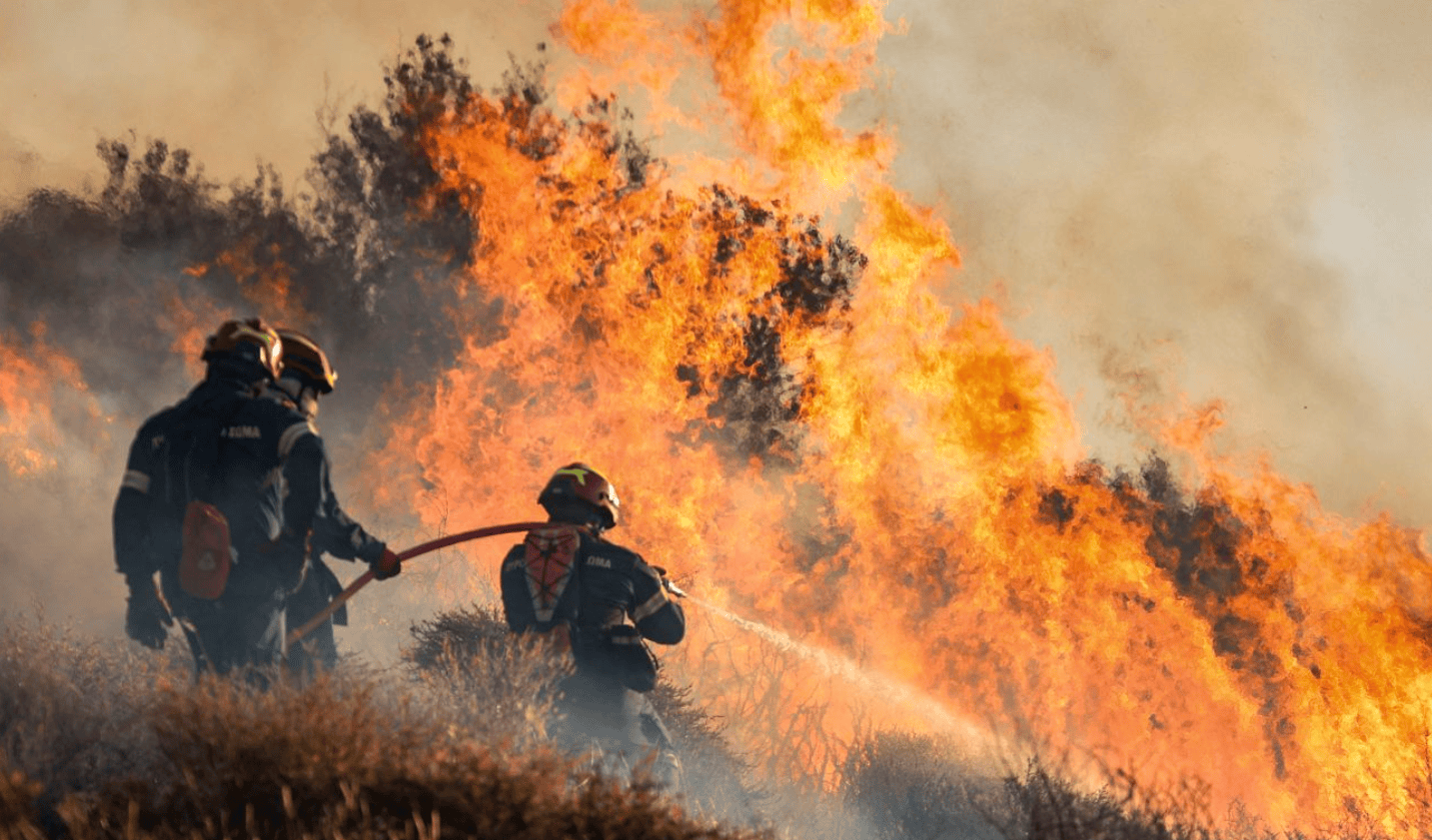
Wildfires in Crete have forced thousands of residents and tourists to flee as powerful winds and soaring temperatures continue to fuel destructive blazes across southern Europe. The unfolding emergency highlights the growing threat of European wildfires, with Greece, Spain, Portugal, France, and Turkey all battling major fires during one of the continent’s most severe summer fire seasons in recent years.
As firefighters race to contain multiple fronts, authorities are warning that the combination of drought, extreme heat, and strong winds could keep wildfire conditions dangerously high in the coming days.
Crete Wildfires Trigger Mass Evacuations
The Greek island of Crete has become one of the hardest-hit regions, where approximately 8,000 people were evacuated overnight from the Rethymno area as flames advanced toward villages and tourist accommodations.
Emergency services relocated residents and holidaymakers to temporary shelters in neighboring municipalities while local authorities coordinated assistance for visitors caught in the rapidly changing situation.
The wildfire, which erupted on Wednesday, has already burned through agricultural land and damaged homes. Officials estimate the fire front now stretches more than 15 kilometers, making it one of the island’s largest active fires.
High winds, with gusts reaching 125 km/h, have significantly complicated firefighting operations by pushing flames into new areas and preventing aircraft from safely conducting water drops.
Firefighters Face Dangerous Conditions
Three Firefighters Lose Their Lives
The wildfire response has also been marked by tragedy.
Two firefighters lost their lives near Krya Vrysi after becoming trapped while battling the flames. A third firefighter died near the Peloponnese port town of Gytheio during separate firefighting operations.
The Greek Fire Service identified the two firefighters who died in Crete as 58-year-old Emmanouil Stratidakis and 25-year-old Pantelis Diamantakis, honoring their service and sacrifice during one of Greece’s most challenging wildfire emergencies.
Their deaths underscore the extreme risks emergency crews face as increasingly unpredictable fires spread rapidly under severe weather conditions.
Strong Winds Continue to Hamper Firefighting Efforts
Containment remains difficult despite a large-scale emergency response.
Greek authorities have deployed:
- 224 firefighters
- 53 fire engines
- 11 specialized firefighting units
- Two firefighting aircraft, when weather conditions allow
However, violent winds have repeatedly shifted the direction of the flames, limiting aerial firefighting operations and creating dangerous conditions for crews working on the ground.
Officials say their immediate priority remains protecting lives while preventing additional communities from being threatened.
Tourism Faces Major Disruption
July is traditionally one of Crete’s busiest tourism periods, attracting millions of international visitors every year.
The ongoing evacuations have disrupted holidays across parts of the island as hotels, resorts, and local businesses implement emergency procedures.
Authorities have emphasized that accommodations and temporary shelters have been prepared for both residents and tourists, helping ensure those displaced receive food, shelter, and essential support while firefighting operations continue.
Although tourism remains active across much of Crete, travelers are being urged to monitor official updates and follow evacuation instructions where necessary.
European Wildfires Spread Beyond Greece
The crisis extends well beyond Greece, with several European countries confronting major wildfire emergencies driven by exceptionally hot and dry weather.
Spain Battles Record-Breaking Fires
Spain continues to experience multiple significant wildfires.
Around 600 people have been evacuated near the Portuguese border because of a blaze affecting the province of Zamora.
Meanwhile, authorities report that the wildfire in Ávila Province has burned more than 43,000 hectares, making it the largest recorded wildfire in Spanish history.
There has been some encouraging news near Madrid, where firefighters have successfully halted the spread of several fires, allowing thousands of evacuated residents to safely return home.
Portugal Responds to New Fire Outbreaks
Portugal has also experienced dangerous wildfire activity.
Local reports indicate that five people were injured during a fire in the eastern municipality of Valpaços as emergency responders worked to contain multiple outbreaks fueled by hot and dry conditions.
Authorities remain on high alert as weather forecasts continue to indicate elevated fire danger across much of the country.
France Continues Recovery Efforts
France has also endured one of its largest wildfire events in decades.
The massive blaze in the Gironde region has scorched approximately 42,000 hectares, making it the country’s largest wildfire since 1949.
Fortunately, cooler temperatures and some rainfall have slowed the fire’s spread, allowing firefighters to make progress after several days of intense operations.
Even so, several southeastern regions remain under heatwave alerts as officials prepare for continued periods of elevated wildfire risk.
Turkey Maintains Emergency Response
Turkey has likewise faced widespread wildfire activity.
Although authorities report that many fires have now been brought under control, hundreds of homes were evacuated as a precaution while emergency services continued suppression efforts across affected regions.
Why Europe’s Wildfire Seasons Are Becoming More Severe
Climate Change Increases Fire Risk
Scientists have repeatedly warned that climate change is contributing to longer and more intense wildfire seasons across Europe.
Higher average temperatures, prolonged droughts, and reduced soil moisture create ideal conditions for vegetation to ignite and for fires to spread rapidly.
According to climate monitoring organizations, Europe is warming faster than the global average, increasing the likelihood of frequent heatwaves and extreme weather events that elevate wildfire danger.
While no single wildfire can be attributed solely to climate change, the overall trend toward hotter and drier summers is increasing the conditions that make large fires more likely.
Extreme Weather Creates Multiple Challenges
Wildfires become significantly more difficult to control when several environmental factors occur simultaneously, including:
- Extreme temperatures
- Low humidity
- Strong winds
- Dry vegetation
- Limited rainfall
These conditions allow fires to spread quickly across forests, farmland, and residential areas while reducing the effectiveness of firefighting operations.
As weather systems continue shifting across southern and central Europe, forecasters warn that additional regions may face elevated wildfire threats in the days ahead.
Emergency Preparedness Remains Essential
Authorities across Europe continue urging residents and travelers to remain vigilant during periods of extreme wildfire danger.
People living in affected areas are encouraged to:
- Follow official evacuation orders immediately.
- Monitor emergency weather alerts.
- Avoid activities that could accidentally ignite fires.
- Keep emergency supplies readily available.
- Stay informed through local government updates.
Quick public cooperation can significantly improve emergency response efforts while helping protect both lives and property during rapidly evolving wildfire events.
Conclusion
The Crete wildfires have become a stark reminder of the growing challenge posed by European wildfires during increasingly extreme summer conditions. Thousands have been forced from their homes and holiday accommodations, firefighters have made the ultimate sacrifice, and emergency services across several countries continue working tirelessly to contain dangerous blazes.
As Europe faces another intense wildfire season, preparedness, coordinated emergency responses, and long-term climate resilience will remain essential in reducing the human, environmental, and economic impact of future fires.












Comments are closed.