
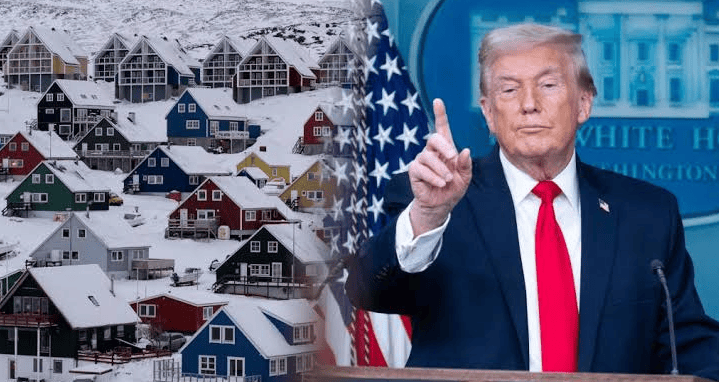
The United States and Denmark have reached a preliminary security agreement concerning Greenland, with Donald Trump saying Washington will gain permanent control over the territory’s security while Danish and Greenlandic leaders insist their sovereignty and right to self-determination remain intact.
The United States and Denmark have reached an agreement aimed at strengthening security in Greenland and the wider Arctic, potentially bringing an end to months of diplomatic tensions triggered by President Donald Trump’s repeated demands for greater American control over the strategically important territory.
Trump described the agreement as giving the United States “permanent control over security” and the ability to take whatever measures are necessary to protect Greenland and American interests.
However, Denmark and Greenland have stressed that the agreement does not transfer sovereignty over Greenland to the United States.
The full text of the agreement has not yet been made public, leaving important questions about the extent of Washington’s future military presence and the precise powers granted to the United States.
Denmark and Greenland Stress Sovereignty
Danish Prime Minister Mette Frederiksen and Greenlandic Prime Minister Jens-Frederik Nielsen welcomed the agreement as a potential step toward strengthening security in the Arctic and North Atlantic.
The two leaders said the proposed arrangement recognises the sovereignty and territorial integrity of the Kingdom of Denmark, as well as the Greenlandic people’s right to self-determination.
The agreement is expected to be signed during the United Nations General Assembly in New York next week.
Even after signing, however, the deal will have to go through the necessary parliamentary procedures before it can formally enter into force.
Nielsen described the agreement as beneficial to Greenland, Denmark, the United States and the wider Western alliance.
At the same time, some Greenlandic politicians have expressed caution, stressing that any final agreement must preserve Greenland’s right to determine its own future.
Trump Had Threatened to Take Greenland
The agreement follows months of escalating rhetoric from Trump, who repeatedly argued that Greenland was essential to US national security.
The president had previously suggested that the United States should acquire or take control of Greenland, citing its strategic location, military importance and mineral resources.
His comments triggered a diplomatic crisis with Denmark and prompted concern across Europe, particularly because Denmark and the United States are both NATO members.
Greenlandic and Danish officials repeatedly rejected the idea that the territory could be transferred to Washington.
The new agreement appears to move the dispute away from the question of ownership and toward a greater US military and security role while leaving Greenland within the Kingdom of Denmark.
What the Agreement Could Give the US
Although the official text has not been released, a US State Department official has outlined several provisions reportedly included in the agreement.
According to the official, the arrangement would provide the United States with permanent access, basing and overflight rights in Greenland.
Washington would also reportedly be able to develop additional military infrastructure on the island without requiring separate approval from Denmark or Greenland for each facility.
The agreement would also prevent non-NATO countries from establishing military bases in Greenland.
It would further restrict investments by countries considered potential US adversaries in sensitive sectors of Greenland’s economy.
The United States has specifically identified Russia and China as strategic concerns in the Arctic.
The agreement is also reportedly designed to remain in effect even if Greenland eventually becomes independent from Denmark.
However, without the published text, it remains unclear exactly how these provisions would operate and how they differ from existing US-Danish defence arrangements.
US Already Has a Military Presence in Greenland
Washington already maintains a military installation in Greenland.
The Pituffik Space Base, formerly known as Thule Air Base, is located in northwestern Greenland and plays a role in missile warning, missile defence and space surveillance.
The United States has maintained a military presence on the island for decades, including under a 1951 defence agreement with Denmark.
The new arrangement could significantly expand that presence.
Trump has linked Greenland to his proposed Golden Dome missile defence system, which is intended to strengthen US protection against potential missile threats from countries including Russia and China.
Greenland’s geographical position between North America and Europe makes it strategically important for missile-warning systems, satellite operations and monitoring activity across the Arctic and North Atlantic.
Why Greenland Matters to the US
Security is not the only reason Washington has increased its focus on Greenland.
The island contains significant deposits of rare earth elements and other minerals considered important for advanced technology, defence systems, electric vehicles and renewable energy infrastructure.
Greenland’s location is also becoming increasingly important as climate change opens more Arctic waters to shipping and intensifies competition among major powers.
The United States has expressed concern about growing Chinese and Russian influence in the region and wants to strengthen its ability to monitor and defend the Arctic approaches to North America.
These strategic considerations have made Greenland increasingly important to US, Danish and broader NATO security planning.
NATO Welcomes the Agreement
NATO has welcomed the emerging agreement between Washington, Copenhagen and Nuuk.
The alliance said the arrangement could help strengthen security, stability and cooperation in the Arctic and North Atlantic.
The Arctic has become an increasingly important area for NATO as Russia maintains a substantial military presence in the region and China has expanded its economic and strategic interest in the Arctic.
The Greenland dispute had previously created an unusual source of tension within the alliance, with European NATO members concerned about Trump’s threats toward territory belonging to another NATO member.
The agreement could reduce some of those tensions if it is ultimately implemented while maintaining Danish and Greenlandic sovereignty.
Greenlanders Remain Cautious
Despite the positive statements from government leaders, the proposed agreement has not eliminated concerns in Greenland.
Some Greenlandic politicians have welcomed the prospect of greater security but stressed that Greenland’s interests must remain central to the arrangement.
Former Greenlandic politician Aaja Chemnitz said she looked forward to seeing the agreement finalised but remained sceptical until its details were available.
The lack of a publicly available text has made it difficult for Greenlanders and outside observers to determine precisely what Washington, Copenhagen and Nuuk have agreed to.
That uncertainty is particularly significant because Greenland has its own government and parliament and has a recognised right to self-determination.
A Deal Without a Transfer of Territory
One of the most significant aspects of the emerging agreement is what it does not appear to do.
There is currently no indication that Greenland will be transferred to the United States or that Danish sovereignty over the territory will end.
Instead, the agreement appears to focus on expanding US military access and security responsibilities while restricting the ability of countries outside NATO to establish a strategic foothold on the island.
Trump has presented the agreement as a major achievement that addresses longstanding American security concerns.
Danish and Greenlandic officials, meanwhile, have emphasised that their sovereignty and Greenlanders’ right to self-determination remain protected.
The difference in how the agreement has been described reflects the uncertainty surrounding its final terms.
What Happens Next
The agreement is expected to be formally signed during the United Nations General Assembly next week.
It will then face the required parliamentary procedures in Denmark and Greenland before entering into force.
Until the full text is released, several important questions remain unanswered, including the exact scale of any expanded US military presence, the scope of American access to Greenland and the practical limits of the new security arrangements.
For now, the agreement represents a significant shift from months of confrontation over Trump’s demands for control of Greenland.
Whether it becomes a lasting framework for US-Danish-Greenlandic cooperation will depend on the final text, parliamentary approval and how the arrangement is received by Greenland’s population.










Comments are closed.