
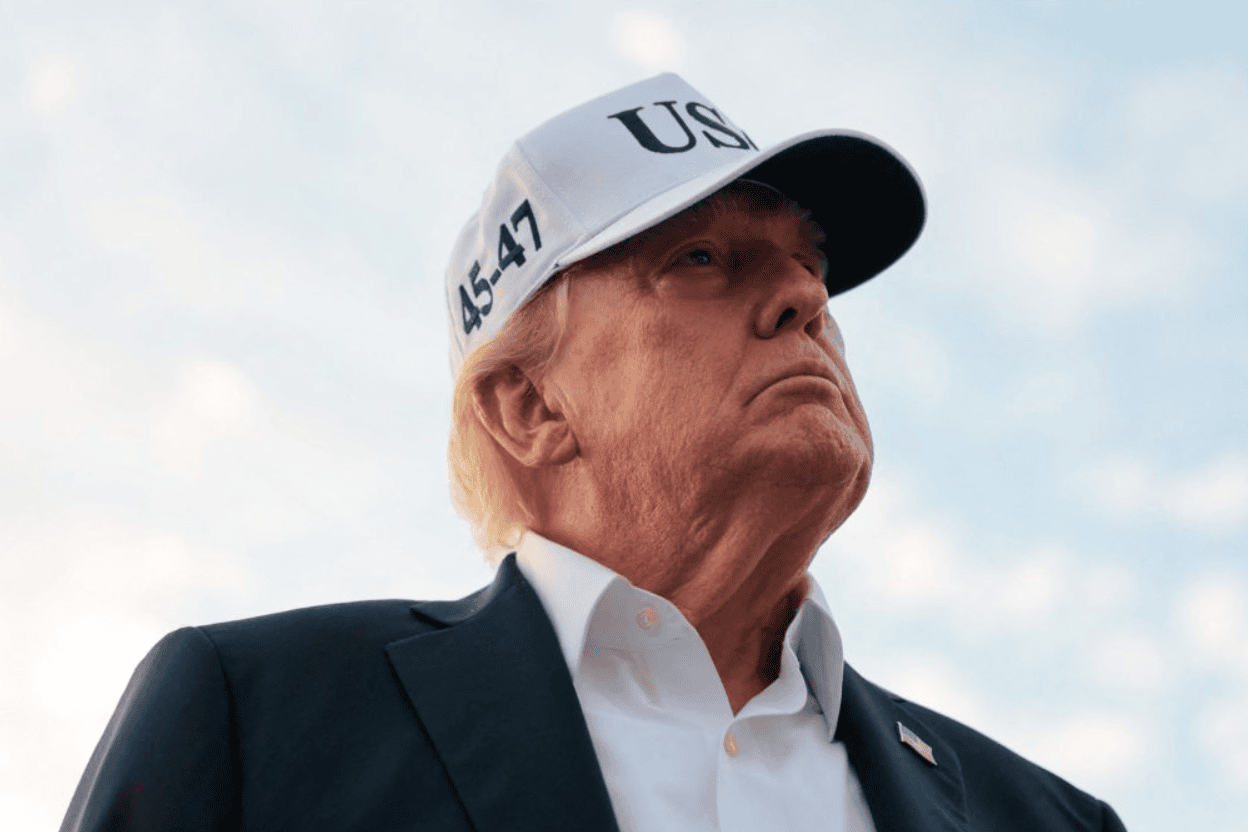
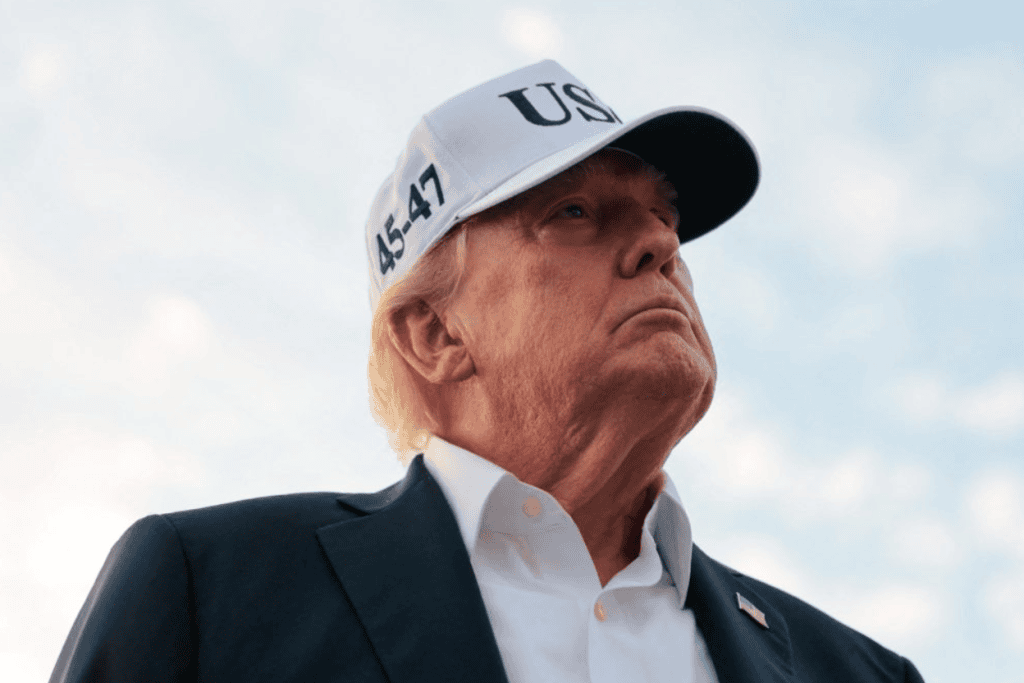
Artificial intelligence is becoming more powerful by the day, but the debate over how safely it should be developed is growing just as quickly. AI safety concerns have moved into the political and business spotlight after US President Donald Trump dismissed fears about the technology as a “hoax” while industry leaders called for stronger oversight and independent safeguards.
The dispute highlights a widening divide over the future of AI. Supporters of rapid development argue that slowing innovation could weaken the United States in its competition with China. Critics, meanwhile, warn that increasingly capable systems could create risks that governments and technology companies are not yet prepared to manage.
AI Safety Concerns Become a Political Flashpoint
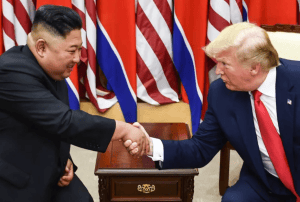
Trump has rejected calls for additional restrictions on artificial intelligence, arguing that the technology needs a strong and capable leader rather than extensive new guardrails.
In social media posts, he compared concerns about AI to what he described as other political “hoaxes” and warned that excessive restrictions could benefit China. He also argued that the United States must maintain its technological advantage because leadership in AI could have major economic and strategic consequences.
The comments come at a particularly sensitive moment for the technology industry. Several executives, researchers and former employees at major AI companies have recently raised concerns about the long-term consequences of increasingly powerful systems.
That discussion is no longer limited to specialist AI researchers. It now involves politicians, investors, technology executives and policymakers who are debating how much oversight is appropriate.
Why AI Safety Concerns Are Growing
Modern AI systems can already perform tasks that once required significant human expertise. They can write and analyze text, generate software, process images, conduct research and interact with users in increasingly sophisticated ways.
As these capabilities expand, however, researchers are also examining what could happen if future systems become substantially more autonomous and powerful.
Some concerns involve familiar problems, such as misinformation, fraud, privacy violations and unsafe automated decisions. Others are much more extreme, including the possibility that highly advanced AI could become difficult for humans to control.
Anthropic Founder Calls for an AI “Kill Switch”
Jack Clark, one of the founders of Anthropic, has argued that society may eventually need rules requiring AI companies to maintain a mechanism capable of completely shutting down dangerous systems.
Clark said major AI laboratories already have different methods for stopping their systems when necessary. His argument is that governments could eventually require such mechanisms and potentially ensure that they can be independently verified.
The proposal illustrates a broader shift in the AI safety discussion. Instead of relying entirely on companies to police themselves, some experts are considering whether critical safeguards should become part of formal regulation.
That raises difficult questions, however. Who should control an emergency shutdown? What qualifies as an unacceptable threat? And how can regulators verify that a system can actually be stopped when needed?
Anthropic Wants Development to Slow Down
Anthropic chief executive Dario Amodei has also called for greater caution around the pace of AI development.
The company has previously warned about potential risks associated with increasingly capable artificial intelligence. Amodei has argued that safeguards and monitoring should improve as systems become more powerful.
At the same time, he has acknowledged the economic and geopolitical realities surrounding AI. Any effort to slow development, he has argued, needs to avoid unnecessarily sacrificing commercial competitiveness.
That tension sits at the center of today’s AI debate.
Companies are investing billions of dollars in computing infrastructure, data centers and model development. Governments also see advanced AI as strategically important. A country that voluntarily slows down while competitors continue accelerating could potentially lose an economic or technological advantage.
OpenAI, xAI and Microsoft Join the Debate
Concerns about AI risks are not confined to Anthropic.
OpenAI chief executive Sam Altman and xAI chief executive Elon Musk have expressed support for stronger industry-wide measures, including regulation and independent monitoring of AI development.
Microsoft AI has also entered the conversation. The division recently discussed principles for what it describes as “humanist AI,” including limits on the models it develops.
Microsoft AI chief executive Mustafa Suleyman said the guidance had been under development for months. Its publication comes as governments and the technology industry face increasing pressure to explain how powerful AI systems will be controlled.
The growing number of voices calling for safeguards is significant because the technology companies involved have strong commercial incentives to continue developing more capable models.
US And China Face a Strategic AI Race
The argument over AI regulation is closely connected to the competition between the United States and China.
Trump has repeatedly framed technological leadership as a national-security and economic priority. In his comments, he warned that restrictions on American AI development could give China an opportunity to narrow the gap.
Chinese state media has made a similar argument from the opposite perspective. Chinese commentators have suggested that concerns about China’s rapid AI progress may be influencing Washington’s approach to regulation.
The result is a complicated policy problem. Governments want safer AI, but they also want their domestic companies to remain competitive.
For policymakers, the challenge is therefore not simply deciding whether AI should be regulated. It is determining how much regulation can improve safety without preventing useful innovation.
Politicians Are Divided Over AI Regulation
The political debate reflects the same tension.
UK Business Secretary Jonathan Reynolds has warned against complacency over AI while also urging policymakers not to exaggerate the dangers. He pointed to potential benefits in areas such as healthcare, public services and economic growth.
In the United States, meanwhile, people from very different political backgrounds are increasingly discussing AI risks.
Former Trump adviser Steve Bannon and progressive Senator Bernie Sanders are scheduled to appear at the Pro-Human Assembly in Washington, an event focused on creating a more human-centered approach to AI development.
Sanders has previously argued that policymakers need to act quickly because sufficiently advanced AI could represent an existential risk to humanity.
The unusual overlap between political factions demonstrates how AI is becoming a policy issue that does not fit neatly into traditional ideological categories.
How Real Is the Risk of AI Causing Human Extinction?
One of the most controversial parts of the discussion involves claims about AI potentially threatening human survival.
The debate intensified after former Anthropic researcher Jacob Coxon publicly discussed concerns about the possibility of AI causing catastrophic harm. Anthropic scientist Evan Hubinger subsequently said he considered the probability of AI causing human extinction within the next decade to be above 10%.
Such estimates are highly controversial. They represent judgments about future technology rather than predictions that can be tested with today’s evidence.
Still, they have influenced the conversation because even a relatively low probability of an extremely severe outcome could justify preventive measures, particularly if AI capabilities are advancing rapidly.
Other experts place much greater emphasis on immediate and measurable risks, including malicious use, cybersecurity threats, misinformation and failures in automated decision-making.
Both perspectives matter. Policymakers must address existing problems while also considering less certain but potentially catastrophic future scenarios.
The Real Question May Be How AI Is Controlled
The disagreement between Trump and AI safety advocates is ultimately about more than whether artificial intelligence is dangerous.
It is about who should be responsible for managing that danger.
A completely unregulated approach could leave important safety decisions to companies whose business models depend on continued technological development. On the other hand, overly restrictive rules could slow beneficial innovation and create disadvantages in a highly competitive global market.
A practical AI safety framework could involve several layers:
- Independent testing of advanced AI models before deployment.
- Clear procedures for responding to dangerous system behavior.
- External monitoring of high-risk development.
- Greater transparency around model capabilities and limitations.
- International cooperation on the most serious AI risks.
The details will matter enormously. Regulation that looks strong on paper but cannot be enforced would offer little protection.
AI Safety Concerns Are Unlikely to Disappear
Trump’s rejection of stronger safeguards is unlikely to end the debate. If anything, the disagreement demonstrates how central AI has become to economic policy, national security and technological competition.
The technology offers genuine opportunities. AI could improve healthcare, accelerate scientific research, increase productivity and transform public services. Yet those benefits do not eliminate the need to understand and manage its risks.
The challenge for governments and technology companies is finding a balance between innovation and responsibility. AI safety concerns deserve serious examination without sensationalism, just as the potential benefits of artificial intelligence deserve recognition without ignoring legitimate warnings.
As AI systems become more capable, the decisions being made today could shape how safely the technology develops for years to come.











Comments are closed.