
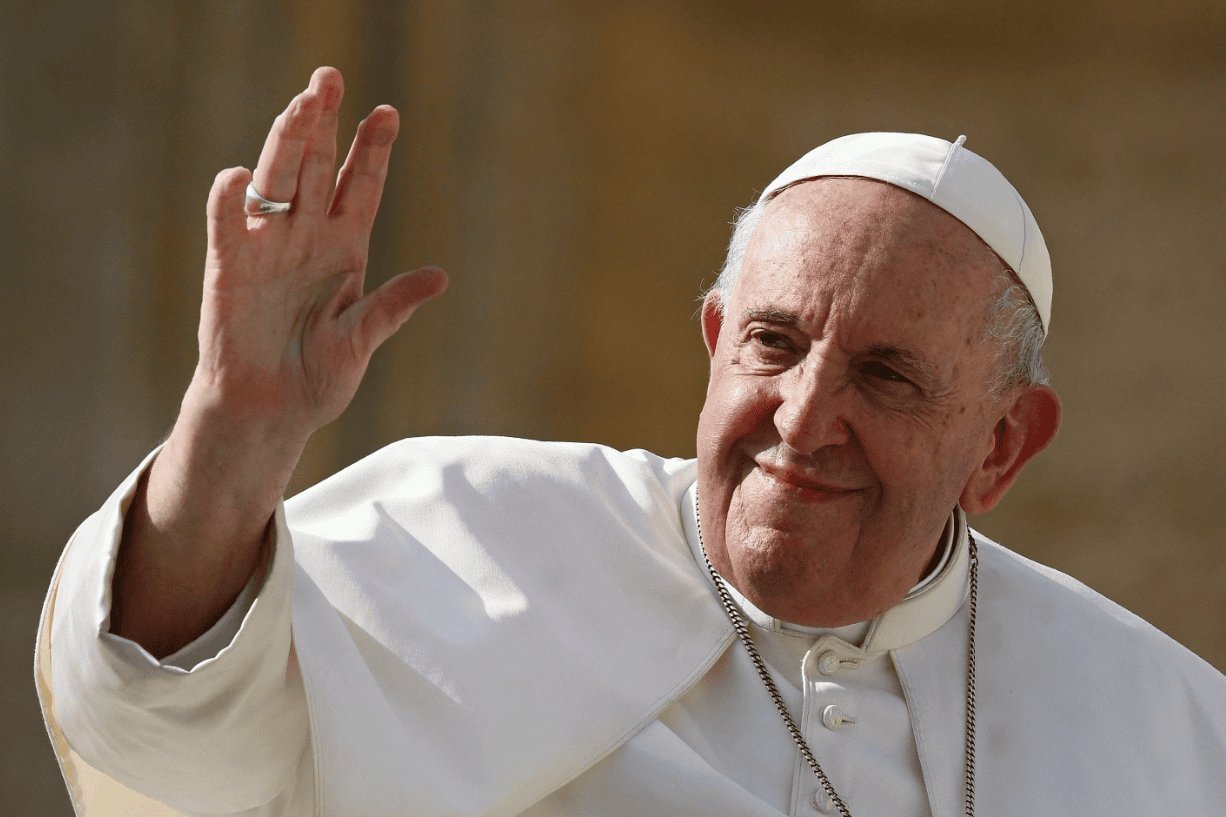
Newly published extracts from the private diaries of Pope Francis have revealed extraordinary personal accounts in which the late pontiff described seeing what he believed to be the devil on three separate occasions. The revelations appear in The Private Diary of Pope Francis, a collection documenting his thoughts and experiences between 1992 and 2024.
In the newly released entries, Francis recalled three disturbing encounters, describing a frightening voice, menacing eyes and a presence he associated with the devil. He also wrote about seeing what he called the “gates of hell” in June 2018, an experience that reportedly left him terrified.
The revelations offer an unusual glimpse into the private spiritual reflections of a pope who spent 12 years leading the Roman Catholic Church. Alongside these extraordinary accounts, the diaries also address moments of personal regret, including the controversy surrounding his 2018 visit to Chile and the handling of allegations of clerical sexual abuse.
Pope Francis Describes Three Encounters With the Devil
According to entries from 2021, Pope Francis recorded three occasions when he believed he had encountered the devil during his lifetime.
The experiences reportedly happened in different settings: once while travelling in a car, another time in a choir loft during Mass, and a third during a meeting with Vatican officials.
Francis described the encounters in deeply personal terms, recalling details that appeared to remain vivid in his memory.
“I can’t forget the powerful raspiness of his voice,” he wrote when reflecting on one of the experiences.
His descriptions also included references to threatening eyes and an unsettling presence. In one account, he recalled an encounter inside a Carmelite chapel in Buenos Aires, dating back to his time as archbishop of the Argentine capital.
He described the figure’s eyes as particularly frightening, writing that they appeared to burn with an intensity greater than during his previous experience.
“He looked at me with flaming eyes… more intense than the previous one. They were like flashes of fire,” Francis wrote.
The diary presents these experiences through the late pope’s personal religious understanding. They are accounts of what he believed he had witnessed rather than independently verified supernatural events.
The Pope’s Account of a Disturbing Voice and Presence
Francis also suggested that these encounters were not isolated memories disconnected from his responsibilities as pontiff.
In one passage, he recalled sensing the same threatening presence during his travels, including around the time of his controversial visit to Chile in 2018.
He described another encounter occurring a few days after returning to Rome, writing that he saw and heard a presence that seemed triumphant.
“I saw him and heard his voice, triumphant, possessing everything,” he recorded.
Despite the disturbing nature of these experiences, Francis also expressed a sense of spiritual reassurance.
He wrote that the Lord had given him the opportunity to free himself from these encounters, reflecting the importance of faith and prayer in how he understood the events.
Pope Francis Says He Saw the Gates of Hell in 2018
Among the most striking revelations in the diaries is an account from June 2018, when Francis described seeing what he called the “gates of hell”.
According to the entry, the experience occurred while he was preparing to go to sleep.
The late pontiff recalled looking at the scene briefly before becoming frightened by what he believed he was witnessing.
“I watched a little, and it terrified me,” he wrote.
Francis also described reaching for his rosary, which he characterised as a weapon against the frightening experience.
“I took the rosary as a weapon,” he recorded.
He further warned about the danger of approaching what he described as the gates of hell, writing that flames could emerge and cause harm.
The passage offers another insight into the deeply personal religious reflections contained in the collection. For Francis, prayer and the rosary represented sources of spiritual protection during moments of fear.
The account also illustrates how seriously he approached the subject of spiritual evil, which has long occupied an important place in Catholic theology.
Private Diaries Reveal Francis’ Regret Over the Chile Abuse Scandal
Beyond the extraordinary spiritual accounts, the diaries also address one of the most difficult periods of Francis’ papacy.
In 2018, the pope faced widespread criticism following his visit to Chile, particularly because of his defence of Bishop Juan Barros, who had been accused of covering up sexual abuse committed by a priest.
The controversy attracted international attention and raised serious questions about the Vatican’s handling of abuse allegations.
Francis initially defended Barros, but later acknowledged that he had not fully understood the seriousness of the situation.
The newly published diary entries reveal that the experience continued to weigh heavily on him.
In a 2021 reflection, he wrote:
“Devastated because of the situation in Chile.”
He also admitted that he had struggled to recognise the extent of the problem.
“It was hard for me to admit what happened in Chile; I didn’t think it was so serious.”
The comments provide a personal perspective on a controversy that significantly challenged his leadership and credibility on the issue of clerical abuse.
Francis Later Apologised to Chile’s Bishops
Following the criticism, Francis initiated a reassessment of the situation and took steps to address the concerns surrounding the Chilean Church.
He later apologised and summoned the country’s bishops to Rome. During the meeting, all the bishops offered their resignations.
The episode became an important moment in his papacy, highlighting the difficulties the Catholic Church faced in confronting allegations of sexual abuse and institutional failures.
The diary entries suggest that Francis continued to reflect on the situation years after the initial controversy.
His admission that he had underestimated the seriousness of the allegations adds another dimension to the public record of his response.
The Private Diary of Pope Francis: A Rare Publication
The newly released collection is particularly significant because of its unusual access to the personal reflections of a modern pope.
The Private Diary of Pope Francis covers a period spanning more than three decades, from 1992 to 2024.
The diaries were edited by Cardinal Víctor Manuel Fernández, a longtime friend of Francis and head of the Vatican’s Dicastery for the Doctrine of the Faith.
The publication is also notable because it represents the first release of a pope’s diaries to the public since the 1960s.
Unlike traditional papal documents, which generally focus on official Church positions, speeches and theological statements, private diaries can reveal more personal thoughts, doubts and emotional experiences.
In this case, the collection includes reflections on spirituality, leadership, personal responsibility and some of the most challenging moments of Francis’ time in the Church.
It provides readers with a different perspective on a religious leader whose public life was closely followed around the world.
Pope Francis’ Legacy and His Final Years
Born Jorge Mario Bergoglio in Argentina, Francis was elected pope in March 2013, becoming the first pontiff from Latin America and the first Jesuit to lead the Roman Catholic Church.
During his 12-year papacy, he became widely associated with calls for compassion, social justice, concern for disadvantaged communities and reform within the Church.
His leadership also involved difficult challenges, including internal Vatican tensions, declining trust following abuse scandals and debates over the future direction of Catholicism.
Francis died in April 2025 at the age of 88, bringing an influential chapter in modern Church history to a close.
His successor, Pope Leo XIV, inherited an institution facing many of the same questions about accountability, transparency and its relationship with the wider world.
The publication of Francis’ private diaries now adds another layer to the historical understanding of his life and leadership.
What the Newly Published Diaries Reveal About Pope Francis
The revelations surrounding the three alleged encounters with the devil and the reported vision of the gates of hell have attracted attention because they offer an unusually personal account of Francis’ spiritual life.
However, the collection is about more than supernatural experiences. Its reflections on the Chilean abuse scandal reveal a leader who continued to grapple with difficult decisions and acknowledged mistakes in his handling of a major Church controversy.
Together, these entries present a more personal portrait of the late pontiff, bringing his private fears, religious convictions and leadership challenges into public view.
For historians, Catholics and readers interested in the modern papacy, The Private Diary of Pope Francis provides an opportunity to examine the thoughts of a religious leader whose influence extended far beyond the Vatican.
Ultimately, the diaries offer a reminder that behind the public responsibilities of the papacy was a man who experienced fear, uncertainty, regret and a profound commitment to his faith.




Comments are closed.