
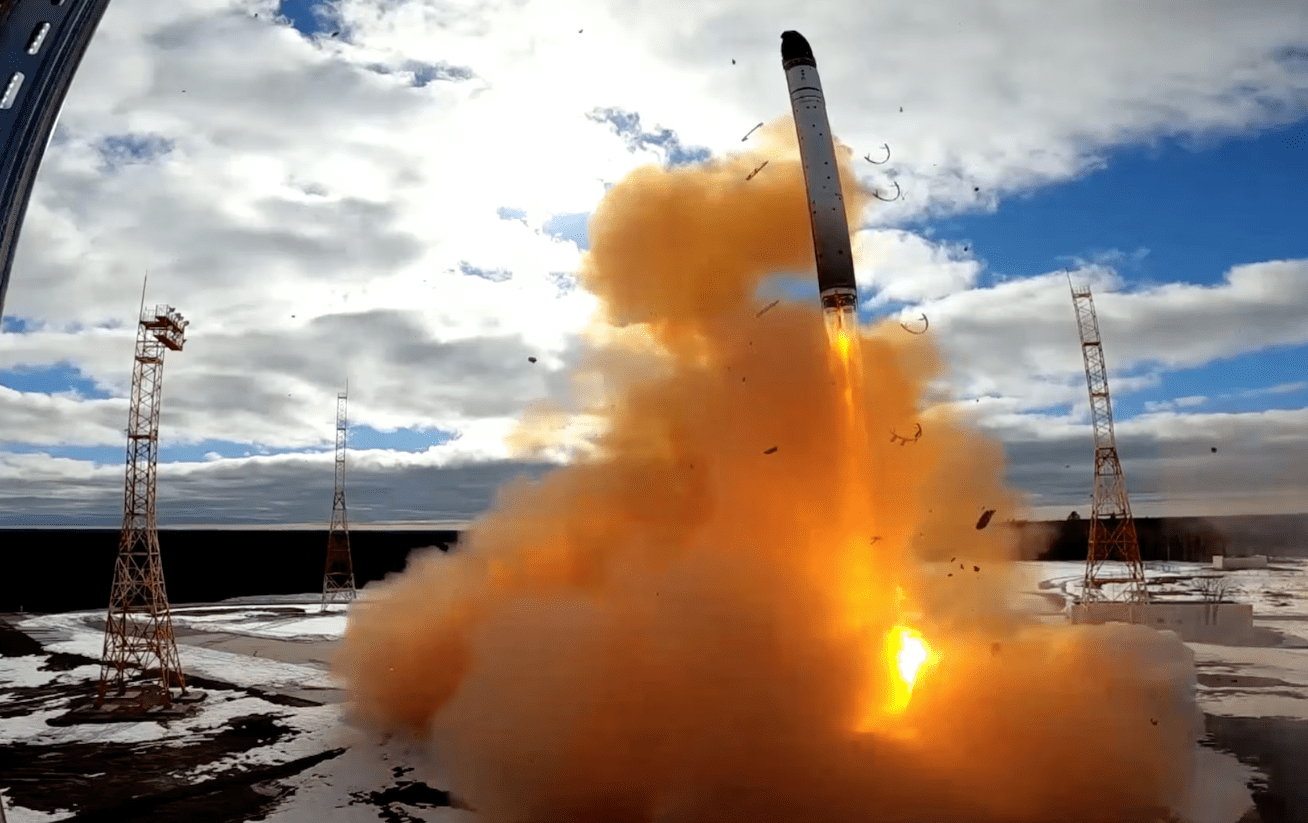
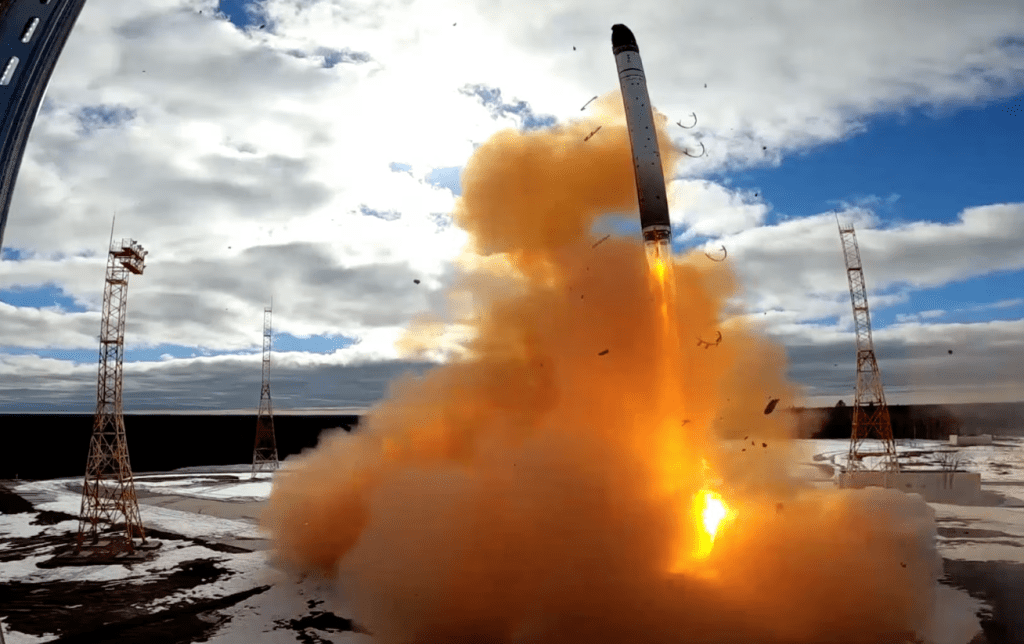
Russia has once again drawn global attention to its nuclear capabilities after successfully test-launching the RS-28 Sarmat intercontinental ballistic missile, a weapon President Vladimir Putin described as “the most powerful missile in the world.”
The launch comes at a highly sensitive geopolitical moment as tensions surrounding the Russia-Ukraine war continue alongside growing concerns over global military escalation. Moscow says the Sarmat missile represents a major step in modernizing Russia’s nuclear forces and maintaining strategic parity with the West.
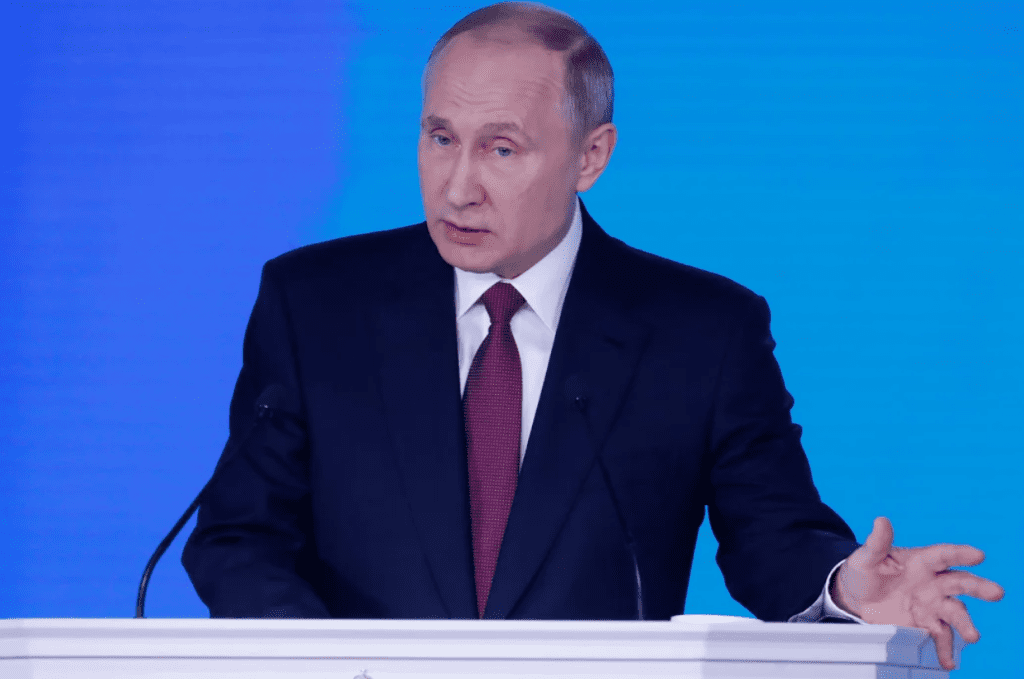
At the same time, Western analysts remain skeptical about some of the Kremlin’s more ambitious claims regarding the missile’s capabilities and range.
What Is the RS-28 Sarmat Missile?
The RS-28 Sarmat, often referred to in Western media as “Satan II,” is a next-generation intercontinental ballistic missile developed to replace the aging Soviet-era Voyevoda system.
An intercontinental ballistic missile, commonly known as an ICBM, is designed to carry nuclear warheads across extremely long distances. These weapons represent one of the core pillars of nuclear deterrence for major military powers.
The Sarmat missile has reportedly been under development since 2011 as part of Russia’s broader effort to modernize its strategic nuclear arsenal.
According to Russian officials, the missile is capable of carrying multiple independently targetable nuclear warheads and penetrating existing missile defense systems.
Putin Calls Sarmat the “Most Powerful Missile in the World”
During the announcement of the test launch, Putin praised the missile’s capabilities in unusually strong language.
He claimed the Sarmat possesses destructive power significantly greater than Western counterparts and argued that its advanced systems make interception nearly impossible.
Claimed Range Sparks Global Attention
One of the most debated aspects of Putin’s statement involves the missile’s reported range.
According to the Russian president, the Sarmat can travel more than 35,000 kilometers. If accurate, that distance would theoretically allow the missile to strike almost any target on Earth.
However, Western military analysts strongly dispute that figure.
Most independent estimates place the missile’s actual operational range closer to 18,000 kilometers. Even so, that range still allows the weapon to reach targets across the United States, Europe, and much of the world from Russian territory.
For comparison, the distance between Moscow and New York is roughly 7,500 kilometers.
How the Sarmat Missile Works
The Sarmat missile is designed as a heavy liquid-fueled ICBM capable of delivering a massive nuclear payload.
Reports from defense analysts estimate the missile can carry payloads weighing up to 10 tonnes. Additionally, the missile is believed to support multiple warheads capable of independently targeting separate locations.
Why Russia Says It Can Defeat Missile Defenses
Russian officials claim one of the Sarmat’s biggest advantages is its ability to evade modern missile defense systems.
Putin stated that the missile accelerates rapidly after launch and spends less time in vulnerable flight phases, reducing opportunities for interception.
Furthermore, Russia says the missile can potentially use suborbital flight paths, allowing it to approach targets from unexpected directions.
This capability would complicate defensive tracking systems designed primarily for traditional ballistic trajectories.
Although many of these claims remain difficult to independently verify, the missile clearly represents a major part of Russia’s long-term strategic military planning.
Russia’s Broader Nuclear Modernization Strategy
The Sarmat launch is only one component of a much larger Russian military modernization effort.
Over the past several years, Moscow has unveiled multiple advanced weapons systems intended to reinforce its nuclear deterrence capabilities.
Other Weapons Russia Has Introduced
Among the most notable systems is the Avangard hypersonic glide vehicle, which Russia claims can travel at speeds exceeding 27 times the speed of sound.
Russia has also introduced the nuclear-capable Oreshnik intermediate-range ballistic missile, which has reportedly already been used in conventional strikes against Ukraine.
Additionally, Moscow continues developing the Poseidon underwater nuclear drone and the Burevestnik nuclear-powered cruise missile.
Together, these systems represent Russia’s attempt to counter growing Western missile defense technologies and preserve strategic military balance.
Why Russia Is Showcasing These Weapons Now
The timing of the Sarmat test launch is highly significant.
Russia’s ongoing war in Ukraine has dramatically increased tensions between Moscow and NATO countries. Since the conflict escalated in 2022, Putin has repeatedly referenced Russia’s nuclear arsenal in speeches and military announcements.
Many Western governments view these statements as strategic messaging intended to discourage deeper military intervention in support of Ukraine.
Moscow’s Concerns Over U.S. Missile Defense
Russian officials argue that expanding American missile defense systems threaten global strategic stability.
Putin specifically referenced concerns about future U.S. missile shield projects, including discussions surrounding America’s proposed “Golden Dome” defense initiative.
According to Russian military planners, a sufficiently advanced missile shield could theoretically weaken Russia’s ability to retaliate after a nuclear strike. Consequently, Moscow believes it must continue developing weapons capable of bypassing such defenses.
This logic forms a central part of Russia’s modern nuclear doctrine.
Ukraine War Continues Alongside Rising Military Tensions
The Sarmat missile announcement also arrives amid continued fighting between Russia and Ukraine.
Ukrainian President Volodymyr Zelenskyy recently confirmed strikes against Russian gas facilities deep inside Russian territory. According to Kyiv, the attacks were carried out in response to ongoing Russian strikes against Ukrainian cities and infrastructure.
Meanwhile, Kremlin officials continue suggesting that negotiations could eventually bring the conflict toward a conclusion. However, active military operations and drone attacks remain ongoing.
Nuclear Messaging Remains Central to the Conflict
Since the start of the war, Russia has repeatedly emphasized the scale and strength of its nuclear capabilities.
Analysts widely interpret these reminders as part of a broader deterrence strategy aimed at limiting direct NATO involvement.
The unveiling of advanced systems like the Sarmat reinforces that message while also serving domestic political purposes inside Russia.
How the World Is Reacting to the Sarmat Missile
International reactions to the launch have been mixed.
Some military experts view the test as largely symbolic because Russia already possesses a vast nuclear arsenal capable of global reach. Others argue that modernizing strategic weapons systems could intensify a new arms race between major powers.
At the same time, many analysts caution against overstating the missile’s technological breakthroughs until more independent verification becomes available.
Nevertheless, the Sarmat missile clearly represents an important political and military symbol for the Kremlin.
Conclusion
Russia’s successful Sarmat missile test highlights the growing importance of strategic nuclear messaging in today’s geopolitical climate. As tensions between Moscow and the West remain elevated, the Kremlin continues investing heavily in advanced weapons designed to reinforce its military deterrence capabilities.
Although experts debate the true extent of the missile’s capabilities, the RS-28 Sarmat has already become a powerful symbol of Russia’s ongoing military modernization efforts.
With the Ukraine war continuing and global security tensions rising, the launch serves as another reminder that nuclear strategy remains deeply central to modern international politics.












Comments are closed.