
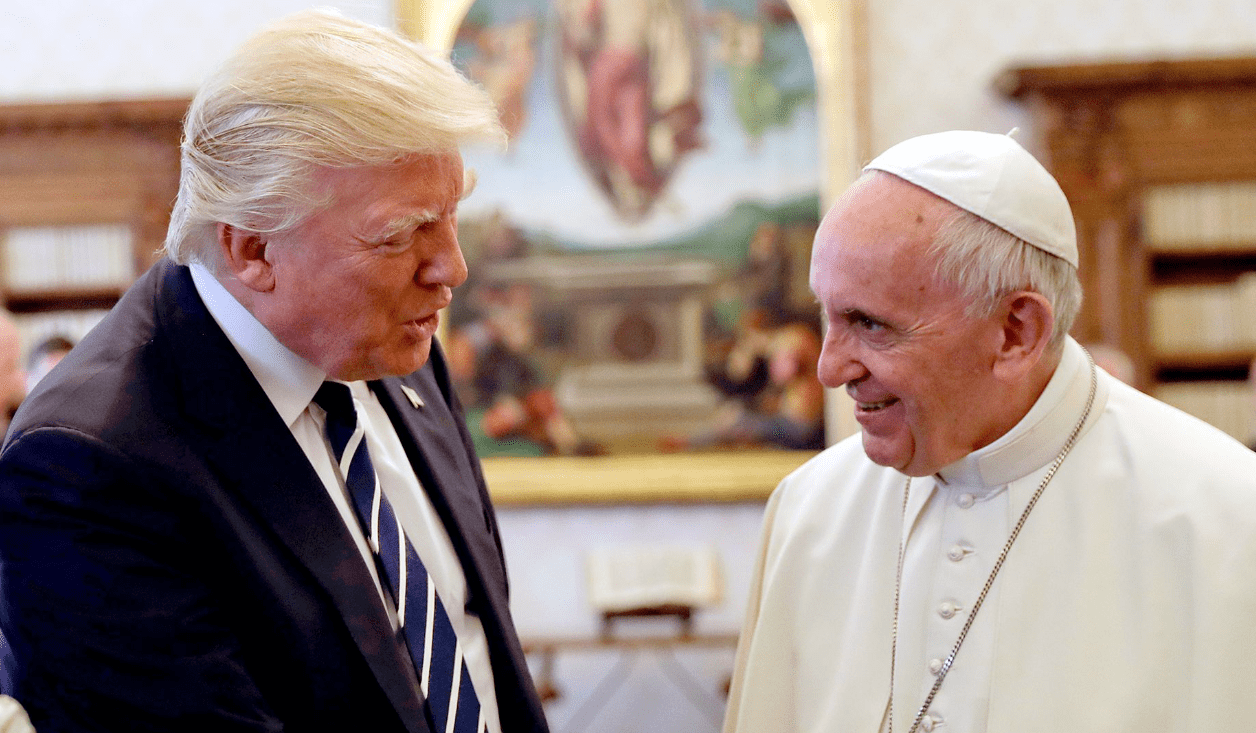
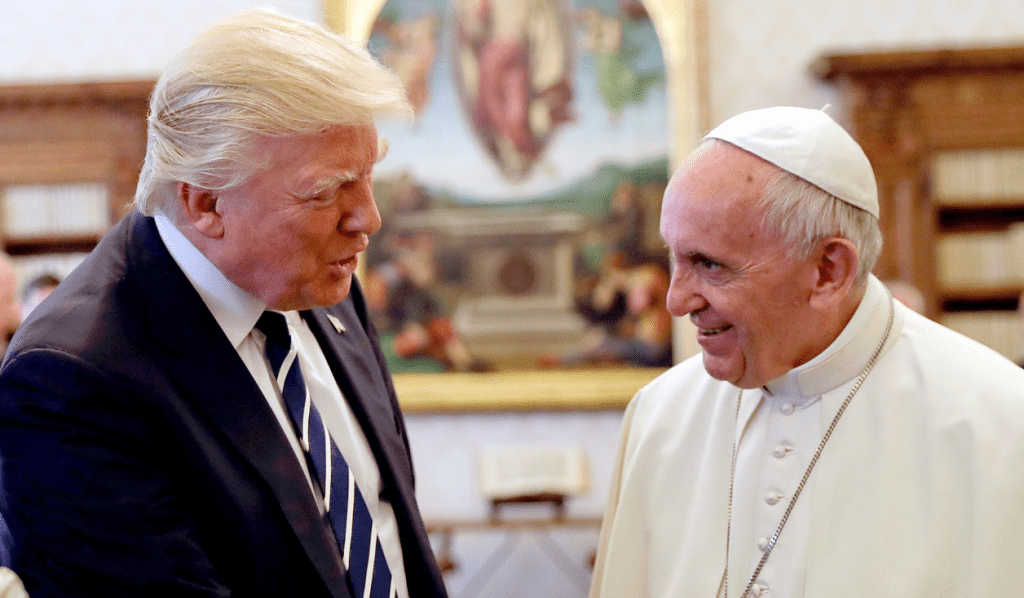
Pope Leo XIV has clarified that recent remarks criticizing “tyrants” who prioritize military spending over humanitarian needs were not directed at Donald Trump, following a public exchange that drew attention to tensions between the Vatican and Washington. The episode highlights broader intersections between moral leadership, US foreign policy, and global conflicts, particularly in the Middle East.
Background & Context
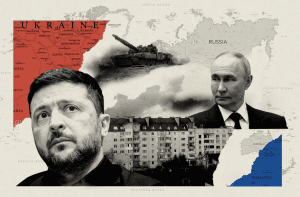
The comments come amid heightened geopolitical tensions shaped by overlapping crises, including the war in Ukraine and escalating conflict involving Iran and U.S.-aligned forces. In recent months, debates over military spending, diplomacy, and humanitarian priorities have intensified across international institutions and political leadership circles.
The Vatican has traditionally positioned itself as a moral voice in global affairs, advocating for peace, dialogue, and humanitarian relief. Under Pope Leo XIV, that stance has included criticism of escalating military conflicts and warnings about the human and economic costs of prolonged warfare.
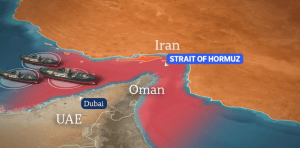
Tensions with Washington emerged after the Pope raised concerns about the potential consequences of U.S. rhetoric and strategy toward Iran, including warnings about broader regional destabilization and risks to global energy security, particularly around key routes such as the Strait of Hormuz.
Key Developments
Speaking to reporters during a flight to Angola as part of his ongoing Africa tour, Pope Leo stated that his earlier speech—delivered in Cameroon—had been prepared weeks in advance and was not intended as a response to President Trump.
“I was not seeking to debate the president,” the pontiff said, adding that interpretations linking the remarks directly to Trump reflected “a narrative that has not been accurate.”
The original speech criticized global leaders who, in the Pope’s words, allocate vast financial resources to warfare while neglecting investments in healthcare, education, and reconstruction. He also referenced ongoing violence in parts of Cameroon, where a prolonged insurgency has caused significant civilian suffering.
The remarks were widely interpreted in political and media circles as an indirect critique of U.S. foreign policy, particularly following Trump’s earlier comments on Iran and regional security. The U.S. president had warned of severe consequences if Tehran did not comply with American demands related to ongoing conflict and maritime access.
In response to the Pope’s clarification, JD Vance welcomed the statement, noting that public narratives often amplify disagreements while overlooking more nuanced realities. Vance had previously urged the Vatican to focus primarily on moral and spiritual issues rather than geopolitical debates.
President Trump, for his part, has maintained a critical stance toward the Pope, describing him as “weak on crime” and “ineffective on foreign policy” in earlier remarks. Despite this, Trump has also emphasized that the Pope is entitled to express his views, even where they diverge from U.S. policy positions.
Analysis & Implications
Religion and Diplomacy in a Polarized Climate
The exchange underscores the evolving role of religious leadership in global political discourse. While the Vatican does not wield formal political power, its moral authority can influence public opinion and shape conversations around international relations, conflict, and humanitarian priorities.
Pope Leo’s intervention reflects a broader pattern of religious figures engaging with geopolitical issues, particularly where human suffering and ethical considerations intersect with policy decisions.
Implications for US Foreign Policy
For the United States, the episode illustrates the challenges of navigating international criticism while pursuing strategic objectives. U.S. policy in the Middle East—especially in relation to Iran and regional security—has significant global implications, including for energy markets and diplomatic alliances.
Criticism from influential global figures, including religious leaders, may not directly alter policy decisions but can contribute to broader debates about the balance between military action and diplomatic engagement.
Middle East Politics and Global Perception
The broader context of the dispute is rooted in ongoing instability in the Middle East, where conflicts involving Iran, Israel, and U.S. interests continue to shape geopolitical dynamics. The risk of escalation, combined with concerns over energy supply disruptions, has elevated the global stakes of regional decision-making.
In this environment, statements from high-profile figures—whether political or religious—are often interpreted through a geopolitical lens, even when not explicitly intended as such.
Media Narratives and Political Framing
The Pope’s clarification also points to the role of media framing in shaping public understanding of international events. Interpretations of his “tyrants” remarks as a direct critique of Trump reflect how quickly narratives can form around high-profile figures, particularly in politically sensitive contexts.
This dynamic can complicate diplomatic communication, as statements aimed at broad ethical concerns are sometimes reframed as targeted political critiques.
Conclusion
Pope Leo XIV’s effort to distance his remarks from U.S. political leadership highlights the delicate balance between moral advocacy and geopolitical interpretation in today’s interconnected world. As global conflicts continue to unfold, interactions between religious authority and political power are likely to remain a visible and sometimes contentious aspect of international discourse.
The episode underscores the broader challenge of maintaining constructive dialogue across differing perspectives, particularly at a time when US foreign policy and Middle East politics are deeply intertwined with global stability.



Comments are closed.