
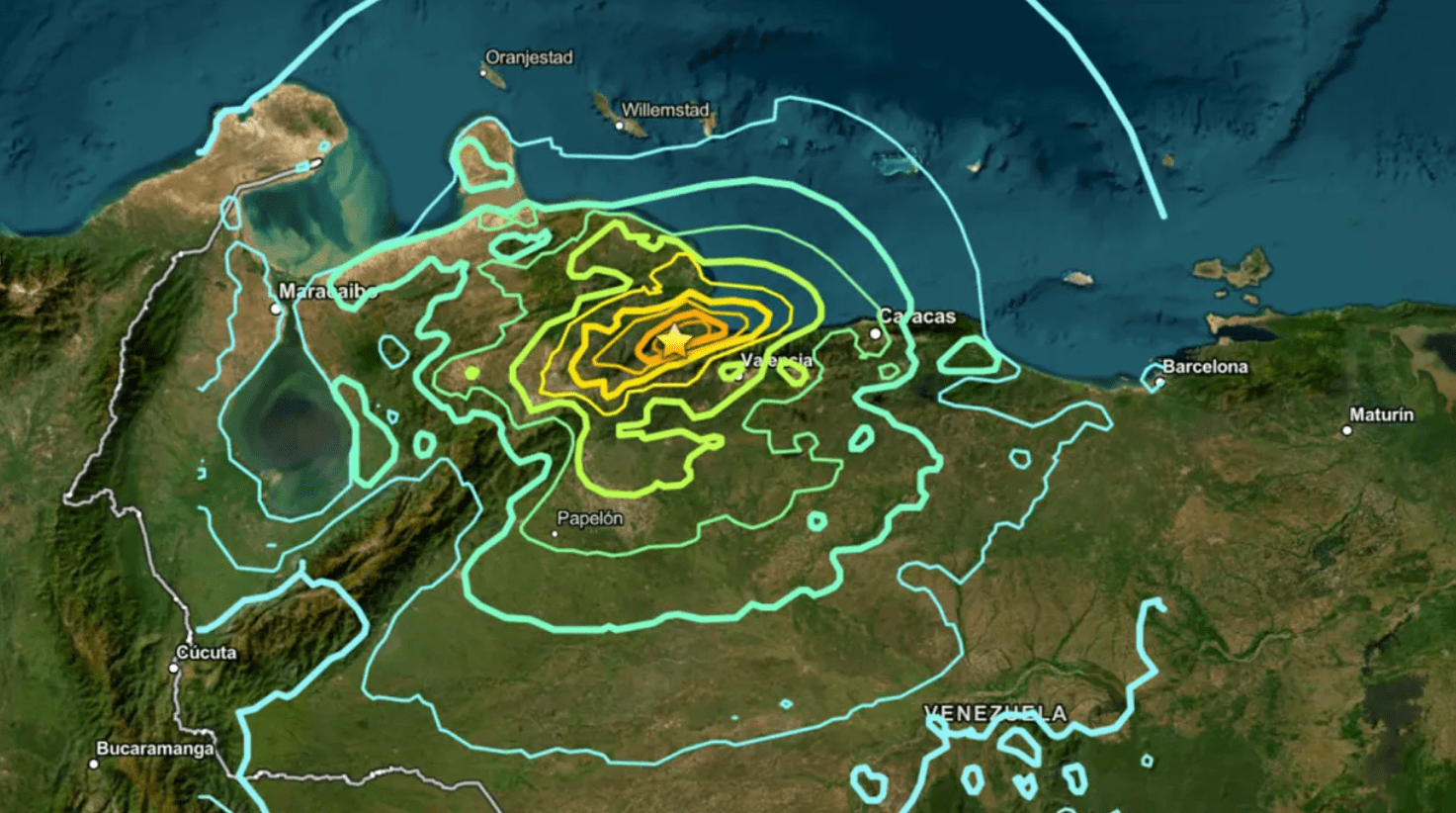
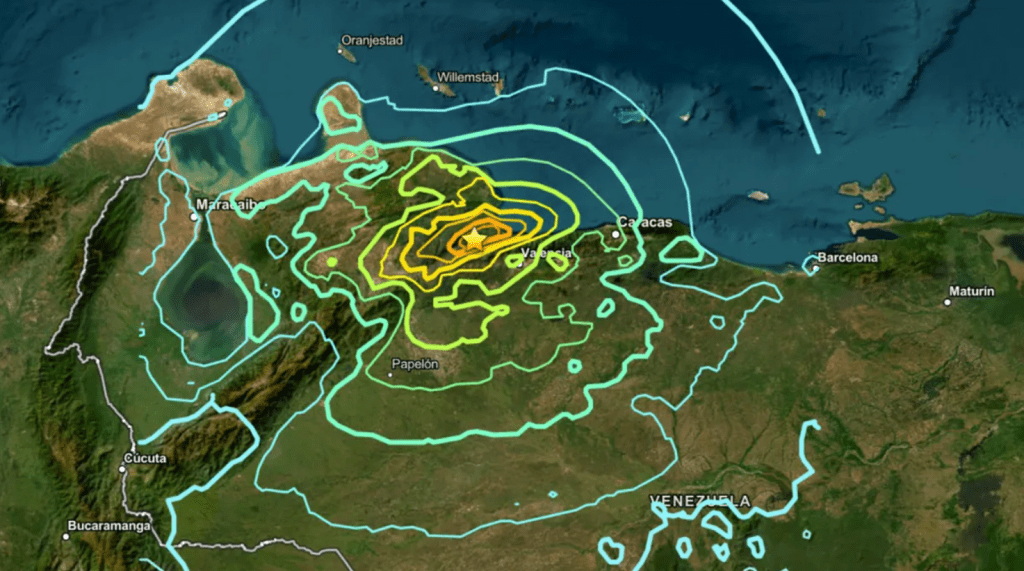
When two powerful earthquakes struck Venezuela within less than a minute of each other, they left behind a trail of destruction that shocked the world. Entire buildings collapsed, rescue teams searched desperately through the rubble, and thousands of families faced an uncertain future. While earthquakes occur across the globe every day, events like these raise an important question: Why are Venezuela and much of Central America so vulnerable to devastating earthquakes?
The recent Venezuela earthquakes once again highlight the dangerous combination of powerful tectonic activity, densely populated urban areas, and aging infrastructure. Although countries such as Japan also experience frequent major earthquakes, stricter building regulations and advanced engineering have dramatically reduced the human cost. In contrast, many communities across Latin America remain exposed to far greater risks.
Venezuela Earthquakes Trigger Humanitarian Crisis
The disaster unfolded on Wednesday evening when a magnitude 7.2 earthquake struck approximately 160 kilometers west of Caracas. Less than a minute later, an even stronger magnitude 7.5 earthquake rocked the same region.
The twin earthquakes caused catastrophic damage across the Venezuelan capital and surrounding areas. Numerous residential towers, office buildings, and older structures collapsed under the intense shaking. Emergency crews immediately launched large-scale rescue operations as survivors remained trapped beneath concrete and steel.
Authorities declared a national state of emergency while international monitoring agencies warned that aftershocks could continue for several days. Initial casualty figures reported hundreds of deaths and thousands of injuries, but officials cautioned that the final toll could rise as rescue efforts continue.
Neighborhoods in Caracas, particularly the heavily affected Altamira district, witnessed extensive destruction as families searched for missing loved ones and emergency responders worked around the clock.
Why Are Venezuela Earthquakes So Powerful?
A Dangerous Tectonic Boundary
The primary reason behind the frequent Venezuela earthquakes is the country’s location along the boundary of two massive tectonic plates.
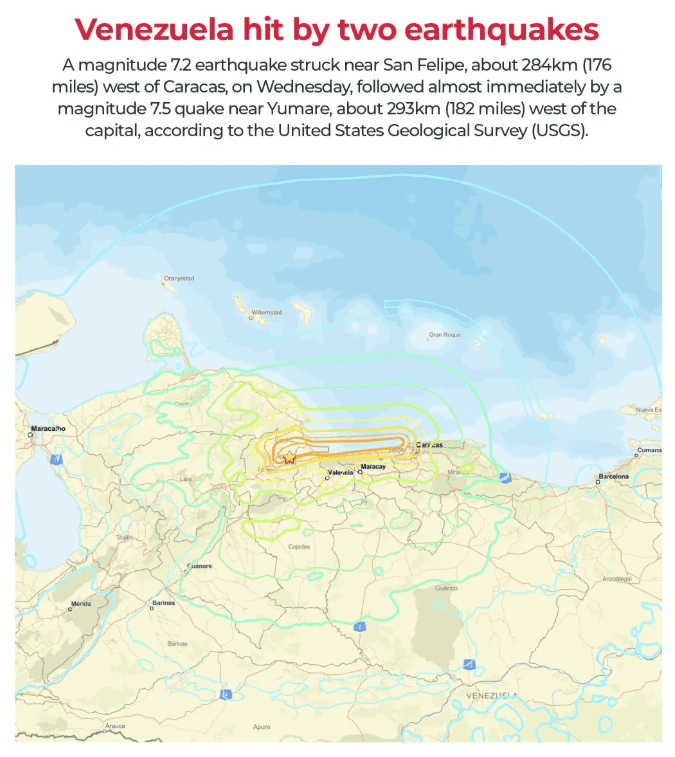
Venezuela sits where the Caribbean Plate meets the South American Plate. These enormous sections of Earth’s crust constantly move against one another, storing tremendous amounts of energy over time.
Eventually, the built-up pressure is released suddenly, producing powerful earthquakes capable of causing widespread destruction.
The recent earthquakes were caused by shallow strike-slip faulting, where two blocks of rock slide horizontally past each other. Because the rupture occurred relatively close to the Earth’s surface, seismic waves reached populated areas with greater intensity, increasing the damage.
Shallow Earthquakes Cause Greater Damage
Not all earthquakes produce the same level of destruction.
Deep earthquakes lose much of their energy before reaching the surface. Shallow earthquakes, however, release their force much closer to cities and towns, resulting in stronger ground shaking.
This explains why even earthquakes of similar magnitude can have vastly different consequences depending on their depth and location.
Why Central America Is Highly Vulnerable
Although Venezuela lies in South America, the wider region shares many of the same geological risks affecting Central America.
Multiple Tectonic Plates Collide
Central America is one of the world’s most seismically active regions because several tectonic plates interact beneath the surface.
One of the most dangerous areas is the subduction zone, where the Cocos Plate slowly sinks beneath the Caribbean Plate. This continuous movement generates powerful earthquakes and volcanic activity throughout the region.
Countries including Guatemala, Costa Rica, Honduras, Nicaragua, and parts of southern Mexico regularly experience significant seismic activity.
Aging Infrastructure Increases the Risk
Natural hazards alone do not determine how deadly an earthquake becomes.
Many communities throughout the region contain older buildings, informal housing developments, or structures constructed before modern seismic building standards were introduced.
When strong shaking occurs, poorly reinforced buildings are far more likely to collapse, trapping residents inside.
Rapid urban growth has also placed millions of people in high-risk areas where infrastructure has struggled to keep pace with population expansion.
Venezuela’s Long History of Earthquakes
The latest tragedy is far from the first major earthquake to strike Venezuela.
In 1812, one of the country’s deadliest earthquakes devastated Caracas and Mérida, killing an estimated 30,000 people.
More than 150 years later, another major earthquake struck Caracas in 1967, causing multiple high-rise buildings to collapse and claiming around 240 lives.
These historical disasters demonstrate that seismic activity has shaped Venezuela’s history for centuries. Despite improvements in construction techniques, many vulnerable buildings remain standing today.
Recent Earthquakes Across Central America
The region has experienced numerous destructive earthquakes over the past two decades.
Some of the most significant include:
Chile, 2010
A massive magnitude 8.8 earthquake struck the Maule region, generating a devastating tsunami and causing widespread destruction across central Chile.
Costa Rica and Guatemala, 2012
Costa Rica experienced a magnitude 7.6 earthquake near its Pacific coast, while Guatemala suffered its strongest earthquake in decades later that year, resulting in dozens of fatalities.
Honduras, 2018
A magnitude 7.6 earthquake off the Honduran coast triggered tsunami warnings throughout parts of the Caribbean.
Nicaragua, 2022
A magnitude 6.7 offshore earthquake rattled western Nicaragua, reminding residents that seismic risks remain constant across the region.
More recently, Guatemala has also experienced damaging earthquakes that caused significant structural losses and displaced thousands of residents.
Why Japan Experiences Fewer Casualties
Japan provides one of the clearest examples of how preparation can save lives.
Like Venezuela, Japan sits in one of the world’s most active seismic zones and experiences thousands of earthquakes every year. However, strict building codes, advanced engineering, and decades of investment in disaster preparedness have transformed the country’s resilience.
Many modern Japanese buildings incorporate base isolation systems that absorb seismic energy before it reaches the structure above. Flexible steel frameworks, sophisticated early warning systems, and regular emergency drills also help reduce casualties.
As a result, earthquakes that might devastate poorly constructed neighborhoods elsewhere often cause significantly fewer fatalities in Japan.
The Pacific Ring of Fire Remains the World’s Earthquake Hotspot
The majority of the world’s strongest earthquakes occur within the Pacific Ring of Fire, a vast horseshoe-shaped belt stretching around the Pacific Ocean.
This zone accounts for roughly 90 percent of global seismic activity and includes countries such as Japan, Indonesia, the Philippines, Chile, Peru, Mexico, and the western coasts of North and South America.
Frequent earthquakes and volcanic eruptions are expected throughout this region because numerous tectonic plates constantly collide, separate, and slide past one another.
What Happens After a Major Earthquake?
The danger rarely ends once the initial shaking stops.
Powerful aftershocks can continue for days or even weeks, causing additional building collapses and complicating rescue efforts.
Emergency officials typically focus on:
- Searching for survivors trapped beneath collapsed structures
- Restoring electricity, water, and communications
- Providing temporary shelter for displaced families
- Assessing structural safety before residents return home
- Monitoring aftershocks and secondary hazards
Long-term recovery often takes months or even years, particularly in heavily populated urban areas.
Conclusion
The recent Venezuela earthquakes serve as another reminder that natural hazards become humanitarian disasters when powerful seismic forces meet vulnerable infrastructure. Venezuela’s location along an active tectonic boundary makes earthquakes unavoidable, but stronger building standards, improved emergency planning, and continued investment in disaster resilience can significantly reduce future losses.
While earthquakes cannot be prevented, their impact can be managed. As rescue efforts continue and communities begin rebuilding, the tragedy also underscores the importance of preparedness in every earthquake-prone region around the world.










Comments are closed.