
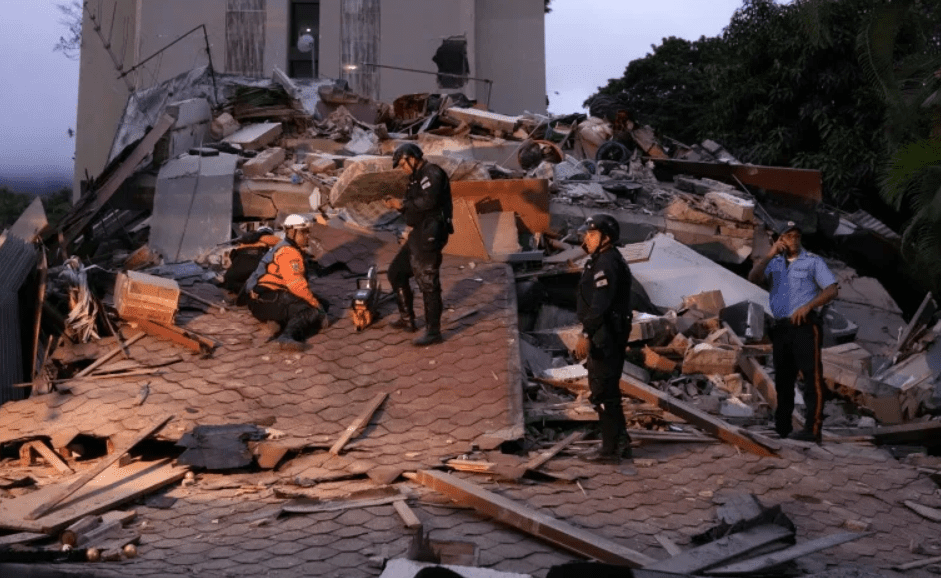
Two powerful earthquakes struck Venezuela within seconds of each other, triggering widespread devastation, collapsing buildings, and prompting a nationwide state of emergency. The Venezuela twin earthquakes have left dozens dead, injured hundreds more, and disrupted critical infrastructure across the country, creating one of the most significant natural disasters Venezuela has faced in recent years.
As rescue teams continue searching through rubble and emergency services work around the clock, authorities are racing to assess the full extent of the damage while international support begins to arrive.
Venezuela Twin Earthquakes Shake the Nation
The disaster unfolded when a magnitude 7.2 earthquake struck western Venezuela, followed less than a minute later by an even stronger magnitude 7.5 tremor. According to seismic monitoring agencies, both earthquakes originated in Yaracuy state, west of the capital Caracas.
Although the epicenters were located outside the capital region, the force of the quakes was felt across much of central and western Venezuela. Residents reported violent shaking in Caracas, Carabobo, Miranda, La Guaira, and Trujillo, while tremors were also detected in neighboring Colombia and parts of northern Brazil.
The back-to-back nature of the earthquakes amplified their impact. Buildings weakened by the first shock were further damaged by the second, leading to multiple structural collapses and widespread panic.
Death Toll Rises as Rescue Efforts Intensify
Authorities have confirmed at least 32 fatalities, while more than 700 people have been injured. Officials caution that these numbers could rise as emergency crews continue search-and-rescue operations in heavily affected areas.
In Caracas, emergency responders have been working tirelessly to locate survivors trapped beneath collapsed buildings. Images emerging from the capital show rescue workers navigating mountains of concrete, twisted metal, and debris.
Hospitals across affected regions have been treating hundreds of injured residents, ranging from minor injuries to severe trauma caused by falling structures and debris.
Meanwhile, temporary medical stations have been established to help relieve pressure on healthcare facilities already stretched by the disaster.
Communities Face Uncertainty
For many Venezuelans, the earthquakes have created immediate concerns about shelter, food, and access to essential services.
Thousands of residents have been forced from their homes due to structural damage or safety concerns. Families are gathering in open spaces, parks, and emergency shelters as aftershocks remain a possibility.
The Ministry of Education has suspended classes nationwide, with several schools being converted into emergency shelters and relief centers for displaced residents.
Caracas Infrastructure Suffers Major Damage
One of the most significant impacts of the Venezuela twin earthquakes has been the disruption of transportation and public services.
Authorities announced the closure of Simon Bolivar International Airport after inspectors identified damage to airport infrastructure. Flight operations were suspended as engineers began evaluating the safety of facilities.
Several major airlines quickly adjusted their schedules. International carriers canceled or postponed flights to Caracas while offering passengers refunds and flexible rebooking options.
Public transportation has also been affected. Portions of Caracas’s metro system were suspended while inspections continue, creating additional challenges for residents attempting to move around the city.
Power outages and communication disruptions have also been reported in several regions, complicating rescue operations and emergency response efforts.
Government Declares State of Emergency
Acting President Delcy Rodriguez declared a national state of emergency shortly after the earthquakes struck.
The emergency declaration allows authorities to mobilize resources more rapidly, coordinate rescue operations, and provide support to affected communities.
Government agencies, military personnel, civil defense units, and emergency responders have been deployed across impacted areas to assist with evacuations, medical treatment, and recovery efforts.
Officials are urging residents to follow safety instructions and avoid damaged structures until engineers complete inspections.
International Support Begins to Arrive
As news of the disaster spread, governments around the world expressed solidarity with Venezuela and offered assistance.
Spain announced its readiness to provide emergency aid through its international development and humanitarian response mechanisms. Several Latin American nations also offered support and technical assistance.
The United States extended condolences and signaled its willingness to assist with disaster response efforts. Additional expressions of support came from governments across Europe, Asia, and the Americas.
Cuban medical personnel already working in Venezuela have reportedly been mobilized to assist affected communities and support local healthcare services.
Why These Earthquakes Were So Destructive
Earthquakes of magnitude 7.0 and above are considered major seismic events capable of causing severe damage, particularly in densely populated areas.
The first Venezuela earthquake measured 7.2 and occurred at a depth of approximately 22 kilometers. The second, measuring 7.5, occurred at a shallower depth of around 10 kilometers.
Shallower earthquakes often generate stronger surface shaking, increasing the potential for structural damage. The rapid succession of two powerful quakes further intensified the destruction.
Seismologists note that when major earthquakes occur back-to-back, buildings weakened by the initial shock can fail during the second event, significantly increasing casualties and damage.
How the Venezuela Earthquakes Compare Globally
While the Venezuela twin earthquakes rank among the strongest in the country’s modern history, they remain below the largest earthquakes ever recorded worldwide.
The most powerful earthquake on record was the 1960 Valdivia earthquake in Chile, which measured magnitude 9.5. Other catastrophic events include the 2004 Indian Ocean earthquake and tsunami and the 2011 Tohoku earthquake in Japan.
Even so, earthquakes in the 7.0 to 7.9 range can be devastating, especially when they strike populated regions with vulnerable infrastructure.
The extent of destruction depends on multiple factors, including depth, proximity to population centers, building standards, and the preparedness of emergency response systems.
Recovery Challenges Lie Ahead
Although the immediate focus remains on rescue operations, Venezuela now faces a long and complex recovery process.
Engineers must assess thousands of buildings for structural integrity. Damaged roads, utilities, and transportation networks will require extensive repairs. At the same time, displaced families will need housing, healthcare, and financial support.
Humanitarian organizations are expected to play a key role in assisting affected communities as recovery efforts continue.
Experts warn that aftershocks could still occur in the coming days and weeks, making ongoing vigilance essential.
Conclusion
The Venezuela twin earthquakes have left a profound mark on the nation, causing loss of life, widespread injuries, and extensive infrastructure damage. As rescue teams continue their work and international aid begins to arrive, the country’s focus remains on saving lives and supporting those affected.
While the full impact of the disaster is still unfolding, the Venezuela twin earthquakes serve as a powerful reminder of the destructive force of nature and the importance of preparedness, resilient infrastructure, and rapid emergency response in the face of major seismic events.



Comments are closed.