
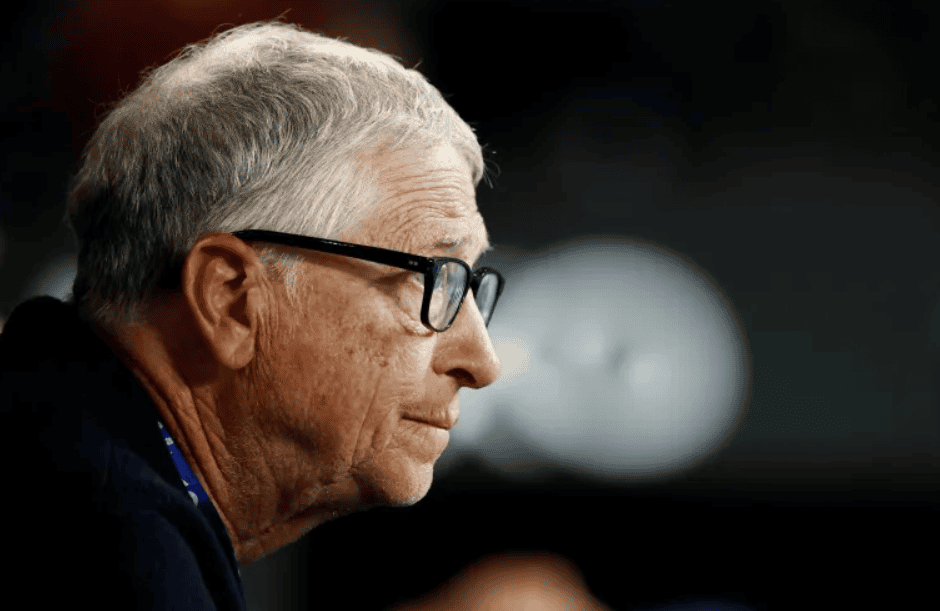
Artificial intelligence is advancing at a remarkable pace, but Bill Gates’ AI warning highlights a darker question: what happens if increasingly powerful systems are used by people with harmful intentions? In a recent interview, the Microsoft co-founder argued that AI could potentially contribute to events causing a billion deaths, particularly if its capabilities were misused in biological threats.
Bill Gates’ AI Warning Focuses On Misuse
Gates’ comments are less about predicting a specific catastrophe and more about the potential scale of AI-enabled harm.
Speaking on Meet the Press, Gates argued that modern AI could become powerful enough to help drive events with an extraordinarily high death toll. He emphasized that the greatest danger could emerge when advanced technology is placed in the hands of people deliberately seeking to cause harm.
His concern centers on a fundamental challenge facing AI developers and policymakers: the same technology that can accelerate beneficial scientific research could potentially be adapted for dangerous purposes.
Gates pointed to biology as one particularly difficult area. AI systems are increasingly capable of helping researchers analyze information, identify patterns and explore potential treatments. However, similar capabilities could raise concerns if they were directed toward developing biological weapons.
That dual-use problem makes AI safety particularly complicated.
Why Bill Gates Is Concerned About AI And Biology
The distinction between beneficial and harmful applications can be difficult to establish.
A researcher might use advanced computational tools to understand a disease or investigate a new medicine. In another context, similar knowledge could potentially be used for malicious purposes.
Gates has argued that it is difficult to reliably distinguish those intentions simply by looking at the technology involved. His comments therefore point toward safeguards that focus not only on what AI systems can do, but also on how those capabilities are accessed and used.
That issue is becoming increasingly important as AI models grow more capable.
AI Safety Is Becoming A Bigger Industry Debate
Bill Gates is not alone in raising concerns about the speed of artificial intelligence development.
Dario Amodei, chief executive of AI company Anthropic, has also discussed the risks associated with increasingly powerful AI systems. At the same time, he has emphasized the potential benefits, including scientific progress, improved healthcare and economic gains.
That combination is important.
The debate surrounding AI is no longer simply about whether the technology is good or bad. Instead, researchers, technology companies and governments are increasingly wrestling with how to capture its benefits while limiting potentially severe risks.
Amodei has argued that safety measures need to keep pace with technological progress. His position reflects a broader discussion within the AI industry about whether existing safeguards are sufficient as models become more capable.
The disagreement is not necessarily about whether AI should be developed. Much of the discussion centers on how quickly it should advance, what protections should accompany new systems and who should be responsible for enforcing them.
What Could AI Safeguards Look Like?
There is no single measure that can eliminate every potential AI risk. Instead, experts have discussed multiple layers of protection.
These can include:
- Testing advanced AI models before deployment
- Restricting access to particularly sensitive capabilities
- Monitoring potentially dangerous uses
- Improving cybersecurity around AI systems
- Establishing rules for biological and other high-risk applications
- Creating clearer standards for developers and companies
- Increasing cooperation between governments, researchers and technology firms
The challenge is finding safeguards that reduce genuine risks without preventing useful research.
Gates has argued that stronger protections should be achievable without dramatically slowing technological development. That claim is part of a larger policy debate, rather than an established conclusion shared by everyone in face the difficult task of determining which risks require immediate intervention and which can be addressed through existing laws and the industry.
As AI capabilities evolve, regulators will also face the difficult task of determining which risks require immediate intervention and which can be addressed through existing laws and technical controls.
Why The “Billion Deaths” Claim Needs Context
The phrase “a billion deaths” is striking, but it should not be interpreted as a prediction that AI will inevitably kill that many people.
Gates was describing the potential power of AI when combined with malicious intent. His warning is therefore best understood as a risk scenario, not a forecast with a stated probability or timeline.
That distinction matters.
Technology risk discussions often involve extremely unlikely but extremely consequential outcomes. A system does not need to cause such an event routinely for governments and researchers to consider safeguards worthwhile.
At the same time, dramatic scenarios can distract from more immediate AI-related problems.
Artificial intelligence already raises practical questions around misinformation, privacy, cybersecurity, employment, copyright and unreliable automated decisions. These issues affect people today, while more extreme remarks arrive amid a wider wave of concern from people working AI could become extremely dangerous and has criticized the pace of development. His comments represent his personal assessment and should be distinguished from established evidence about, the fact that some researchers and executives are openly discussing catastrophic risks illustrates how much the conversation has AI could replace certain jobs or generate convincing text and images. Now, discussions increasingly include questions about autonomous systems, cybersecurity, biological research and the possibility of accelerate scientific discovery, assist doctors, improve productivity and create new tools for education and research. At the same time, increasingly capable systems could introduce risks that are difficult which safeguards can address those risks without unnecessarily blocking legitimate innovation. That will require continued research, transparent testing, technical protections to the growing debate over artificial intelligence safety. His reference to the possibility of a billion deaths is not a prediction of an inevitable outcome, but a warning about the potential consequences of advanced the safeguards created alongside those technologies. As AI advances, questions about security, accountability and responsible deployment will become increasingly difficult scenarios remain uncertain.
A balanced discussion of AI safety therefore needs to consider both categories.
Other AI Warnings Are Adding To The Debate
Gates’ remarks arrive amid a wider wave of concern from people working directly in artificial intelligence.
A former Anthropic researcher, Jacob Coxon, has publicly argued that advanced AI could become extremely dangerous and has criticized the pace of development. His comments represent his personal assessment and should be distinguished from established evidence about what future AI systems will actually be capable of doing.
Still, the fact that some researchers and executives are openly discussing catastrophic risks illustrates how much the conversation has changed.
Only a few years ago, much of the public debate focused on whether AI could replace certain jobs or generate convincing text and images. Now, discussions increasingly include questions about autonomous systems, cybersecurity, biological research and the possibility of AI being used by malicious actors.
That shift explains why AI safety and AI governance have become increasingly prominent topics.
The Central Question Is How AI Should Be Controlled
The argument surrounding artificial intelligence is ultimately more complicated than simply asking whether the technology should continue developing.
AI could potentially accelerate scientific discovery, assist doctors, improve productivity and create new tools for education and research. At the same time, increasingly capable systems could introduce risks that are difficult to predict or control.
Bill Gates’ AI warning focuses attention on one particularly serious possibility: malicious use of powerful technology.
The practical challenge is determining which safeguards can address those risks without unnecessarily blocking legitimate innovation. That will require continued research, transparent testing, technical protections and policy discussions involving governments, companies and independent experts.
What Bill Gates’ AI Warning Means For The Future
Bill Gates’ latest comments add another prominent voice to the growing debate over artificial intelligence safety. His reference to the possibility of a billion deaths is not a prediction of an inevitable outcome, but a warning about the potential consequences of advanced AI being deliberately misused.
The larger issue is how society responds as these systems become more capable.
The future of artificial intelligence will likely depend not only on what developers can build, but also on the safeguards created alongside those technologies. As AI advances, questions about security, accountability and responsible deployment will become increasingly difficult to separate from the technology itself.




Comments are closed.