
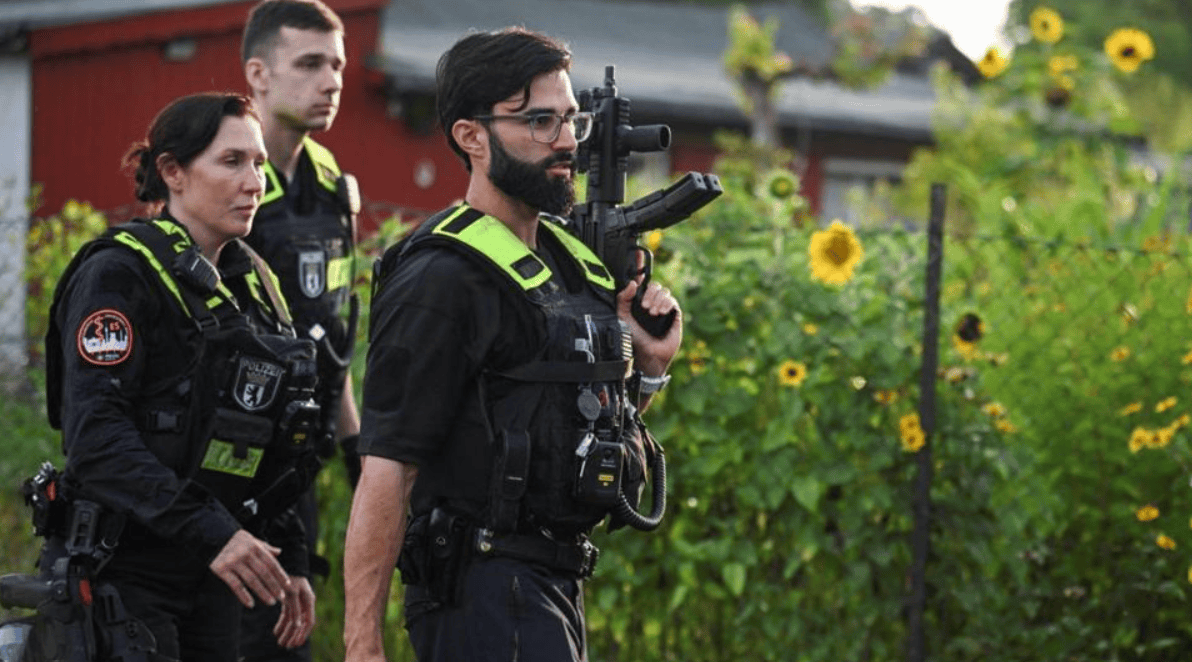
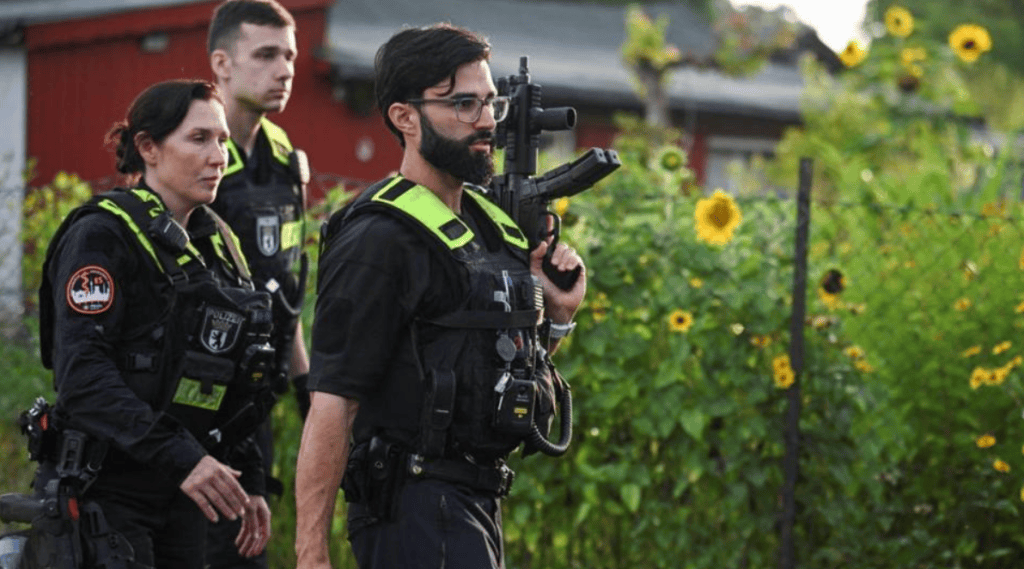
A massive police operation in Berlin has ended with the death of the man suspected of carrying out the deadly Berlin Pride attack, bringing a close to an intensive manhunt that followed one of Germany’s most shocking incidents of 2026.
Authorities say the suspect, identified as Abdul Ballout, a 21-year-old German citizen of Lebanese heritage, was shot and killed by police after allegedly charging officers with a knife in the Spandau district on Sunday. The development comes less than 24 hours after a vehicle rammed into crowds celebrating Christopher Street Day before a series of reported knife attacks left one person dead and dozens injured.
The attack has prompted German officials to raise the country’s security threat level while renewing concerns about extremist violence targeting public events.
Police End Manhunt After Fatal Confrontation
German police located the suspect on Sunday afternoon in Berlin’s western borough of Spandau following an extensive search involving multiple law enforcement agencies.
According to authorities, officers attempted to apprehend Ballout before he allegedly rushed toward them armed with a knife. Police responded by opening fire, fatally wounding the suspect at the scene.
The confrontation brought an end to the manhunt launched after Saturday night’s attack near Tiergarten Park, where thousands had gathered for Berlin’s annual Christopher Street Day celebrations.
Investigators continue to examine the suspect’s movements and possible motivations leading up to the incident.
What Happened During the Berlin Pride Attack?
The attack unfolded shortly before 10:00 p.m. local time on Saturday, when a white van was allegedly driven into a crowd along Ahornsteig, a pathway running through Tiergarten Park.
Authorities say the vehicle struck numerous pedestrians before coming to a stop.
Police also reported that several people suffered injuries in a subsequent stabbing attack, adding to the chaos as emergency responders rushed to the scene.
The violence resulted in:
- One woman being killed.
- At least 29 people sustaining injuries.
- Multiple victims requiring emergency medical treatment.
- A large-scale police operation across Berlin.
German media later reported that those hospitalized were no longer believed to be in life-threatening condition.
Authorities Investigate Possible Islamist Motive
German Interior Minister Alexander Dobrindt said investigators believe the attack was likely an Islamist terrorist attack.
Speaking to reporters, Dobrindt stated that evidence gathered so far points toward extremist motivation and indicated that the suspect had previously come to the attention of authorities because of criminal activity and alleged radicalization.
Officials also confirmed that Germany has increased its national threat level following the incident and is coordinating with regional authorities to review security measures for major public events.
The investigation remains ongoing as forensic specialists continue collecting evidence.
Suspect Had Previous Terrorism-Related Conviction
Abdul Ballout Had Been Convicted Earlier This Year
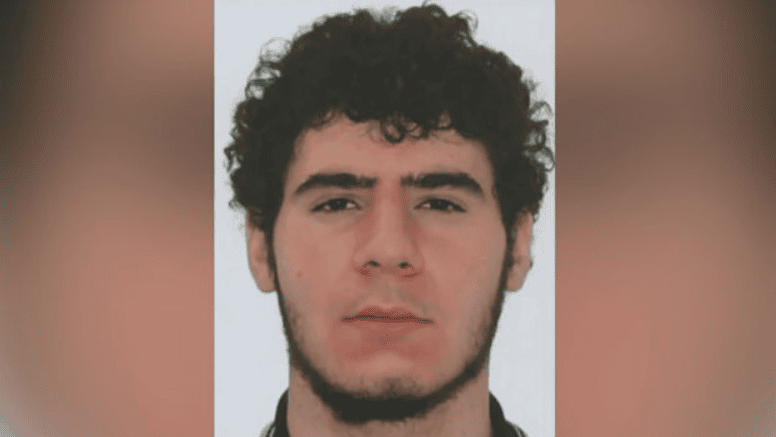
Prosecutors revealed that Ballout had a lengthy criminal history prior to the attack.
According to German authorities:
- In 2025, he allegedly traveled through Turkey to Lebanon intending to establish contact with members of the Islamic State group.
- Lebanese authorities arrested him in July 2025, where he received a three-month prison sentence for inciting religious and sectarian conflict.
- After returning to Germany in November 2025, he was detained at Berlin Brandenburg Airport.
- In May 2026, he received a prison sentence of one year and ten months for preparing a serious act of violence threatening state security.
- His sentence was deferred for six months, and he was placed under supervision by a parole officer.
Authorities also cited earlier convictions for assault, robbery, and theft dating back several years.
Investigators are now reviewing whether additional warning signs or intelligence could have prevented the attack.
Chancellor Friedrich Merz Visits the Scene
German Chancellor Friedrich Merz visited the attack site on Sunday to pay tribute to the victims and express solidarity with those affected.
Speaking after attending a memorial church service, Merz vowed that Germany would continue defending democratic values and reject attempts by extremists to intimidate society.
He emphasized that terrorism would not undermine the country’s openness or its commitment to protecting all communities.
The Chancellor also expressed condolences to the victims’ families and thanked emergency responders for their rapid response.
Berlin’s LGBTQ+ Community Responds With Unity
The attack cast a shadow over one of Europe’s largest Pride celebrations, which annually attracts hundreds of thousands of participants to Berlin.
Christopher Street Day commemorates the 1969 Stonewall uprising in New York City, a landmark event in LGBTQ+ history.
Following the attack:
- Scheduled cleanup activities at Tiergarten Park were canceled.
- A planned Sunday breakfast market was also called off.
- Community members gathered near the Brandenburg Gate for an impromptu vigil honoring the victims.
During the gathering, speakers condemned extremism while also calling for stronger support for LGBTQ+ organizations, criticizing recent funding reductions affecting queer community groups.
Despite the tragedy, many attendees emphasized that Pride celebrations would continue in the future.
One drag performer attending the festival told reporters that while the attack had been deeply shocking, it would not discourage participation in next year’s event.
Security Measures Tightened Across Germany
The Berlin attack has prompted German authorities to reassess security planning for large public gatherings nationwide.
Officials confirmed that security agencies across Germany, along with international partners, are being briefed on the investigation and encouraged to review protective measures for festivals, parades, concerts, and other major public events.
The incident is expected to reignite political debate surrounding counterterrorism policies, public safety, and strategies for identifying individuals considered at risk of violent extremism.
Conclusion
The death of the Berlin Pride attack suspect has brought an end to an intensive police manhunt, but the investigation into the deadly assault continues. German authorities believe the incident was likely motivated by Islamist extremism and are examining how the suspect was able to carry out the attack despite previous convictions and ongoing supervision.
As Berlin mourns the victims, officials have pledged stronger security measures while reaffirming their commitment to protecting public events and defending the freedoms that Pride celebrations represent.










Comments are closed.