
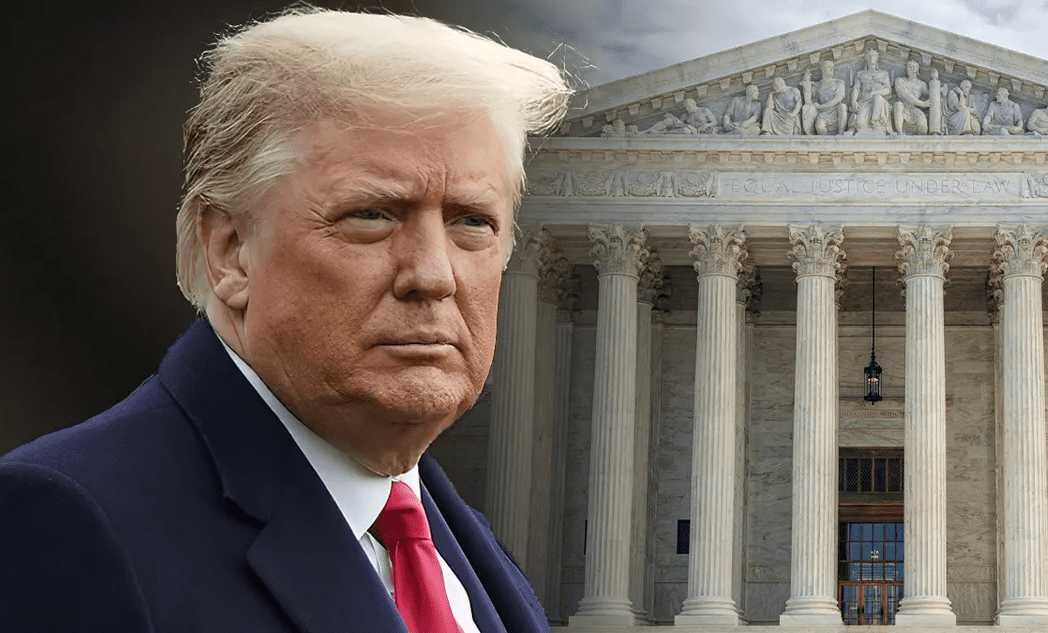
The United States Supreme Court has ruled against an executive order issued by President Donald Trump seeking to restrict birthright citizenship, delivering a significant legal setback to one of his key immigration policy initiatives. The 6–3 decision reaffirms that nearly all individuals born on US soil are entitled to citizenship under the Fourteenth Amendment, reinforcing a longstanding constitutional interpretation that has shaped American immigration law for more than a century.
The ruling, issued at the end of the Court’s term in Washington, DC, underscores the judiciary’s continued role in defining the limits of executive authority over immigration policy and constitutional rights.
Background: The Legal and Political Context of Birthright Citizenship
Birthright citizenship in the United States is grounded in the Fourteenth Amendment, ratified in 1868, which grants citizenship to all persons born or naturalized in the country and “subject to the jurisdiction thereof.” For over a century, this clause has been interpreted to include nearly all children born in the United States, regardless of their parents’ immigration status.
President Trump’s executive order, issued after taking office in January 2025, sought to narrow that interpretation by excluding children born to parents who are undocumented or temporarily residing in the country. The administration argued that the constitutional language was never intended to extend citizenship universally and should be applied more restrictively.
Legal challenges to the order quickly reached federal courts, where lower judges ruled that the policy conflicted with established constitutional precedent, setting the stage for Supreme Court review.
Supreme Court Decision and Reasoning
In a majority opinion authored by Chief Justice John Roberts, the Court rejected the administration’s interpretation of the Fourteenth Amendment, reaffirming its broad application to individuals born in the United States.
The majority emphasized that historical legal precedent, including the 1898 case United States v Wong Kim Ark, had consistently supported birthright citizenship for individuals born on US soil, even when their parents were not US citizens.
Roberts wrote that arguments advanced by the administration lacked sufficient legal grounding and did not provide compelling evidence to overturn established constitutional understanding.
The ruling was supported by a coalition of conservative and liberal justices, including Justices Amy Coney Barrett and Brett Kavanaugh, alongside the Court’s three liberal members: Sonia Sotomayor, Elena Kagan, and Ketanji Brown Jackson.
Dissenting Views and Constitutional Debate
In dissent, Justice Clarence Thomas argued that the majority’s interpretation did not reflect the original intent of the Fourteenth Amendment and criticized what he described as a departure from historical meaning. Justices Samuel Alito and Neil Gorsuch also filed dissenting opinions, questioning the legal reasoning behind the ruling.
While Kavanaugh joined the majority, he separately noted that although he agreed with the outcome, Congress could theoretically pursue legislation to redefine eligibility criteria for citizenship in the future.
The decision reflects ongoing ideological divisions within the Court over constitutional interpretation, particularly regarding originalism and evolving legal precedent.
Political Reaction and Immigration Policy Implications
Following the ruling, President Trump criticized the decision, calling it detrimental to US interests and urging Congress to pursue legislation that would restrict birthright citizenship. However, such legislative changes would face significant political and constitutional hurdles, including widespread public support for the current interpretation of the Fourteenth Amendment.
The ruling represents a broader constraint on the administration’s efforts to overhaul US immigration policy, which has included attempts to limit asylum access and modify temporary protected status frameworks.
Legal experts note that the decision reinforces judicial limits on executive authority in shaping constitutional rights without congressional approval or constitutional amendment.
Broader Implications for US Foreign Policy and Domestic Politics
The ruling is likely to have lasting implications for US foreign policy debates and domestic political discourse on immigration. Immigration remains a central issue in US elections, shaping voter attitudes and party platforms, particularly in states with large immigrant populations.
From a legal perspective, the decision reaffirms long-standing Supreme Court precedent and signals continuity in constitutional interpretation despite political efforts to redefine citizenship standards.
Analysts also suggest the ruling may influence future legislative efforts in Congress, where attempts to alter birthright citizenship would likely face deep partisan divisions.
Conclusion
The Supreme Court’s decision marks a decisive reaffirmation of birthright citizenship in the United States and a significant setback for efforts to narrow its application through executive action. While the ruling resolves the immediate legal challenge, it leaves broader political debates over immigration policy and constitutional interpretation firmly unresolved.
As immigration continues to shape US political dynamics, the decision is expected to serve as a key reference point in future legal and legislative battles over citizenship and national identity.








Comments are closed.