
Could Donald Trump Become the Face of a New $250 Bill?
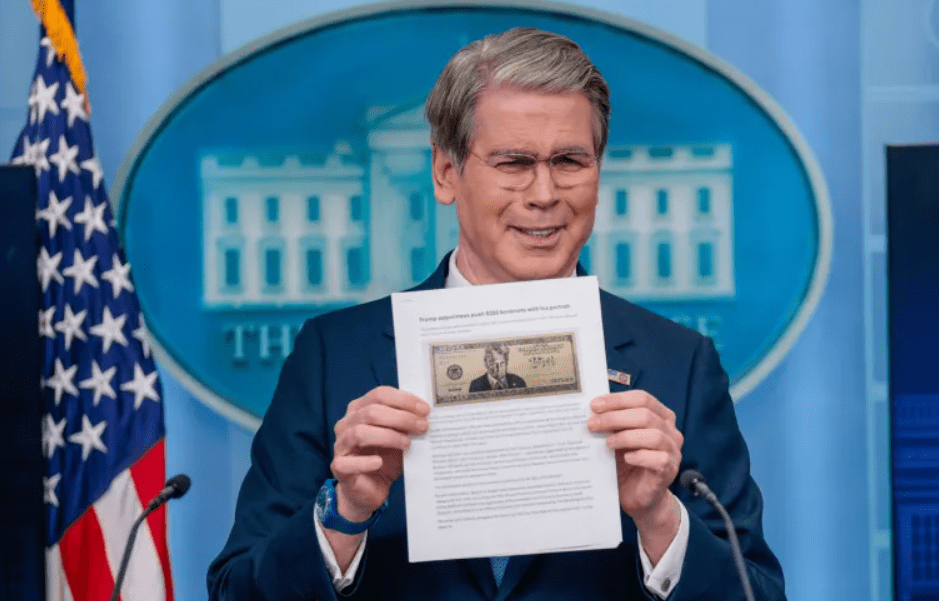
A controversial proposal to place President Donald Trump’s portrait on a new $250 banknote is already igniting political debate across the United States. The plan, confirmed by US Treasury Secretary Scott Bessent, could mark the first time in more than 100 years that a living person appears on American currency.
Supporters call the idea a patriotic tribute tied to the nation’s upcoming 250th anniversary celebrations. Critics, however, argue the proposal pushes presidential branding into territory more commonly associated with monarchies and authoritarian governments.
As discussions intensify in Washington, the proposed Trump $250 bill has quickly become one of the most talked-about political and cultural stories in the country.
Treasury Department Confirms Preparations
Speaking during a White House briefing, Treasury Secretary Scott Bessent revealed that preparations are already under way for the possible creation of a $250 bill featuring Trump’s image.
According to Bessent, lawmakers in both the House and Senate are currently reviewing legislation that would allow a living current or former president to appear on US currency. Existing federal law prohibits living individuals from being featured on banknotes or coins.
Bessent stated that Treasury officials have already prepared a design concept in anticipation of legal approval.
The proposed note would reportedly commemorate the 250th anniversary of the Declaration of Independence, which the United States will celebrate on July 4, 2026. Draft images referenced in media reports include the phrase “America 250 anniversary” alongside Trump’s portrait.
The move represents another example of Trump reshaping traditional presidential norms during his second term in office.
Why the Trump $250 Bill Matters
The debate surrounding the Trump $250 bill goes far beyond currency design. For many Americans, the proposal symbolizes a larger political and cultural shift.
Historically, US currency has featured deceased presidents and national figures such as George Washington, Abraham Lincoln, and Benjamin Franklin. The tradition reflects a long-standing effort to separate political power from personality cults.
If approved, Trump would become the first living individual to appear on American paper currency since the early 20th century.
Supporters argue the proposal celebrates a transformative presidency during a historic national milestone. Some Republicans view the idea as a fitting tribute to Trump’s influence on modern American politics and his role in the country’s 250th anniversary celebrations.
Opponents, meanwhile, see the proposal as part of a broader effort to elevate Trump’s personal image through government institutions.
Critics Compare the Move to Authoritarian Symbolism
The proposal has triggered strong backlash from political commentators, historians, and ethics experts.
Several critics argue that placing a sitting president on currency resembles practices commonly seen in authoritarian states or monarchies, where leaders often place their portraits on money, buildings, and public monuments to reinforce personal power.
The criticism intensified after reports highlighted other recent moves tied to Trump’s branding efforts in office.
Large banners featuring Trump’s portrait have reportedly appeared on federal buildings, including the Department of Justice. In addition, appointees at the Kennedy Center recently approved adding Trump’s name to parts of the nationally recognized arts institution.
Earlier this year, a commemorative gold coin bearing Trump’s image also received approval through a legal loophole allowing special edition minting.
For critics, the proposed Trump $250 bill fits into a broader pattern of personalizing government symbols around one political figure.
Can a Living President Legally Appear on US Currency?
Under current federal law, the answer is no.
US regulations prohibit living individuals from appearing on American currency. The rule was designed to avoid the appearance of personality worship and to preserve the neutrality of national symbols.
However, lawmakers introduced legislation in 2025 seeking to create exceptions for current and former presidents.
If Congress passes the measure, the Treasury Department and Bureau of Engraving and Printing would gain authority to move forward with the new banknote.
Even if approved legally, several logistical and economic questions remain unanswered.
Would a $250 Bill Actually Enter Circulation?
The United States currently does not circulate a $250 bill. High denomination notes such as the $500, $1,000, and $10,000 bills were discontinued decades ago because of limited public use and concerns over financial crime.
Economists remain divided on whether introducing a new $250 denomination makes practical sense in today’s increasingly digital economy.
Some analysts believe the bill would function more as a commemorative collector’s item rather than a widely used piece of currency.
Others argue it could attract strong demand among Trump supporters and collectors, especially during anniversary celebrations.
Political Reactions Continue to Grow
Reaction to the proposal has largely followed partisan lines.
Many Republican lawmakers have praised the concept, framing it as a patriotic recognition of Trump’s leadership during a historic period in American history.
Democrats, however, have sharply criticized the idea. Some lawmakers accuse the administration of prioritizing symbolic political gestures over economic and policy challenges facing the country.
Political analysts say the controversy could also influence the 2026 midterm election cycle, where debates over presidential power and democratic norms are expected to play a central role.
Social media has further amplified the discussion. Images of mock-up $250 bills spread rapidly online after reports surfaced about the Treasury Department’s preparations.
As a result, the issue has evolved into both a political flashpoint and a viral cultural moment.
The Symbolism Behind American Currency
Currency design in the United States has always carried symbolic weight. The individuals featured on banknotes often represent ideals tied to national identity, leadership, and historical legacy.
That is why changes to currency designs typically generate intense public attention.
Over the years, there have been calls to place more women, civil rights leaders, and historically overlooked figures on US money. The proposal to feature Trump instead adds another layer to the ongoing conversation about representation and national symbolism.
Whether Americans view the idea as patriotic recognition or political self-promotion may ultimately depend on their broader views about Trump himself.
What Happens Next?
Congress will ultimately determine whether the Trump $250 bill becomes reality.
If lawmakers approve the proposed legal changes, the Treasury Department could formally begin the process of finalizing the note’s design and production plans.
For now, the proposal remains in the discussion phase, but it has already succeeded in drawing nationwide attention.
As the United States prepares for its 250th anniversary celebrations, debates over history, leadership, and national identity are likely to intensify. The controversy surrounding the Trump $250 bill reflects those deeper tensions and highlights how even the design of money can become politically charged.
Conclusion
The proposed Trump $250 bill has quickly become one of the most divisive political stories of the year. Supporters view it as a historic tribute tied to America’s 250th anniversary, while critics see it as an unprecedented expansion of presidential branding.
Although legal and political hurdles remain, the debate has already sparked broader conversations about symbolism, democracy, and the role of personal image in American government.
Whether the Trump $250 bill ever reaches circulation or not, the controversy surrounding it is likely to remain part of the national conversation for months to come.









Comments are closed.