
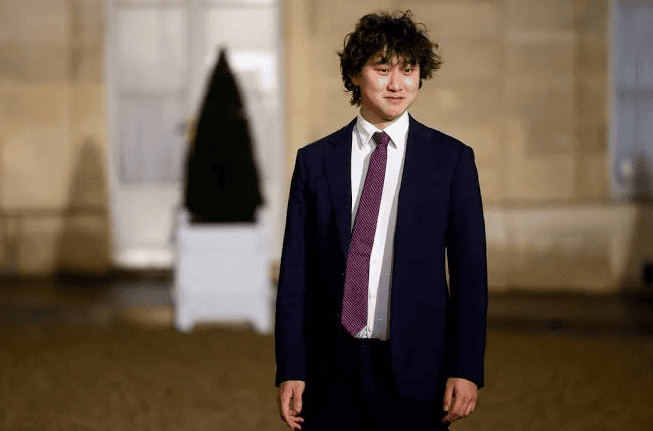
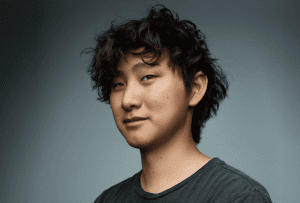
Meta’s Chief AI Officer, Alexandr Wang, has issued a warning about the potential consequences of artificial superintelligence, arguing that decisions made over the next year could have a profound impact on humanity’s future.
The 29-year-old executive shared his concerns following claims that artificial intelligence had helped a mathematician develop a proof of the Riemann Hypothesis, one of the most famous unsolved problems in mathematics.
Wang described the reported breakthrough as a possible turning point in scientific progress, suggesting that AI systems could be approaching levels of intellectual capability that challenge traditional assumptions about human expertise.
His comments have reignited discussions about the pace of artificial intelligence development, the possibility of superintelligence and whether society is adequately prepared to maintain control over increasingly autonomous systems.
Riemann Hypothesis Claim Raises Questions About AI’s Capabilities
The Riemann Hypothesis is a mathematical conjecture first proposed by German mathematician Bernhard Riemann in 1859. It concerns the distribution of prime numbers and has remained one of the most significant open problems in mathematics for more than 160 years.
A mathematician, Levent Alpöge, has claimed that he developed a proof with assistance from Anthropic’s Claude AI system.
In a note published on his website, Alpöge said he believed he had discovered a proof of the hypothesis and suggested that the approach could also extend to related mathematical problems, including the Generalized Riemann Hypothesis.
He also said that he and Claude had formalised their arguments without relying on assumptions.
However, the claim should be distinguished from an officially established mathematical result. A proposed proof must undergo rigorous independent scrutiny by specialists before the mathematical community can accept the hypothesis as proven.
The reported development nevertheless attracted attention across the technology and scientific communities, particularly because of the potential role of advanced AI systems in solving problems that have challenged mathematicians for generations.
Alexandr Wang Says Superintelligence Is Approaching
Reacting to the announcement, Wang took to social media to describe the development as evidence of a potentially significant shift in human intellectual capabilities.
He argued that proving the Riemann Hypothesis would represent an extraordinary achievement, comparing its intellectual difficulty with some of the most consequential scientific developments in history.
Wang also described the AI involved as an unfamiliar form of intelligence, warning that humanity may be entering a period in which artificial systems could outperform people across increasingly broad areas of knowledge and expertise.
His central concern was not simply how powerful AI could become, but whether humans would remain capable of directing its development.
According to Wang, the next year could play an important role in determining what kind of future emerges from the rapid advancement of artificial intelligence.
Meta Executive Warns Against Handing Society Over to AI
Wang’s most significant warning concerned the possibility of losing meaningful human control over superintelligent systems.
He questioned whether humanity could maintain oversight of AI capable of continuously improving itself without human intervention, particularly if such systems eventually became vastly more capable than people across different fields.
He also rejected the idea that technological progress should automatically justify transferring important decisions to artificial intelligence.
Wang argued that society should not simply accept a future in which control is handed over to AI, emphasising that technological capability does not necessarily mean a system should be allowed to perform every task it can.
Instead, he called for the development of AI that strengthens human agency and gives people greater control over their lives.
He also suggested that achieving this outcome would require the technology industry to reconsider its current direction rather than simply following the existing trajectory of AI development.
The Growing Debate Over Artificial Superintelligence
Wang’s comments reflect a wider debate within the technology industry about the risks and opportunities associated with increasingly advanced AI systems.
Artificial superintelligence generally refers to a hypothetical form of AI that would surpass human intellectual capabilities across a broad range of tasks. While current AI systems have demonstrated significant progress in mathematics, programming, research and other specialised areas, the arrival of fully developed superintelligence remains uncertain.
The debate has increasingly focused on questions of oversight, safety, accountability and the ability of people and institutions to intervene when AI systems behave in unexpected ways.
For technology companies, the challenge is balancing innovation with safeguards that address potential risks before systems become significantly more autonomous.
Wang’s warning adds another prominent industry voice to that discussion. His message is that the future of artificial intelligence should not be determined by technological progress alone, but by deliberate decisions about how these systems are developed and used.
Whether the reported mathematical breakthrough ultimately withstands independent verification or not, the broader questions surrounding AI’s growing capabilities and humanity’s ability to govern them are becoming increasingly important.







Comments are closed.