
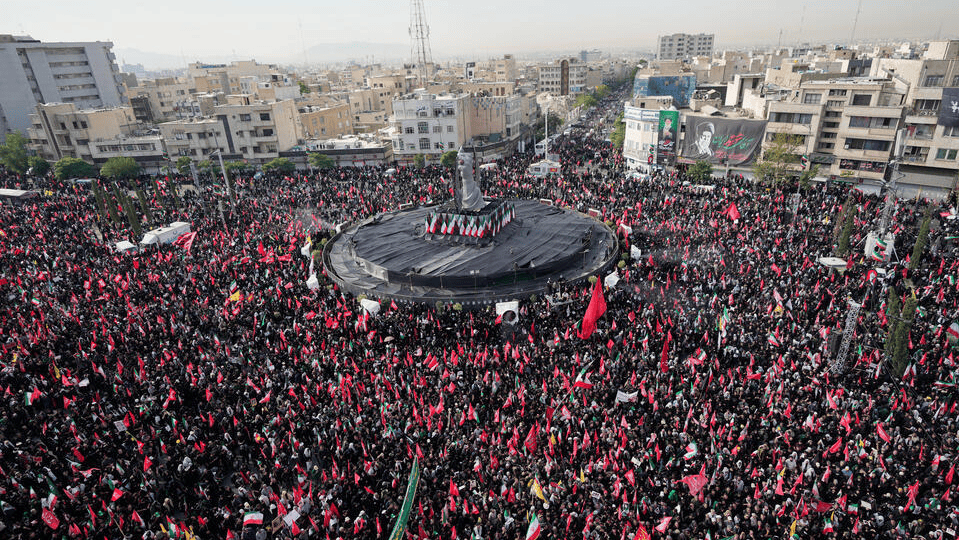
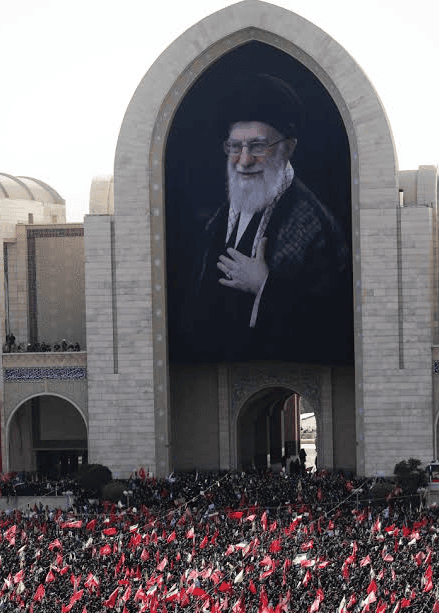
Millions of mourners gathered across Iran on Monday for the funeral procession of former Supreme Leader Ali Khamenei, marking one of the country’s largest public ceremonies in recent years as regional instability continued to unfold. At the same time, Israeli military operations in Gaza and southern Lebanon, humanitarian concerns, and renewed diplomatic efforts underscored the fragile security environment across the Middle East.
The developments come amid continued international efforts to preserve ceasefire arrangements, improve humanitarian access, and prevent further escalation following months of heightened geopolitical tensions involving Iran, Israel, Lebanon, and Palestinian territories.
Background and Context
The funeral follows the death of Ali Khamenei during the recent Iran-Israel conflict, an event that has reshaped Iran’s political leadership and intensified international attention on regional security. His successor, Mojtaba Khamenei, assumed the position of Supreme Leader earlier this year, with Iranian authorities emphasizing continuity across key state institutions.
The conflict between Israel and Iran has had broader regional consequences, affecting Gaza, southern Lebanon, and the occupied West Bank while drawing renewed diplomatic engagement from the United States, the United Nations, and regional governments seeking to stabilize the situation.
Although a US-mediated ceasefire agreement reduced direct hostilities between Israel and Lebanon last month, military activity has continued along the border, raising concerns over the durability of the truce.
Key Developments
Funeral ceremonies in Tehran attracted massive crowds, with Iranian authorities reporting that millions participated in public mourning events before the procession moves to Qom Province. Emergency services said nearly 50,000 people received medical assistance during the gathering, largely for heat-related or minor health issues, with officials reporting no major incidents.
Amid the ceremonies, Iran announced the reappointment of Gholam-Hossein Mohseni-Ejei as chief justice for another five-year term, a move widely interpreted as an effort to project institutional stability during the country’s political transition.
Meanwhile, Israeli military operations continued across several fronts. Israeli strikes and demolition operations were reported in southern Lebanon despite the existing ceasefire framework, while humanitarian organizations said ongoing military activity has prevented hundreds of thousands of displaced Lebanese residents from returning to their homes.
In Gaza, the United Nations Office for the Coordination of Humanitarian Affairs (OCHA) reported continued restrictions on humanitarian deliveries through the Kerem Shalom (Karem Abu Salem) crossing. According to the agency, aid volumes entering the enclave declined in June compared with the previous month, while other cargo crossings remain closed.
Separately, the United Nations welcomed Hamas’s decision to dissolve the governing body that had administered Gaza for nearly two decades, describing the move as one that could support implementation of the ceasefire agreement and contribute to efforts aimed at restoring unified Palestinian governance under the Palestinian Authority.
In Israel, lawmakers advanced legislation that would establish an independent commission to investigate the security failures surrounding the October 7 attacks and the events that followed.
Analysis and Implications
The simultaneous funeral ceremonies in Iran and ongoing military operations across Gaza and Lebanon illustrate that regional tensions remain elevated despite diplomatic efforts to reduce violence.
For US foreign policy, maintaining ceasefire arrangements while encouraging humanitarian access continues to represent a significant diplomatic challenge. Washington remains engaged in regional mediation efforts aimed at preventing broader military escalation.
For Middle East politics, Iran’s leadership transition is being closely watched for indications of continuity or policy adjustments. The reappointment of senior judicial officials suggests Tehran is seeking to project political stability during a period of heightened regional uncertainty.
Humanitarian conditions remain another central concern. UN agencies continue to warn that restrictions affecting aid deliveries into Gaza, together with continued displacement in southern Lebanon, could deepen civilian hardships and complicate longer-term recovery efforts.
At the international level, renewed discussions over governance in Gaza, accountability for the October 7 attacks, and implementation of ceasefire agreements are expected to remain central issues in ongoing diplomatic negotiations.
Conclusion
The funeral of Iran’s former supreme leader has become both a national moment of mourning and a symbol of political transition during one of the Middle East’s most volatile periods. While diplomatic initiatives continue, military operations, humanitarian challenges, and unresolved political disputes demonstrate that the path toward lasting regional stability remains uncertain.
International attention is now focused on whether ceasefire agreements can hold, humanitarian access can improve, and diplomatic engagement can prevent another cycle of broader conflict.







Comments are closed.