
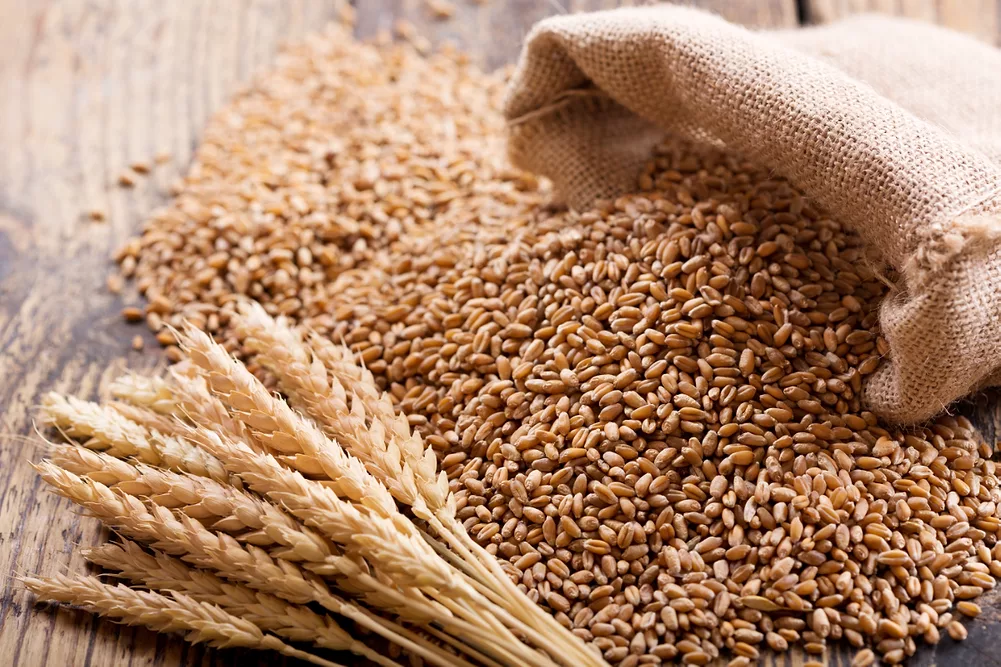
Wheat prices are climbing as disruptions to Black Sea exports collide with drought, extreme heat and increasingly unpredictable weather patterns. The result is a global grain market facing a complex new challenge: not simply whether wheat exists, but whether it can reach consumers at an affordable price.
The global wheat market is once again under pressure.
A combination of intensified attacks on grain infrastructure in the Black Sea, disruptions to shipping routes and worsening drought conditions across major producing regions has sent wheat prices sharply higher, raising renewed concerns about food security and affordability.
Russia and Ukraine remain at the centre of the crisis. Russia is the world’s largest wheat exporter, while Ukraine is one of the world’s leading grain producers. Together, their role in global agricultural trade means that disruption in the Black Sea can quickly reverberate through international markets.
But the latest price surge is not being driven by war alone.
Extreme heat, prolonged drought and changing weather patterns are increasingly affecting wheat production from North America to Europe and the Southern Hemisphere. At a time when the world is already dealing with geopolitical instability, climate pressure is adding another layer of uncertainty to the global food system.
Black Sea disruption sends wheat prices higher
The Black Sea remains one of the world’s most important corridors for agricultural exports. Russia and Ukraine supply major quantities of wheat to international markets, making their ports and shipping infrastructure strategically important far beyond the region.
Over the past month, attacks involving ports, vessels and grain facilities have disrupted shipments during a critical period of the export season.
Ukraine’s Ministry of Infrastructure reported that Russian forces carried out dozens of attacks affecting vessels and port facilities during July. At the same time, Ukrainian drone attacks targeting Russian infrastructure in the Sea of Azov and Black Sea have affected Russian grain shipments.
Damage and disruption at major Russian ports, including Novorossiysk and Taman, have also increased the cost and complexity of transporting agricultural commodities.
The consequences have been reflected in financial markets.
Chicago wheat futures, widely regarded as a global benchmark, reached a three-year high before edging lower. In Russia’s Rostov region, authorities declared a state of emergency after port closures and navigation disruptions contributed to agricultural products accumulating at farms.
The immediate problem, however, is more complicated than a simple shortage of wheat.
According to Joe Glauber, a research fellow emeritus at the International Food Policy Research Institute, significant quantities of wheat remain available in Russia and Ukraine. The challenge is getting that wheat to international buyers efficiently and at a reasonable cost.
That distinction is crucial.
The world’s wheat supply may be sufficient, but disruptions to transportation can make that supply considerably more expensive.
Climate change is adding pressure to the wheat market
Geopolitical instability is only one side of the story.
Across major agricultural regions, increasingly extreme weather is putting pressure on wheat yields. Higher temperatures, prolonged droughts and changing rainfall patterns are making production less predictable and increasing the risks faced by farmers.
In the United States, one of the world’s largest wheat exporters, the US Department of Agriculture has forecast a significant decline in yields. The USDA has attributed the smaller crop partly to long-term reductions in wheat acreage and widespread drought affecting Hard Red Winter wheat production across the Great Plains.
If the forecast is realised, the US wheat yield would be among the lowest recorded in more than a decade.
Canada is facing similar pressure. The country’s 2026–27 wheat production is forecast at approximately 34.6 million metric tonnes, around 13% below the previous year, reflecting reduced planted areas and weaker-than-average yields.
Europe is also feeling the effects of extreme heat.
Heatwaves across the continent have damaged agricultural production, with COCERAL forecasting that European grain output in 2026 could fall by around nine million tonnes to approximately 286 million tonnes.
The effects are particularly significant because wheat is highly sensitive to weather conditions during key stages of its development. Excessive heat and inadequate rainfall can reduce yields, damage crops and ultimately tighten the amount of grain available to international markets.
El Niño could make conditions even more difficult
The developing El Niño weather pattern is adding another element of uncertainty.
El Niño alters atmospheric and oceanic conditions across the globe, often producing significant changes in rainfall and temperature patterns.
For the Southern Hemisphere, the phenomenon is expected to contribute to drier-than-usual conditions in some major agricultural regions. South Africa and Australia are among the countries facing increased drought risks.
That matters because Australia is a major wheat exporter, while South Africa is an important producer for its regional market.
The potential convergence of El Niño, drought and geopolitical disruption creates a particularly difficult environment for global agriculture.
If several major producing regions experience weaker harvests simultaneously, countries that rely heavily on imports may have fewer affordable alternatives.
Why Egypt and Asia are particularly exposed
The impact of rising wheat prices is not evenly distributed.
Countries that depend heavily on imported grain are especially vulnerable because international prices feed directly into food costs.
Egypt is the world’s largest wheat importer and spends billions of dollars each year securing supplies. During the first half of 2026, more than 82% of its wheat stocks came from Russia and Ukraine.
That concentration leaves the country particularly exposed to disruptions in the Black Sea.
Indonesia faces a similar challenge. Between 2023 and 2024, the country purchased hundreds of millions of dollars’ worth of wheat from Ukraine and Russia. With shipments potentially disrupted, Indonesian millers have increasingly had to consider alternative suppliers, including Bulgaria, Australia, Romania and Argentina.
For now, existing stocks may be sufficient to meet immediate food-grade wheat requirements. But limited reserves mean that prolonged disruption could quickly become more expensive.
And that is where the global wheat crisis becomes a question not only of availability, but affordability.
The hidden cost of disrupted trade
Wheat does not have to disappear from the market for prices to rise.
When shipping routes become dangerous, insurance costs increase, ports are damaged or vessels are forced to take longer routes, the cost of moving grain rises.
Those additional costs are ultimately absorbed somewhere along the supply chain.
Importers pay more. Mills pay more. Food manufacturers face higher production costs. And consumers can eventually see the effects through the prices of bread, flour, pasta and other wheat-based products.
Alternative suppliers can help reduce the pressure, but switching origins is neither immediate nor inexpensive.
A country accustomed to buying wheat from the Black Sea cannot necessarily replace those volumes overnight with shipments from Australia, Argentina or North America. Different suppliers have different harvest seasons, transport requirements, grain qualities and logistical costs.
The global wheat market is therefore interconnected by more than production figures. Infrastructure, shipping routes, trade relationships and geopolitical stability are equally important.
What happened to the Black Sea Grain Initiative?
The current situation has revived memories of the Black Sea Grain Initiative.
Brokered in 2022, the agreement was designed to facilitate the safe export of grain, food and fertiliser from Ukrainian ports and help stabilise global food markets.
More than 1,000 vessels carrying grain and other food products left Ukraine while the initiative was operational, according to the European Union.
Russia withdrew from the agreement in July 2023.
A renewed mechanism for safe maritime trade could significantly reduce pressure on global wheat markets, but achieving such an agreement would require a major diplomatic breakthrough between the parties involved in the war.
For shipping companies and commodity traders, the security of the Black Sea remains a central concern.
Can other wheat-producing countries fill the gap?
One potential solution is greater production and exports from other major wheat-producing nations.
The global market demonstrated some resilience during the 2022 grain price shock, when countries such as India increased wheat exports to compensate for supply disruptions elsewhere.
However, repeating that response in 2026 may be more difficult.
Weather conditions are affecting multiple agricultural regions simultaneously, while El Niño could further constrain production in parts of the Southern Hemisphere.
That means there may be fewer countries capable of rapidly increasing exports without putting pressure on their own domestic supplies.
The diversification of global wheat sourcing is therefore likely to become increasingly important.
How can governments respond?
There is no single solution to the current pressure on wheat markets.
In the short term, restoring reliable shipping routes and reducing risks around Black Sea exports would be among the most effective ways to ease market volatility.
Over the longer term, governments and agricultural producers will need to address the growing impact of climate change.
Improved water management could play an important role. Investments in reservoirs, irrigation systems and more efficient agricultural water use could help farmers withstand periods of drought and reduce crop losses.
Agricultural research will also become increasingly important, particularly in developing wheat varieties that can tolerate heat, water scarcity and other environmental stresses.
At the same time, greater diversification of global grain supply chains could make countries less dependent on individual exporters or vulnerable trade corridors.
A warning for the global food system
The latest rise in wheat prices illustrates how closely connected geopolitics, climate and food security have become.
A conflict thousands of kilometres away can disrupt a shipping route. A heatwave can reduce harvests. A drought can weaken production in another major exporting country. Together, these events can transform a local crisis into a global economic problem.
For consumers, the most visible consequence may simply be a higher price for everyday staples.
For governments, however, the stakes are much higher.
The wheat market is increasingly being tested by two forces at once: a geopolitical landscape capable of disrupting trade and a changing climate capable of disrupting production.
The world may still have enough wheat.
The greater question is whether it can continue producing, transporting and distributing that wheat reliably — and at a price that people can afford.











Comments are closed.