
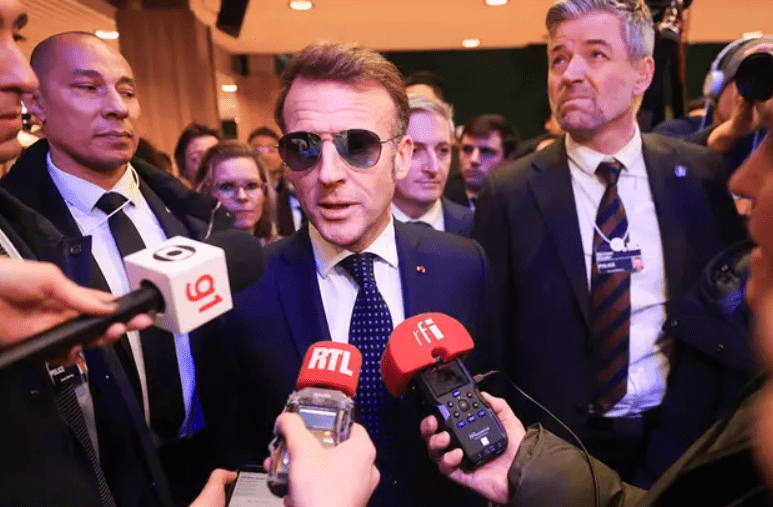
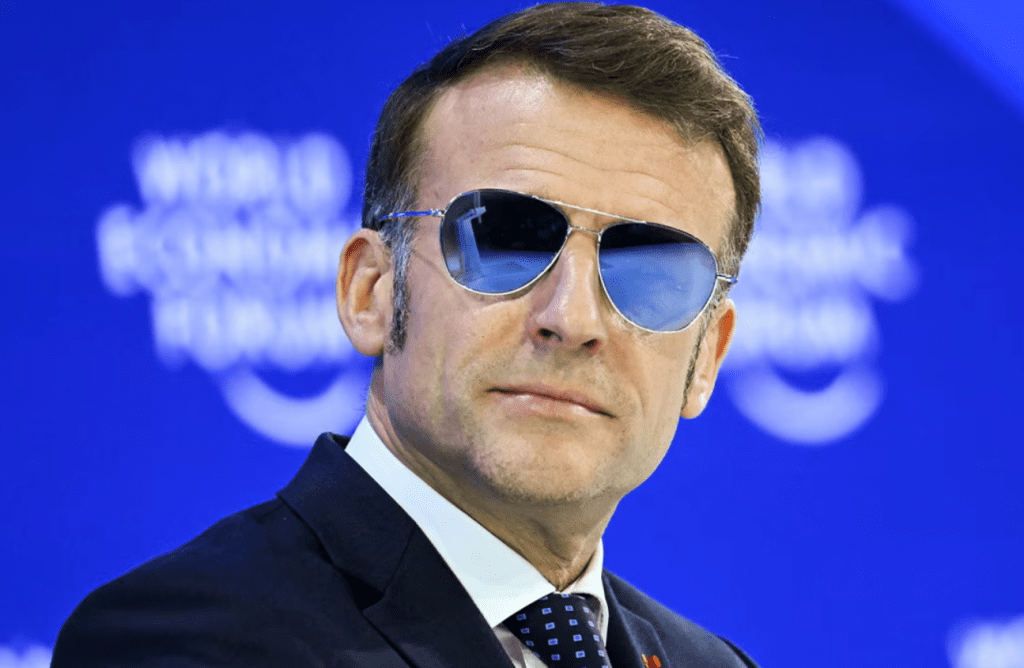
World leaders are used to scrutiny, but even by Davos standards, Emmanuel Macron’s appearance raised eyebrows. During a high profile speech at the World Economic Forum in Switzerland, the French president stepped onto the stage wearing sunglasses indoors. In January. In the Alps.
Within minutes, social media buzzed, commentators speculated, and political rivals joked openly. What followed was a mix of confusion, humor, and genuine concern. However, the real reason behind the sunglasses was far less dramatic than many assumed.
Here is what actually happened, why it mattered, and how a small visual detail briefly became one of Davos’ most talked about moments.
A Davos Summit Full of Distractions
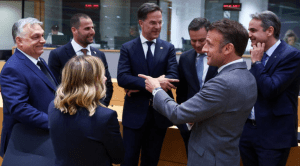
The World Economic Forum is rarely short on headlines. This year was no exception. Global leaders gathered to debate security, geopolitics, and economic stability, with Greenland, NATO, and Russia unexpectedly dominating several conversations.
US president Donald Trump attracted attention with a series of remarks that quickly went viral. From confusing Greenland with Iceland to making offhand comments that baffled European leaders, the atmosphere was already charged.
Against that backdrop, Emmanuel Macron’s sunglasses became an unexpected focal point. In a room full of power suits and diplomatic formality, the accessory stood out immediately.
Why Emmanuel Macron Wore Sunglasses at Davos
A Medical Issue, Not a Style Statement
The real reason Emmanuel Macron wore sunglasses at Davos was medical, not political or performative. French media later reported that the president was experiencing a sub conjunctival haemorrhage.
This condition involves a small broken blood vessel on the surface of the eye. While it can look alarming, it is harmless, painless, and temporary. It does not affect vision and usually resolves on its own within days.
Doctors note that it can be caused by something as simple as sneezing forcefully, coughing, or rubbing the eye too hard. In short, it is common and medically insignificant.
An Attempt to Avoid Attention
Ironically, the sunglasses were likely intended to draw less attention, not more. Covering the affected eye would prevent photographers from zooming in and avoid distracting from the substance of Macron’s speech.
Instead, the opposite happened. Once cameras captured the look, speculation took over, and the visual detail became a talking point across international media.
Macron later acknowledged the situation with humor, referring to the “unsightly appearance” of his eye and downplaying the seriousness of the issue.
Macron’s Response and Sense of Humor
Rather than brushing off the attention, Macron leaned into it. He joked about an unintentional reference to the “Eye of the Tiger,” suggesting it symbolized determination for those who caught the joke.
This response fit his broader public image. Macron often balances formality with calculated humor, especially when navigating moments that could otherwise turn awkward.
By addressing the situation directly, he defused speculation and redirected attention back to policy discussions.
Trump’s Public Comment Adds Fuel
The moment escalated when Donald Trump publicly commented on Macron’s appearance. Speaking at Davos, Trump remarked on the sunglasses in front of an audience, questioning what had happened.
The comment drew laughter but also criticism. For many observers, it underscored the contrast between diplomatic decorum and Trump’s more confrontational style.
What might have remained a minor footnote instead became part of a broader narrative about tensions, tone, and optics at the summit.
Optics Matter at Global Summits
Visuals Can Eclipse Substance
Events like Davos are as much about imagery as they are about policy. Every gesture, outfit choice, and facial expression is dissected in real time.
Macron’s sunglasses illustrate how quickly visuals can overshadow substance. While leaders discussed global security and economic cooperation, headlines focused on eyewear.
This is not new. From wardrobe choices to body language, leaders have long been judged on appearance as much as rhetoric.
The Pressure of Constant Visibility
For modern politicians, there is little room for human imperfection. A minor medical issue becomes public discussion within minutes.
Macron’s situation highlights the pressure leaders face to appear flawless, even when dealing with everyday health issues that affect millions of people.
In this sense, the incident humanized him, reminding audiences that even presidents deal with mundane physical problems.
Europe, Greenland, and a Wider Political Context
While the sunglasses dominated headlines, the broader political context remained serious. Trump’s renewed interest in Greenland and comments about European security unsettled many leaders.
Macron, along with other European figures, appeared aligned with Denmark in opposing any notion of US acquisition of the territory.
Trump even revealed a private message from Macron expressing confusion over the Greenland stance and proposing diplomatic meetings in Paris to address wider issues, including Syria and Iran.
This behind the scenes diplomacy contrasted sharply with the public spectacle surrounding sunglasses.
Social Media Turns a Moment Into a Meme
As expected, social media amplified the story. Memes, jokes, and pop culture references spread rapidly, framing the sunglasses as a symbol of confidence, mystery, or what some users jokingly called “aura.”
While lighthearted, the reaction showed how quickly serious political events can be reframed through humor online.
For younger audiences especially, these moments often become their primary point of engagement with global politics.
A Small Detail With a Big Echo
In the end, the reason Emmanuel Macron wore sunglasses at Davos was simple, harmless, and human. A minor eye condition led to a practical decision that unexpectedly stole the spotlight.
The episode serves as a reminder of how optics, media cycles, and personality clashes can shape narratives at major global events.
It also shows how easily substance can be sidelined by spectacle, even when world leaders are discussing issues with global consequences.
Final Thoughts
Macron’s sunglasses were never about secrecy, arrogance, or style. They were about comfort and discretion. Yet in the high pressure environment of Davos, even the smallest details can become international talking points.
As the forum moves on and policy debates continue, the sunglasses will likely be remembered as a brief distraction in an otherwise serious gathering. Still, they offer a revealing glimpse into how modern politics is watched, judged, and shared in real time.









Comments are closed.