
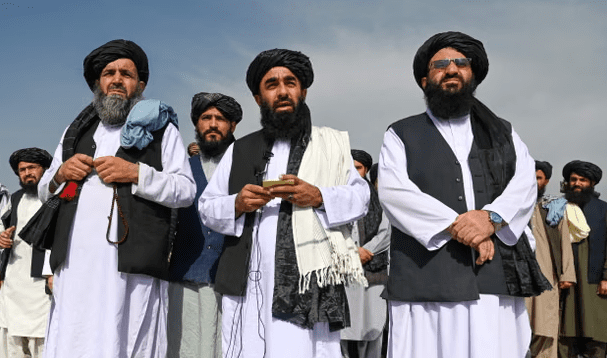
Since the Taliban’s return to power in August 2021, Afghanistan has seen a systematic rollback of women’s rights, and the recent approval of a new penal code marks an alarming codification of gender-based oppression. The law, quietly approved at the beginning of 2026 without public debate, effectively legalizes violence against women, while placing stricter penalties on animals than on human beings, highlighting the regime’s distorted priorities.
According to the new legislation, a man who breaks his wife’s arm can receive just 15 days in jail, whereas mistreatment of a camel can result in five months of imprisonment. Human rights advocates describe the code as a stark reminder that Afghan women remain “legally vulnerable,” with little to no recourse against domestic violence, harassment, or systemic abuse.
Legalized Oppression
The penal code, spanning 119 articles, frames violence against women as a tool of social discipline and “prevention of vice,” using language that explicitly refers to wives and daughters as “slaves” or possessions of their husbands. Former Afghan parliamentarian Fawzia Koofi told El País, “The Taliban have always treated women as a system of apartheid. This code gives men legal power to punish and even torture women.”
Under Article 32, only if a woman suffers a visible wound or bruise, and can prove it in court, can her husband face a minimal 15-day jail sentence. Meanwhile, other forms of abuse — including psychological, sexual, or subtle physical violence — are ignored. As Koofi notes, in a country without a functioning judicial system or protective institutions, the law effectively silences women, who risk retaliation if they report abuse.
Prioritizing Animals Over Women
In one of the most controversial provisions, the law punishes animal cruelty far more severely than violence against women. A man who harms a camel or other animals faces five months in prison, a contrast human rights organizations describe as a “moral inversion.” Journalist Zahra Joya, founder of Rukhshana, adds, “Women are treated almost like slaves, with no control over their own lives and bodies. This legal framework codifies their vulnerability.”
The code also enforces social hierarchy. Punishments vary according to the offender’s social class, privileging elites and scholars while deepening inequities for lower-class citizens. Experts warn this system entrenches both gender and class-based oppression, cementing a climate of arbitrary violence across Afghan society.
Impact on Daily Life
Since 2021, the Taliban has issued over 130 edicts curtailing women’s rights. Girls above 12 are barred from education, and women now constitute only 20% of the workforce. The UN considers this a form of gender apartheid, leaving women without freedom of movement, employment, or even basic social participation.
The new penal code further criminalizes independent behavior. A woman visiting her father’s house without her husband’s permission risks up to three months in prison, a rule that exposes women to domestic violence and removes the last remaining protective networks outside the household.
Global Silence and Humanitarian Dilemma
Despite the severity of the code, the international response has been muted. The UN’s Under-Secretary-General, Rosemary DiCarlo, visited Kabul just days after the law’s approval but reportedly did not publicly address the code. Afghan activists stress that this silence sends a dangerous signal. Koofi warns: “If the international community ignores these violations, it emboldens perpetrators and risks long-term regional instability. Violating women’s rights in Afghanistan is not just a local issue; it’s a global security concern.”
Richard Bennett, the UN special rapporteur on human rights in Afghanistan, has called the new code “extremely worrying” and is set to present a report in Geneva detailing its human rights implications. Afghan lawyers and humanitarian workers highlight a painful dilemma: withdrawing aid could worsen poverty, yet continued engagement risks legitimizing the Taliban’s oppressive policies.
A Codified Gender Apartheid
The Taliban’s penal code transforms violence into a religious and legal duty for men, with explicit language allowing husbands and “masters” to punish women to prevent “sin.” Children’s rights are similarly compromised, with limited protections against teacher-inflicted violence. The overall effect is a society in which human rights are selectively enforced, gender equality is erased, and oppression is institutionally legitimized.
Activists like Koofi and Joya continue to appeal for international intervention, legal pressure, and global advocacy, emphasizing that Afghan women cannot wait for gradual reforms. “This law institutionalizes cruelty,” Joya says. “It’s not just a step back; it’s a leap into state-sanctioned oppression.”
As Afghanistan moves further into legal and social regression, the world watches — and for millions of Afghan women, the stakes could not be higher.













Comments are closed.