
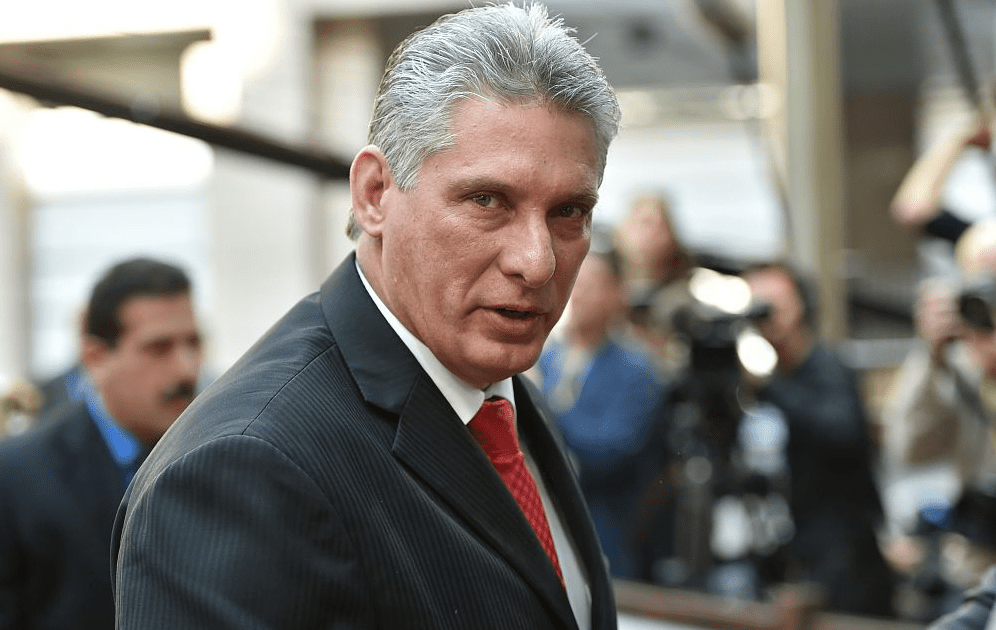
Cuba is facing a widening political and humanitarian crisis marked by severe energy shortages, nationwide blackouts, and renewed geopolitical tensions with the United States. The situation has intensified questions over the country’s leadership structure and the potential for political change under sustained external pressure.
Background and Context
The crisis unfolding in Cuba is rooted in long-standing tensions between Havana and Washington, which date back to the Cuban Revolution of the 1950s and the subsequent US trade embargo imposed in the early 1960s. Over decades, successive US administrations have maintained economic restrictions aimed at limiting Cuba’s access to international markets and energy supplies.
Under the current US administration led by President Donald Trump, economic pressure on Cuba has intensified. Officials in Washington have characterized the policy as part of broader efforts to influence political and economic reforms in the country. Cuban authorities, meanwhile, have consistently rejected external demands for leadership change.
The Cuban political system is structured as a one-party state, where the Communist Party of Cuba remains the central governing authority. While the president serves as head of state, analysts emphasize that ultimate decision-making power lies within party structures and influential military-linked economic institutions.
Key Developments
Cuba has experienced repeated island-wide power outages in recent months, with energy shortages affecting transport systems, healthcare services, and food distribution. The shortages are linked to a combination of reduced fuel imports and structural limitations in the country’s aging energy infrastructure.
According to reporting from Havana, fuel shipments have significantly declined since early 2026. A limited number of deliveries, including a recent shipment from Russia, have provided only partial relief. Analysts note that the reduction in external energy supplies has pushed Cuba’s electricity grid into repeated failure, resulting in outages lasting many hours across both urban and rural areas.
The humanitarian impact has been significant. Hospitals have reported disruptions to medical services, including postponed procedures and limited capacity for patient care. Public transport systems have been reduced, while shortages have also affected water supply systems and waste collection. In some areas, residents have resorted to alternative cooking methods due to fuel scarcity.
The political dimension of the crisis has also intensified. President Miguel Díaz-Canel, who has led Cuba since 2018, faces growing domestic dissatisfaction amid economic decline and protests. While he holds the presidency and serves within the Communist Party leadership, analysts argue that key authority also resides within senior party figures and military-linked economic structures.
Reports have highlighted internal discussions within Cuba’s political establishment and external diplomatic engagement involving US officials. However, no formal agreement has emerged regarding political transition or sanctions relief.
Leadership Dynamics and Political Structure
Cuba’s governance system is centered on the Communist Party, which is constitutionally defined as the guiding political force. Within this framework, several figures are considered influential in shaping future leadership scenarios.
Among them is Vice Prime Minister Oscar Pérez-Oliva Fraga, a senior official with experience in foreign trade and investment policy and ties to military-managed economic institutions. Another frequently cited figure is Raúl Guillermo Rodríguez Castro, the grandson of former president Raúl Castro, who has reportedly played a role in informal diplomatic communication channels despite holding no formal high-level government post.
Roberto Morales Ojeda, a senior party official with a background in health and government administration, is also viewed by analysts as a potential institutional successor should leadership changes occur through formal party mechanisms.
Experts emphasize that any leadership transition would likely occur within the existing political system rather than through structural regime change, given the entrenched role of the Communist Party and military-linked economic institutions.
Analysis and Implications
The situation in Cuba highlights broader questions in US foreign policy and its long-standing strategy toward the island. The continued application of economic sanctions and energy restrictions has contributed to debate over their humanitarian impact, particularly as infrastructure and essential services come under strain.
From a regional perspective, the crisis has implications for migration patterns across the Caribbean and towards the United States, particularly if economic conditions deteriorate further. Analysts warn that prolonged instability could increase irregular migration flows, adding pressure to already sensitive regional migration systems.
In terms of international relations, Cuba’s reliance on limited external energy sources underscores its vulnerability to geopolitical alignments. Engagements with countries such as Russia and regional partners remain constrained by logistical and political factors, limiting Cuba’s ability to stabilize its energy supply in the short term.
At the same time, internal political dynamics suggest that any future changes are more likely to be managed within the ruling party framework rather than through external intervention or abrupt systemic transformation.
Conclusion
Cuba is entering a period of heightened uncertainty shaped by economic crisis, energy shortages, and sustained external pressure from the United States. While discussions about leadership succession and political reform continue, there is little indication of imminent structural change.
The trajectory of the crisis will depend on a combination of external diplomatic developments, energy access, and internal party decision-making. For now, Cuba’s political system appears focused on maintaining continuity while navigating one of its most severe economic challenges in decades.









Comments are closed.