
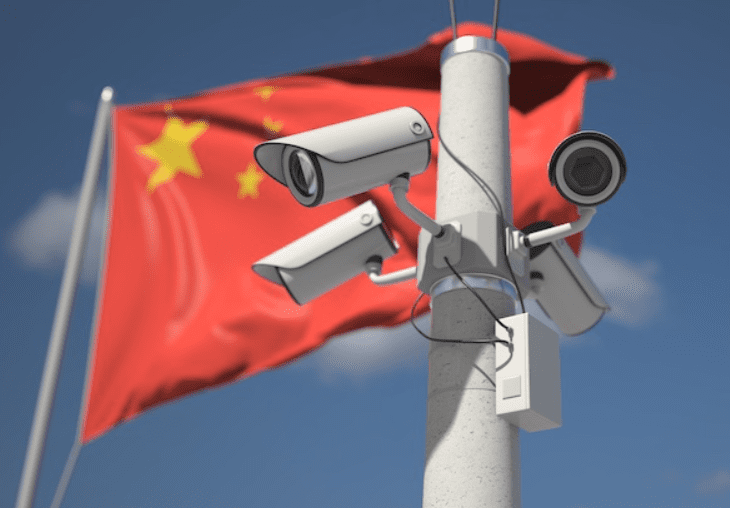
China’s use of artificial intelligence has entered a new and far more intrusive era. A new report reveals that AI driven tools are now deeply embedded in the country’s already powerful censorship and surveillance systems. These technologies extend into everyday life, influence public behavior and even shape interactions within the criminal justice system. As the digital infrastructure grows, so does the government’s ability to monitor and manage its population with unprecedented precision.
AI Becomes the Backbone of Modern Surveillance
China has long been known for its vast security network, including millions of surveillance cameras and strict online censorship. However, according to recent findings, AI now plays a central role in upgrading these systems.
Analysts note that artificial intelligence allows authorities to monitor more people with less effort. Modern tools can detect public gatherings, track individuals across cities and identify potential dissent before it materializes. This marks a shift from reactive policing to predictive control.
Local governments, especially in major cities like Shanghai and Beijing, are already experimenting with advanced AI tools. Smaller regions may not yet have the infrastructure to match these capabilities, but experts believe nationwide implementation is only a matter of time.
AI Tools Move Deeply Into the Criminal Justice System
One of the most striking developments is the integration of AI into nearly every stage of China’s criminal justice operations. Surveillance begins with the country’s enormous camera network, estimated to include up to 600 million devices. Many are equipped with facial recognition and location tracking, allowing authorities to monitor crowds and automatically detect unusual behavior.
AI in Policing and Courts
In some districts, AI powered cameras and drones enforce local laws by flagging potential incidents to authorities. Meanwhile, China’s Supreme Court has encouraged courts nationwide to adopt AI tools by 2025. These systems can assist with administrative tasks and even recommend judicial decisions.
For example, one Shanghai system can suggest whether suspects should be arrested or receive suspended sentences. This growing reliance on algorithmic judgment adds a new layer of opacity to an already tightly controlled justice process.
Smart Prisons and AI Assisted Rehabilitation
AI is also reshaping prison management. Smart prisons now track inmate movement and emotional expression. Facial recognition can detect anger or distress, prompting intervention from guards. Some rehabilitation facilities even use virtual reality headsets as part of AI assisted therapy.
These advancements create a fully integrated system where an individual may be monitored by AI during arrest, trial and imprisonment.
Implications for Minority Groups and Dissidents
AI surveillance does not affect all groups equally. The report highlights concerns that ethnic and religious minorities, including Uyghurs and Tibetans, may face deeper targeting. Developers are creating large language models for minority languages, which could allow authorities to monitor communication within these communities more effectively.
Because China’s political system already prioritizes control and stability, these tools may be used to suppress dissent rather than foster safety. Critics warn that the combination of digital monitoring and political ideology creates a powerful enforcement machine.
Tech Giants Play a Central Role
China’s major tech companies are key partners in the expansion of AI governance. Firms such as ByteDance, Tencent and Baidu develop and maintain censorship systems that help shape online discussions and filter sensitive content.
How Platforms Enforce Censorship
ByteDance moderates Douyin, removing or downranking political content. Tencent uses AI to analyze user behavior and assign risk scores based on online activity. Baidu provides content moderation technology and has cooperated with authorities in numerous investigations.
These companies also export tools internationally, expanding China’s influence in the global surveillance market. Some authoritarian governments have already adopted such systems to control their own populations.
A Growing Global Footprint
Chinese AI models are increasingly used outside the country due to their low cost and open access. While convenient, these tools come with built in moderation that reflects China’s censorship standards. As a result, foreign users may unknowingly adopt the digital values and restrictions embedded in these platforms.
Experts warn that this trend could empower other governments to replicate similar systems of control, widening the global reach of AI powered surveillance.
Conclusion
China’s rapid adoption of AI is transforming surveillance, policing and digital governance at extraordinary speed. What began as a network of cameras and online filters has evolved into an interconnected system that monitors speech, behavior and even emotion. As the technology spreads and becomes more accessible worldwide, the implications stretch far beyond China’s borders. The future of AI governance may depend on how nations respond to this growing model of predictive and pervasive control.

















Comments are closed.