
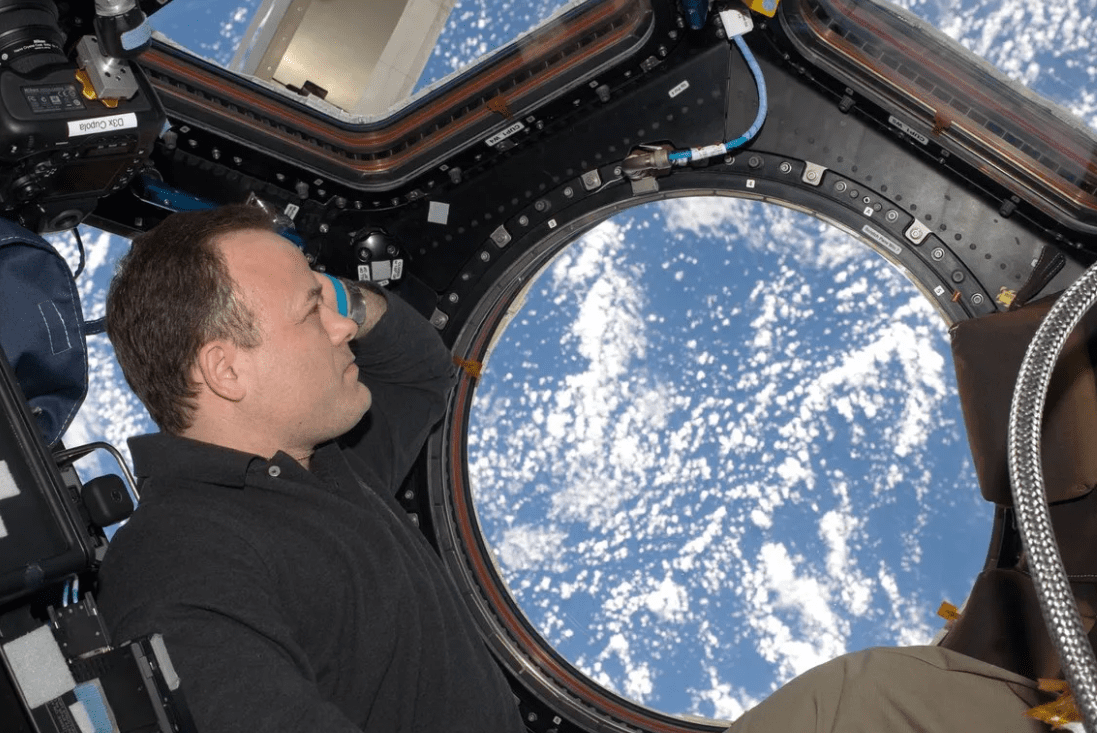

Spending months in space can change how astronauts see the universe. But for one NASA astronaut, the experience completely transformed how he views humanity’s relationship with Earth.
After living aboard the International Space Station for nearly six months, Ron Garan returned with a message that has sparked global debate. According to him, humanity may be “living a lie” about how it understands the planet and its priorities.
Garan spent 178 days orbiting Earth during a mission that gave him a unique perspective few humans will ever experience. From space, the boundaries that divide nations disappear. What remains visible is something far more fragile and interconnected.
His reflections have since become part of a growing conversation about environmental responsibility, global cooperation, and the way humanity organizes its economic systems.
Life in Space Changes How Astronauts See Earth
Garan launched into orbit on April 4, 2011, beginning a mission aboard the International Space Station that would last almost half a year.
During his time in orbit, he circled the planet 2,842 times before returning to Earth on September 16 of the same year. Each orbit offered a sweeping view of the entire planet from a perspective that few people have ever experienced.
Astronauts often describe spaceflight as a deeply transformative experience. Looking down at Earth from hundreds of kilometers above the surface reveals a world without visible borders or political divisions.
For Garan, that view triggered a powerful realization about how humanity understands the planet.
He later explained that many of the world’s biggest crises are often treated as isolated problems when they are actually symptoms of a deeper issue.
The “Overview Effect” and a Powerful Shift in Perspective
The experience Garan described is widely known as the Overview Effect.
This phenomenon occurs when astronauts see Earth from space and develop a sudden awareness of how interconnected and fragile the planet truly is.
From orbit, Earth appears as a vibrant, living system surrounded by the vast darkness of space.
Garan described watching intense lightning storms flash across continents like bursts of paparazzi cameras. He also observed massive curtains of auroras stretching across the polar regions, glowing so brightly that they seemed close enough to touch.
But one detail struck him more than anything else.
The atmosphere that protects all life on Earth appeared incredibly thin.
From space, it looked like a delicate layer wrapped around the planet.
A “Paper-Thin” Shield Protecting Life
According to Garan, seeing the atmosphere from orbit revealed a sobering truth.
That thin atmospheric layer is all that protects Earth’s ecosystems from the harsh conditions of space.
Without it, life as humans know it would not exist.
He described the planet as an “iridescent biosphere teeming with life” that depends entirely on this fragile protective shield.
The realization led him to question how human society prioritizes its systems.
From space, he said, he could not see economies, markets, or financial systems.
Instead, he saw a living planet functioning as a single interconnected system.
Why Garan Believes Humanity Is “Living a Lie”
After returning to Earth, Garan explained that the view from space changed his perspective on global priorities.
He believes humanity has built systems that treat the environment as secondary to economic growth.
According to him, the planet’s life-support systems are often treated as if they are merely components of the global economy.
But from orbit, that perspective appears reversed.
Without a healthy planet, economic systems cannot exist at all.
This is why Garan argued that humanity may be “living a lie” by structuring society in a way that ignores the fundamental role of Earth’s natural systems.
In his view, environmental challenges such as climate change, deforestation, and biodiversity loss are not separate issues.
Instead, they are signs that humanity is failing to see itself as part of a single planetary system.
The Message Garan Wants the World to Hear
Since leaving NASA, Garan has focused much of his work on promoting global cooperation and environmental awareness.
He believes that recognizing the interconnected nature of Earth’s systems is essential for creating a sustainable future.
According to him, peace and stability on the planet depend on humanity acknowledging this shared reality.
Garan has frequently spoken about how the experience of spaceflight reshaped his understanding of global challenges.
He argues that humans must shift their perspective from national or economic interests toward a broader planetary mindset.
In other words, the survival of humanity depends on recognizing that everyone shares the same fragile world.
A Perspective Only Space Can Provide
Only a small number of humans have had the opportunity to see Earth from orbit.
Yet many astronauts report experiencing similar revelations after spending time in space.
The NASA has documented how astronauts often return home with a stronger sense of environmental responsibility and global unity.
Seeing the planet as a single living system can fundamentally change how people think about politics, economics, and environmental stewardship.
For Garan, the experience became a lifelong mission to encourage humanity to rethink its priorities.
Why His Message Matters Today
As global environmental challenges continue to intensify, the message delivered by astronauts like Garan is gaining renewed attention.
Their perspective highlights how fragile the planet truly is and how interconnected its systems have become.
From space, Earth appears less like a collection of separate countries and more like a single shared home.
That realization may be exactly what humanity needs to confront the complex challenges of the future.
For Garan, the lesson from space is simple but powerful.
The fate of humanity depends on understanding that the health of the planet comes first.
Everything else depends on it.








Comments are closed.