
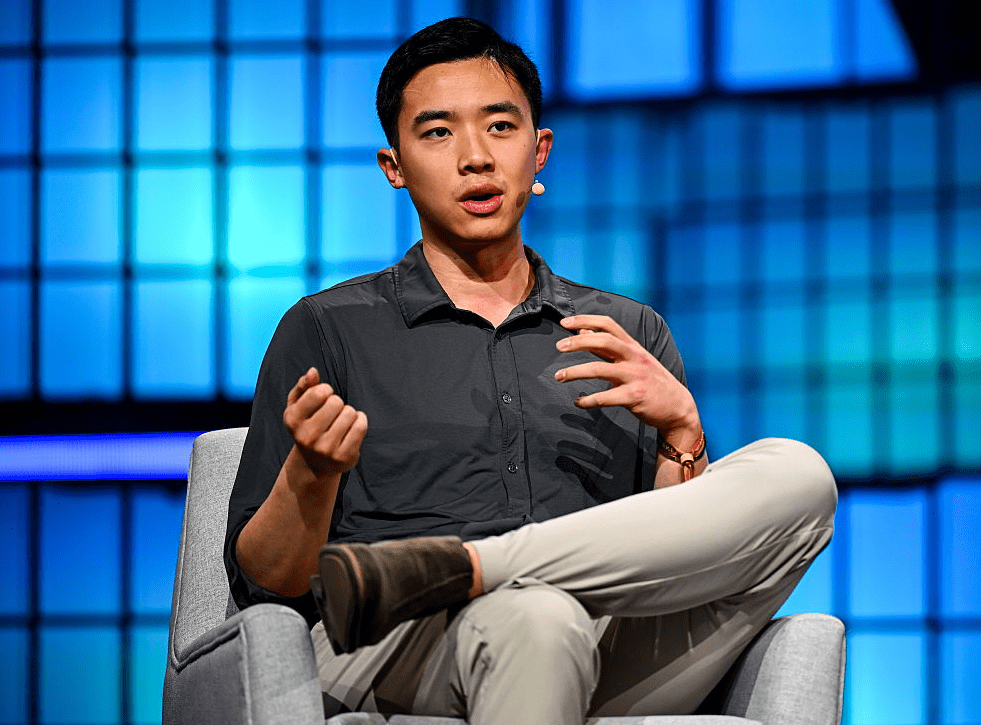
In the rapidly evolving world of artificial intelligence, few founders have moved as quickly—or as decisively—as Jesse Zhang. As the cofounder of the San Francisco-based AI startup Decagon, Zhang is part of a new generation of entrepreneurs reshaping how businesses interact with their customers, replacing traditional service models with intelligent, human-like AI systems.
At the center of his vision is a bold idea: the future of customer service won’t sound like automation—it will sound human.
Building the Invisible Workforce of the Future
Founded in 2023, Decagon has quickly positioned itself as one of the most promising players in the applied AI space. The company builds AI agents designed to handle everyday customer service tasks such as refunds, order corrections, cancellations, and account updates.
What makes Decagon stand out is not just automation, but emotional realism. The company’s systems are designed to respond with nuance, empathy, and conversational flow—qualities traditionally associated with human agents rather than algorithms.
As Zhang explains, the goal is to create “the smartest, most human-like, most empathetic agents,” capable of operating without the fatigue, inconsistency, or emotional strain that often affects human customer service teams.
From Startup Vision to AI Unicorn
In just a short period of time, Decagon has reached a valuation of approximately $1.5 billion, earning it the status of an AI unicorn. This rapid ascent reflects both the urgency and demand for scalable customer service solutions in a digital-first economy.
The company has already secured partnerships with major global brands, including Duolingo, Hertz, and ClassPass, signaling strong enterprise confidence in AI-driven customer operations.
Behind this growth is also significant investor backing, with Andreessen Horowitz and Accel among the major firms supporting the company’s expansion. In total, Decagon has raised around $255 million, fueling its ambition to redefine customer interaction at scale.
The Philosophy of Human-Like AI
At the core of Zhang’s approach is a shift in how AI is perceived. Rather than positioning machines as cold, mechanical tools, Decagon aims to create systems that feel intuitive, responsive, and emotionally aware.
This philosophy challenges a long-standing assumption in tech: that automation must sacrifice personality. Instead, Zhang’s vision suggests that AI can enhance customer experience by mimicking the best qualities of human communication—while eliminating the limitations.
In practice, this means faster resolutions, fewer errors, and 24/7 availability without burnout or inconsistency.
A New Era of Customer Service
The implications of Decagon’s technology extend far beyond efficiency. If widely adopted, AI agents like those developed by Zhang’s company could fundamentally reshape employment structures in customer support industries, shifting human roles toward oversight, escalation handling, and experience design.
For companies, the appeal is clear: reduced operational costs and improved scalability. For customers, it promises instant responses and more consistent service experiences.
Yet it also raises important questions about transparency, trust, and the evolving role of human labor in automated environments.
Recognition and Academic Foundation
Zhang’s work has already earned him a place on the Forbes 30 Under 30, recognizing his impact in the field of artificial intelligence. A graduate of Harvard University, he represents a cohort of founders who combine elite academic backgrounds with aggressive startup execution.
Despite Decagon’s rapid rise, Zhang has noted that he did not actively pursue funding in the traditional sense—an indication of how strong investor demand has become in the AI sector.
Challenges in the Age of AI Agents
As with any disruptive technology, Decagon’s model comes with challenges. Questions around data privacy, AI reliability, and the replacement of human roles continue to shape the debate around customer service automation.
However, Zhang’s strategy focuses on augmentation rather than total replacement—positioning AI agents as tools that enhance business operations while still requiring human oversight.
Looking Ahead
As AI continues to integrate into everyday digital experiences, Jesse Zhang and Decagon stand at the forefront of a major technological shift. The idea that a customer service interaction might no longer involve a human is no longer speculative—it is already becoming reality.
As Camel Move Magazine’s Entrepreneur of the Month for March, Jesse Zhang represents a new kind of builder: one who is not just creating companies, but redefining how humans and machines communicate in the modern economy.


















Comments are closed.