
Since the September 11 attacks reshaped global security policy, the United States has carried out military operations across multiple regions of the world. Over the past two decades, American foreign policy has been defined by counterterrorism campaigns, invasions, air strikes, and drone warfare.
From Afghanistan to the Middle East and parts of Africa, US military engagement has expanded far beyond traditional battlefields. As new strikes continue to emerge in global headlines, an important question resurfaces: how many countries has the US bombed since 2001, and what has been the true financial and human cost?
The Beginning of the Post 9/11 War Era
The attacks of September 11, 2001 triggered what US leadership described as a global War on Terror. The objective was to dismantle extremist networks and prevent future attacks against American interests.
Soon after, military operations began in Afghanistan. However, what started as a targeted response evolved into decades of sustained military involvement worldwide.
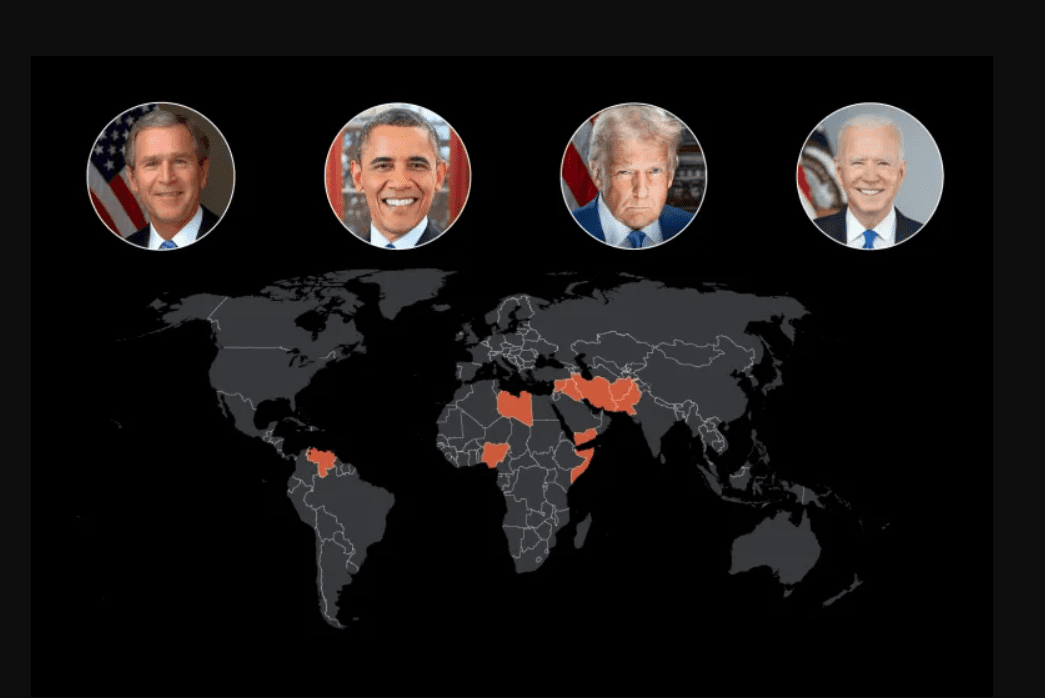
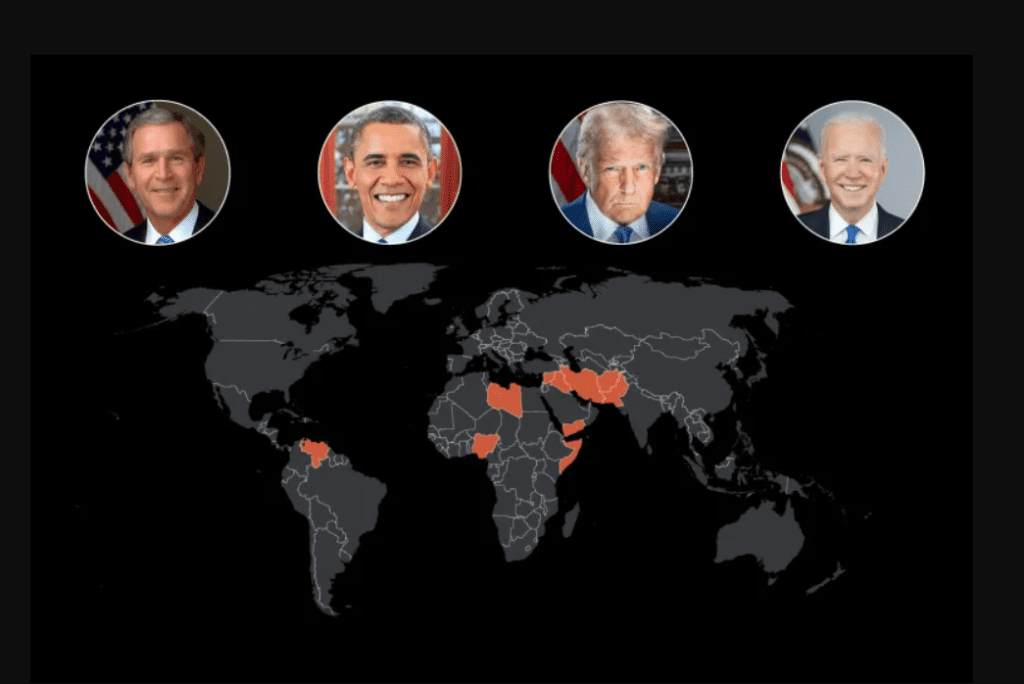
Since 2001, the United States has fought three major full-scale wars while conducting bombing campaigns and air strikes in at least ten countries.
Countries Bombed by the US Since 2001
Military operations have taken different forms, including invasions, coalition interventions, drone strikes, and targeted missile attacks.
According to available analyses, the United States has bombed or conducted air strikes in the following countries since 2001:
- Afghanistan
- Iraq
- Syria
- Libya
- Yemen
- Pakistan
- Somalia
- Nigeria
- Venezuela
- Iran
These operations occurred under four different US presidents and often continued across multiple administrations, demonstrating long-term strategic continuity regardless of political leadership.
Importantly, some covert or classified operations may not be publicly documented, meaning the actual scope could be broader.
Full-Scale Wars That Defined US Military Strategy
Afghanistan War 2001 to 2021
The invasion of Afghanistan marked America’s longest war in history. Launched in October 2001, the mission aimed to dismantle al-Qaeda networks and remove the Taliban government from power.
Although initial objectives were achieved quickly, the conflict evolved into a prolonged insurgency lasting twenty years.
The war officially ended with the US withdrawal in 2021. Estimates suggest more than 240,000 people died directly due to the conflict, including civilians, local forces, and international troops.
Financially, the Afghanistan war alone cost the United States approximately 2.26 trillion dollars.
Iraq War 2003 to 2011
In 2003, the US launched a second major invasion, this time targeting Iraq over claims that the government possessed weapons of mass destruction.
Major combat operations officially ended within months. However, years of instability followed, contributing to sectarian violence and the later rise of armed extremist groups.
US combat troops withdrew in 2011, yet military involvement continued through advisory missions and counterterrorism operations.
The Rise of Drone Warfare
While Afghanistan and Iraq dominated headlines, US military strategy increasingly shifted toward remote warfare.
Drone strikes became a central tool in counterterrorism operations across Pakistan, Yemen, and Somalia. These campaigns targeted armed groups believed to threaten US security interests without deploying large ground forces.
During the late 2000s and 2010s, drone warfare expanded significantly. Supporters argued it reduced risks to American soldiers. Critics, however, raised concerns about civilian casualties and legal accountability.
This shift fundamentally changed modern warfare by normalizing long-distance military engagement.
Intervention in Libya and Expansion Into Syria
In 2011, the United States joined a NATO-led intervention in Libya during an uprising against longtime leader Muammar Gaddafi. Air and missile strikes enforced a no-fly zone that ultimately contributed to the collapse of the Libyan government.
However, Libya later descended into prolonged instability, illustrating the long-term uncertainty surrounding intervention outcomes.
By 2014, US military focus shifted again toward Iraq and Syria to combat the expansion of ISIL. Sustained air campaigns supported local partner forces while attempting to weaken extremist control across both countries.
These operations continue to influence regional security dynamics today.
The Human Cost of Two Decades of War
Beyond military objectives, the human consequences have been immense.
Research from academic institutions estimates that US-led wars since 2001 have directly caused approximately 940,000 deaths across major conflict zones, including Afghanistan, Iraq, Syria, and Yemen.
This figure reflects direct war casualties only. It does not include indirect deaths caused by displacement, damaged healthcare systems, food insecurity, or war-related disease.
Millions more people have been displaced, creating long-lasting humanitarian challenges across multiple regions.
How Much Have US Wars Cost?
The financial cost of post 9/11 military engagement is equally staggering.
Estimates indicate the United States has already spent around 5.8 trillion dollars on wars and related security operations since 2001.
This spending includes:
- 2.1 trillion dollars in Department of Defense war funding
- 1.1 trillion dollars allocated to homeland security measures
- 884 billion dollars added to long-term defense budgets
- 465 billion dollars for veterans’ medical care
- Nearly 1 trillion dollars in interest payments on borrowed funds
However, the total cost continues to rise.
Future veterans’ healthcare and disability obligations are projected to add at least another 2.2 trillion dollars over the next three decades. This would bring the overall cost of US wars since 2001 close to 8 trillion dollars.
Why Military Engagement Continued Across Presidents
Despite campaign promises from multiple administrations to reduce foreign military involvement, strategic realities often led to continued operations.
Successive presidents relied on military force to pursue counterterrorism goals, protect alliances, and maintain geopolitical influence.
Changing threats, regional instability, and evolving security doctrines ensured that military engagement remained a consistent feature of US foreign policy.
A Legacy Still Shaping Global Politics
More than two decades after 9/11, the consequences of US military intervention continue to shape international relations, regional stability, and global security debates.
New conflicts and renewed military actions demonstrate how the post 2001 war framework still influences decision-making today.
As policymakers assess future strategies, questions about effectiveness, cost, and long-term outcomes remain central to global political discussion.
Conclusion: Two Decades of War With Lasting Consequences
Since 2001, the United States has bombed at least ten countries and fought multiple prolonged wars, spending trillions of dollars while reshaping global geopolitics.
The financial burden, human toll, and political impact highlight the scale of modern warfare in the twenty-first century. While military interventions aimed to address security threats, their long-term consequences continue to unfold across regions and generations.
Understanding this history remains essential for evaluating future conflicts and the global pursuit of stability.








Comments are closed.