
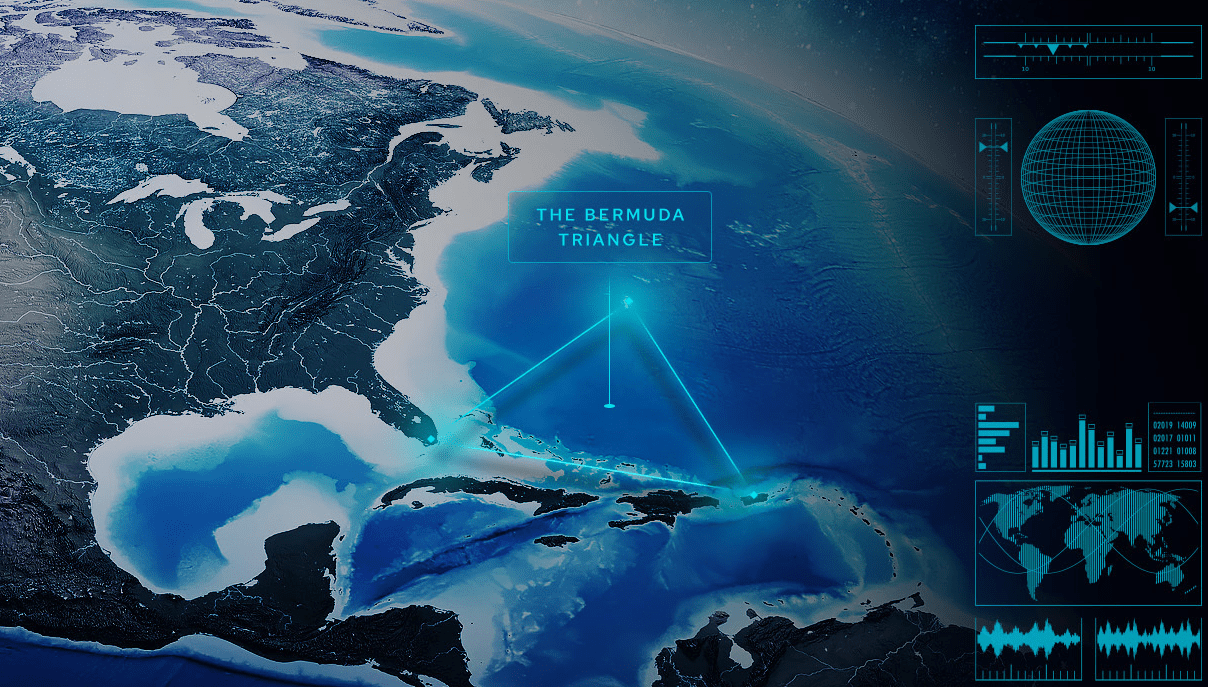
Scientists have uncovered a massive geological anomaly beneath Bermuda that experts say is unlike anything else found anywhere on Earth—adding a startling new layer to one of the world’s most mysterious regions.
The discovery lies deep below the island itself, not in the skies or the surrounding waters of the infamous Bermuda Triangle, but buried within the oceanic crust beneath it.
Bermuda Triangle Anomaly Stuns Scientists
Researchers studying the structure beneath Bermuda found an unusually thick layer of rock measuring more than 12 miles deep. What makes the find remarkable is not just its size, but its location.
Under normal circumstances, Earth’s oceanic crust sits directly on top of the mantle. Beneath Bermuda, however, scientists identified an entirely separate layer wedged between the crust and the mantle—something that has not been observed elsewhere on the planet.
“This isn’t what we expect to see beneath oceanic islands,” researchers said, describing the formation as highly unusual.
A Geological Structure Unlike Anywhere Else on Earth
Dr. William Frazer of Carnegie Science in Washington DC explained that Bermuda breaks all known geological rules.
“Typically, you have the bottom of the oceanic crust and then the mantle,” he said. “But beneath Bermuda, there is this additional layer embedded within the tectonic plate itself.”
The origin of this mysterious rock formation remains unknown, leaving scientists with more questions than answers.
Could an Ancient Eruption Explain the Anomaly?
Bermuda sits atop a broad oceanic swell, suggesting volcanic forces once pushed the seafloor upward. However, the island’s volcanic history complicates that explanation.
The last known eruption in Bermuda occurred around 31 million years ago, long before modern geological records. Researchers believe that ancient volcanic activity may have lifted the seafloor dramatically, leaving behind the enormous slab of rock now detected beneath the island.
This hidden layer could be the geological fingerprint of that ancient event.
Why This Discovery Matters
Understanding extreme geological environments like Bermuda helps scientists better interpret how Earth works as a whole.
“Studying places like Bermuda allows us to separate normal geological processes from rare and extreme ones,” Dr. Frazer explained. “It gives us a clearer picture of how the planet evolves.”
The findings may also help explain how isolated oceanic islands form and why some rise above sea level while others never emerge.
The Ocean Floor Still Holds Major Secrets
The Bermuda discovery is just the latest reminder of how little humans truly know about what lies beneath the oceans. More than 70 percent of Earth’s surface is covered by water, and much of the seafloor remains unexplored.
In recent years, scientists also identified Zealandia—an ancient, mostly submerged continent over a billion years old—highlighting how entire landmasses can remain hidden in plain sight.
As technology improves, researchers expect more discoveries that could rewrite what we understand about Earth’s structure, its past, and the forces still shaping it today.













Comments are closed.