
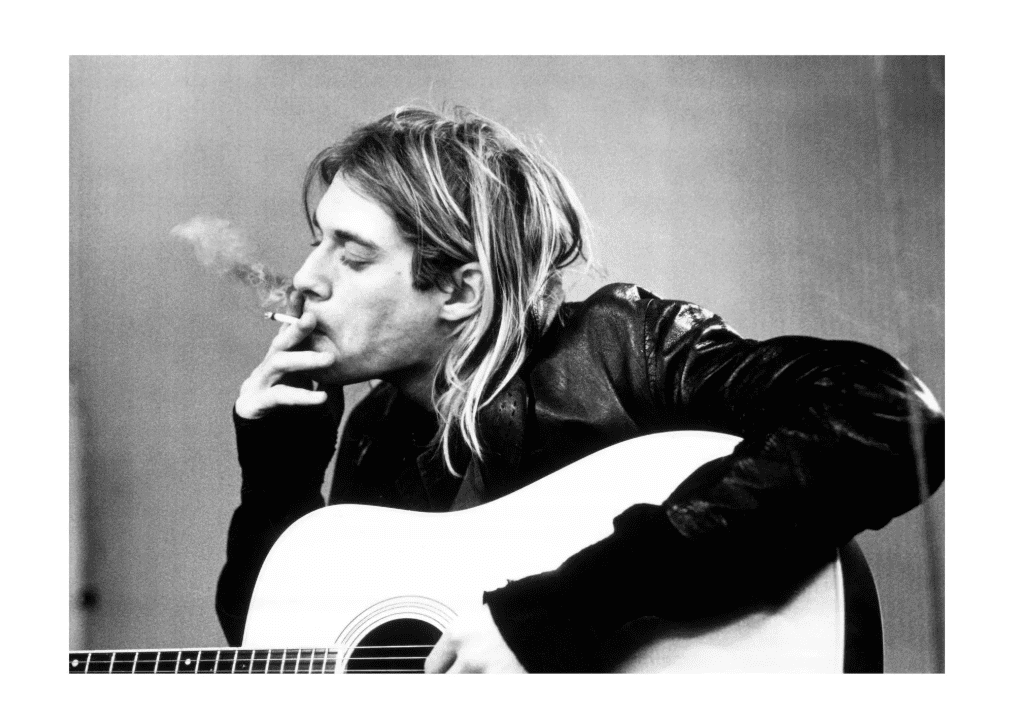
More than three decades after Nirvana frontman Kurt Cobain’s death shocked the world, a new forensic report is reopening one of rock’s most enduring mysteries. According to independent researchers, evidence suggests Cobain may not have died by suicide, as officially ruled, but could have been the victim of a carefully staged homicide.
Cobain, the 27-year-old grunge icon, was found dead in his Seattle apartment on April 8, 1994, three days after he sustained a shotgun wound to the head. At the time, authorities ruled the death a suicide, citing a note left at the scene and the presence of heroin in his system. The official autopsy confirmed the gunshot as the direct cause of death, and the case was closed.
But the new investigation, led by forensic specialist Brian Burnett and independent researcher Michelle Wilkins, challenges many aspects of the original ruling. The team reviewed crime scene photos, autopsy files, and toxicology reports, concluding that several details appear inconsistent with suicide and more consistent with foul play.
Unusual Details Suggest Foul Play
According to the forensic report, multiple factors raise suspicion:
- Cobain may have been forcibly given a heroin overdose to incapacitate him before the gunshot.
- The shotgun and bullets were allegedly placed in his hands in a staged manner, while nearby heroin needles were found neatly capped and arranged—a scenario unlikely for someone in the throes of a fatal overdose.
- Autopsy findings revealed organ damage, fluid in the lungs, and brain necrosis, which are more typical of heroin overdose than gunshot trauma.
- The crime scene was unnaturally clean, and Cobain’s hand gripping the gun had no blood spatter, which experts say is highly unusual in a shotgun suicide.
“It looks like someone staged a movie scene and wanted to make absolutely certain everyone believed it was a suicide,” Wilkins told reporters.
The Context: Drugs, Fame, and Controversy
Cobain’s struggle with depression, heroin addiction, and the pressures of fame have fueled speculation for years. Questions surrounding his tumultuous marriage to Courtney Love and inconsistencies in his suicide note have kept conspiracy theories alive for decades.
In the 1990s, documentaries and books exploring Cobain’s death highlighted the possibility of foul play. Now, this new forensic report adds scientific and procedural weight to those earlier suspicions, reigniting public debate about what really happened in his Seattle apartment.
Calls for the Case to Be Reopened
The research team has formally requested that authorities reopen the investigation. They argue that if their findings are accurate, Cobain’s death was not self-inflicted and should be investigated as a homicide.
However, Seattle authorities remain firm. Both the Seattle Police Department and the King County Medical Examiner’s Office continue to classify the death as a suicide.
“Our office is always open to revisiting conclusions if new evidence emerges,” a spokesperson said, “but nothing so far has warranted reopening this case.”
Fans and Experts React
Cobain’s death left a lasting impact on music and pop culture, making him a figure whose legacy continues to be examined and celebrated. For fans and music historians, this new report raises critical questions: could the circumstances of Cobain’s death have been deliberately misrepresented? Could new forensic techniques uncover the truth decades later?
“If Cobain was murdered, it changes everything we thought we knew,” said a music historian. “It forces us to rethink the story behind one of rock’s most tragic figures.”
Why This Story Matters
Beyond the shock factor, the report underscores broader issues around celebrity, mental health, and the music industry’s dark side. The debate over Cobain’s death reminds us that official narratives may not always capture the full truth, especially when fame, addiction, and cultural pressures intersect.
While the case remains officially closed, the discussion sparked by this forensic report ensures that Kurt Cobain’s story—and the mystery surrounding his death—will continue to captivate and intrigue fans worldwide.
“We’re not asking for conspiracy theories,” Wilkins emphasized. “We’re asking for the facts to be examined. If we’re wrong, prove it. That’s all we’re asking.”













Comments are closed.