
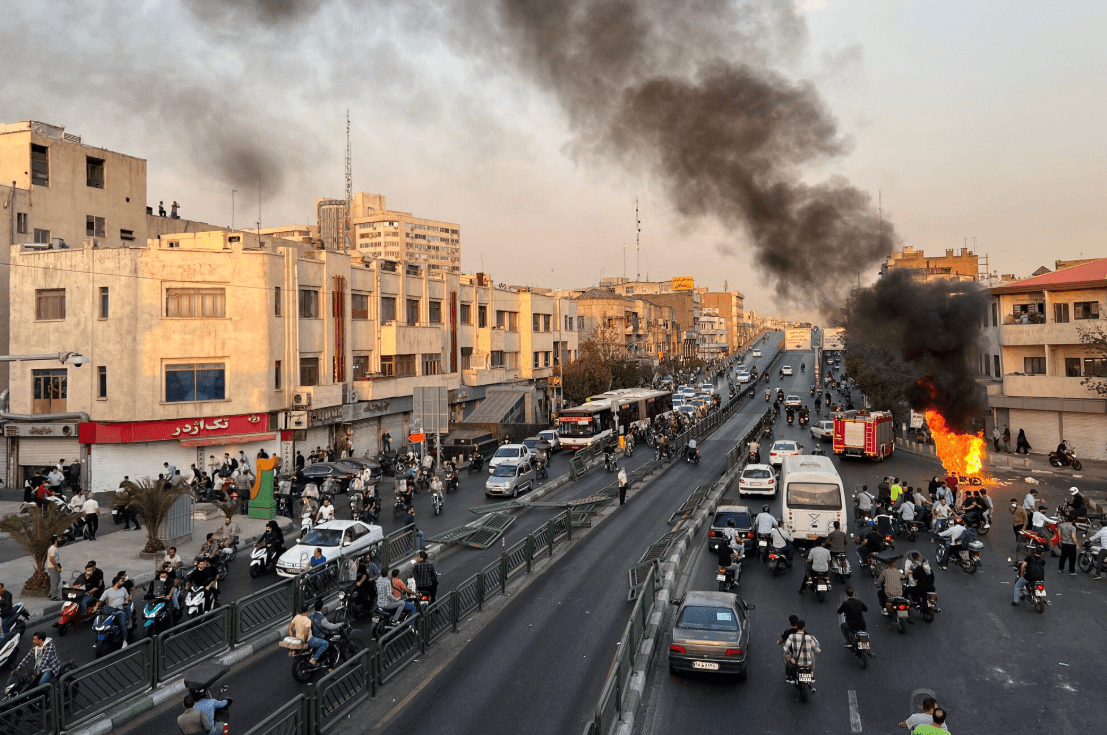
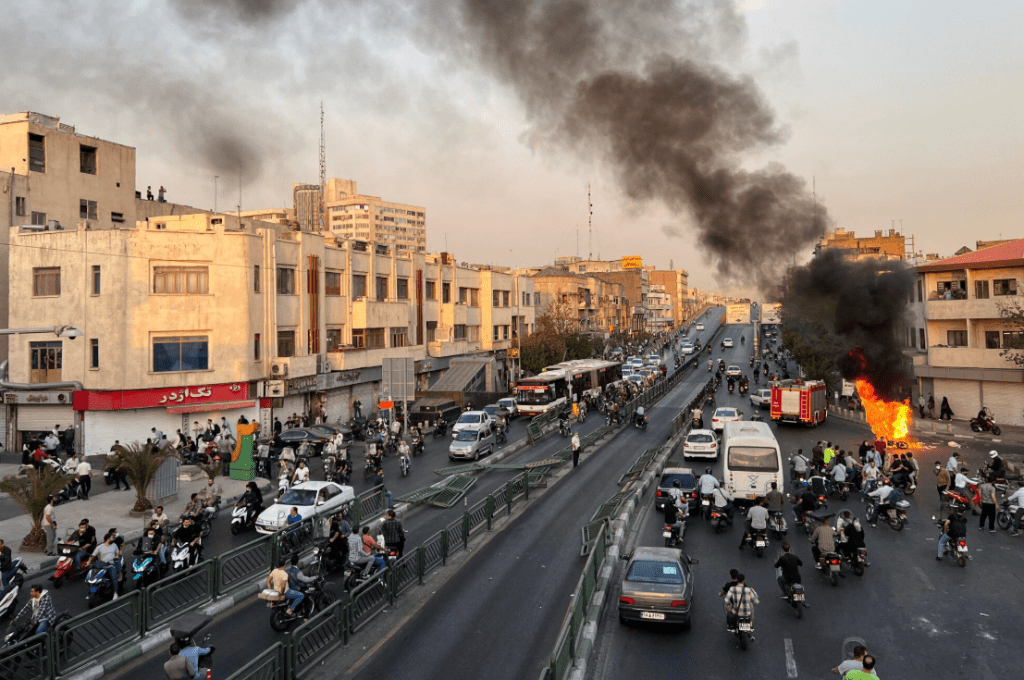
Iran’s post-massacre moment
Iran is no longer facing a protest movement. It is facing the consequences of a historic massacre that has fundamentally altered the country’s political, social and moral landscape.
Newly uncovered internal information indicates that more than 36,500 people were killed during a two-day nationwide crackdown on January 8 and 9. The killings took place across more than 400 cities and towns, making it the deadliest massacre of civilians during street protests in modern history.
What followed was not a return to order, but a forced silence — imposed through fear, repression and one of the most extensive communication blackouts the country has ever seen.
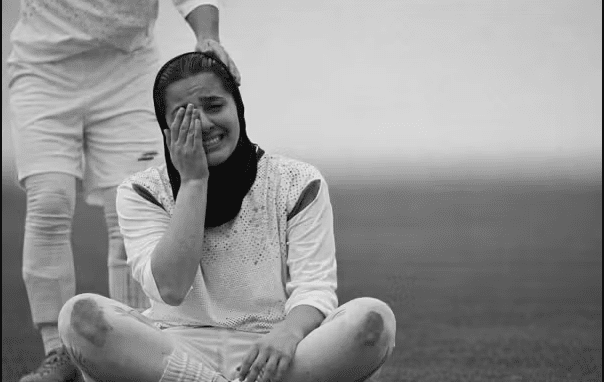
Iran has entered a post-massacre phase, one that will shape its future for years to come.
From economic protest to existential revolt
The unrest did not begin as a revolution. It began with anger over daily survival.
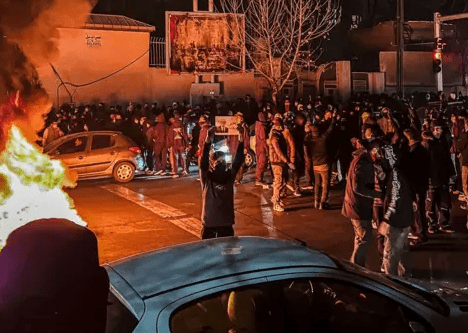
A collapsing currency, runaway inflation and shortages of basic goods pushed people into the streets. But within days, protests evolved into something far deeper. Chants shifted from economic demands to outright rejection of the political system.
This transformation caught the authorities off guard.
What followed was not crowd control, but a coordinated nationwide operation designed to crush dissent permanently.
Two days that changed everything
On January 8 and 9, security forces confronted demonstrators on an unprecedented scale.
Entire neighborhoods were sealed off. Live ammunition was used widely. Communications were cut. Hospitals were placed under security control.
According to internal accounts and medical testimony, wounded protesters were not simply arrested. Some were executed while receiving treatment. Others were removed from hospitals and never seen again.
Images later emerging from morgues showed bodies still connected to medical equipment. Doctors and nurses described so-called “finishing shots” fired at patients who had survived initial injuries.
The killings followed a pattern — not chaos, but command.
A death toll hidden by design
Initial internal estimates listed more than 12,000 dead. Within days, figures rose sharply.
Subsequent assessments placed the toll above 27,000. The most recent internal counts now exceed 36,500 killed, with officials privately acknowledging that the final number may be even higher.
Bodies were moved without records. Families were pressured into silence. Some were forced to pay fees to retrieve remains. Others were told to collect bodies from distant morgues, only to discover that names had been altered or erased.
In many cases, victims were quietly buried without family consent.
Counting the dead became dangerous. Uncertainty became policy.
A country cut off from itself
As the killings unfolded, Iran was plunged into near-total digital darkness.
Internet access was restricted nationwide. Phone networks were disrupted. Social platforms disappeared overnight.
The blackout was not incidental. It was part of the machinery.
Without communication, families could not search for missing relatives. Journalists could not document events. Hospitals could not coordinate openly. Evidence could not travel.
Iran continued to function administratively — but socially, it was isolated.
Life under repression
In the weeks that followed, the atmosphere inside Iran hardened.
Tens of thousands were detained. Many families still do not know where their loved ones are being held. Access to lawyers and medical care remains uncertain.
Security forces expanded their presence into hospitals, universities and residential neighborhoods. Fear replaced public protest, but anger did not disappear.
Instead, dissent retreated into silence.
An economy already in collapse
The massacre unfolded against a backdrop of deep economic failure.
Inflation has erased savings. The national currency has lost much of its value. Power outages and water shortages disrupt daily life. Food prices continue to climb.
Years of sanctions, corruption and mismanagement have left the state unable to cushion the crisis.
Unlike previous protest cycles, there is no financial buffer left to restore calm. The economy is no longer merely strained — it is breaking.
The international fallout
The scale of the violence has changed how Iran is viewed globally.
Calls for accountability are growing louder. Diplomatic pressure is intensifying. The possibility of further sanctions and isolation looms.
At the same time, military tensions in the region have escalated. Foreign powers are repositioning assets. Rhetoric has sharpened. The margin for miscalculation has narrowed.
Negotiations remain theoretically possible, but trust has been further eroded by the magnitude of the crackdown.
A collapsing social contract
For decades, the Islamic Republic relied on an implicit bargain: limited freedoms in exchange for stability and security.
That bargain has collapsed.
When a state kills its own citizens on this scale, legitimacy erodes in ways repression cannot repair. Fear may suppress protest temporarily, but it cannot restore belief.
Many Iranians no longer see the system as a protector. They see it as a threat.
Power consolidates around the security state
While society fractures, power inside the state is consolidating.
Clerical authority has steadily given way to security dominance. The Islamic Revolutionary Guard Corps now controls vast economic assets, political institutions and military power.
This shift suggests that any future transformation of Iran may not come through reform or popular participation, but through internal restructuring led by security elites.
What follows may not resemble the Islamic Republic as it has existed since 1979.
Memory, names and resistance
Despite the blackout, something endures.
Families continue to name the dead. Doctors quietly document injuries. Witnesses preserve timelines. Voices surface in fragments — enough to prevent total erasure.
In authoritarian systems, repression depends not only on violence, but on forgetting. In Iran today, memory itself has become an act of resistance.
What is next for Iran?
There is no single outcome on the horizon.
Iran may enter a prolonged period of repression and economic decline. It may face deeper isolation and instability. Or it may undergo a transformation driven by forces beyond public control.
What is next for Iran will depend on how long fear can contain anger, how quickly economic collapse accelerates unrest, and how internal power struggles unfold behind closed doors.
One reality is already clear: Iran has crossed a historic threshold.
The post-massacre era has begun — and its consequences will extend far beyond Iran’s borders.










Comments are closed.