
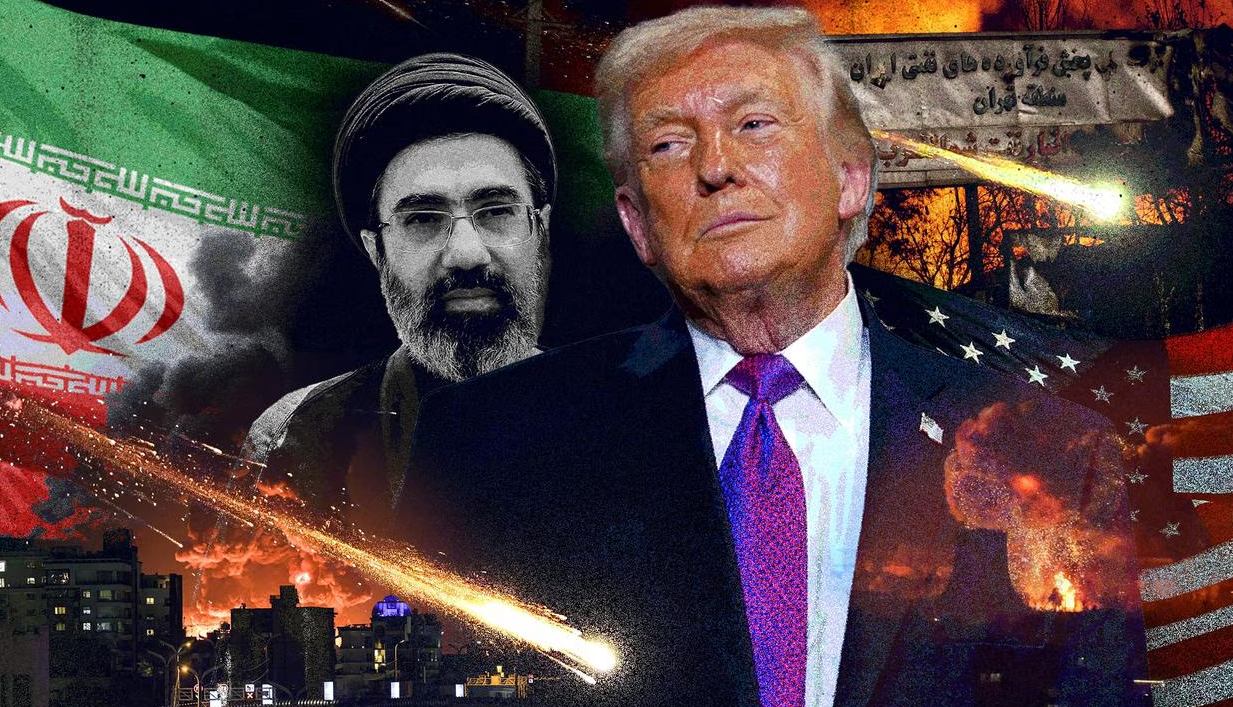
The escalating conflict between the United States and Iran has entered a volatile new phase, with conflicting statements from the White House fueling global uncertainty. As tensions surge across the Middle East, President Donald Trump’s mixed messaging about war objectives, escalation, and withdrawal has left allies, analysts, and markets struggling to interpret Washington’s real strategy.
At the center of the crisis is the strategic Strait of Hormuz, a critical global energy corridor that has become a flashpoint in the widening confrontation. The situation has raised fears of supply disruption, oil price shocks, and broader regional destabilization.
The focus key phrase: Trump Iran war messaging crisis captures the growing confusion surrounding US intentions as military operations continue to intensify.
Escalation or Withdrawal: A War Without a Clear Direction
The latest phase of the US and Israeli campaign against Iran has revealed a striking contradiction in messaging from Washington. On one hand, President Trump has suggested that military operations may be “winding down,” signaling that objectives are close to being achieved. On the other hand, just hours later, he issued direct threats of further escalation, including strikes on Iranian infrastructure.
This dual narrative has created confusion over whether the United States is preparing to exit the conflict or expand it further.
At different points in recent days, Trump has claimed that Iran’s military capabilities have been severely weakened, while also warning that additional targets could be hit if Tehran does not comply with demands related to the Strait of Hormuz.
The lack of a consistent strategy has raised concerns among analysts that the war is evolving in reaction to events rather than following a clearly defined plan.
The Strait of Hormuz: The World’s Most Dangerous Energy Chokepoint
The Strait of Hormuz has become the central pressure point in the escalating crisis. This narrow waterway connects the Persian Gulf to the Gulf of Oman and is responsible for the transport of roughly one fifth of the world’s oil and liquefied natural gas supplies.
Even limited disruption in this region can trigger immediate global economic consequences. Oil prices have already shown volatility as tensions intensify, reflecting fears that shipping routes could be blocked or restricted.
Iran has reportedly increased pressure in the region through strategic maritime control and indirect disruption tactics. Analysts describe the situation as a “de facto blockade,” though full closure of the strait has not been officially declared.
In response, Washington has sought to rally international support to secure the passage. However, enforcement efforts have so far struggled to stabilize the situation.
The possibility of prolonged disruption has raised concerns about a global energy crisis, with economists warning of inflation spikes and potential recessionary risks if the situation worsens.
Trump’s Contradictory Statements on Iran War Objectives
The Trump Iran war messaging crisis has become more visible through a series of rapidly shifting public statements.
At various points, Trump has outlined multiple war objectives, including:
- Degrading Iran’s missile capabilities
- Disabling its defense infrastructure
- Neutralizing naval and air forces
- Preventing nuclear weapons development
- Securing regional allies
- Ensuring safe passage through the Strait of Hormuz
However, just as these objectives are presented as near completion, new statements suggest expanded military readiness.
In one post on his social platform, Trump claimed the United States was “very close” to achieving its goals and considering scaling back operations. Yet shortly after, he warned that Iranian power facilities could be targeted if access through the Strait of Hormuz is not restored.
This rapid shift between de-escalation and escalation has created uncertainty not only among global markets but also within diplomatic circles.
Military Build-Up Continues Despite Claims of Winding Down
While political messaging oscillates, military activity in the region has not slowed. The United States has reportedly maintained a large troop presence in the Middle East, with tens of thousands of personnel already deployed.
Recent developments indicate that additional naval assets and Marines have been sent to the region, reinforcing the idea that escalation remains a real possibility.
Military officials have acknowledged extensive strikes on Iranian coastal infrastructure, including the use of bunker-busting munitions. However, these operations have not fully neutralized Iran’s ability to influence maritime activity in the Gulf.
At the same time, Iranian forces have continued retaliatory actions, including missile and drone strikes targeting regional infrastructure and energy facilities. This has further intensified fears of a broader regional war.
Conflicting Signals From Washington and Their Global Impact
International observers have expressed concern that inconsistent messaging from the US leadership is increasing instability.
According to analysts cited in regional reporting, the absence of a clearly defined end goal makes it difficult to predict future actions. One expert described the situation as “increasingly chaotic,” suggesting that military and political decisions appear reactive rather than strategic.
The uncertainty has significant global implications. Energy markets remain highly sensitive to developments in the Gulf region, and even minor disruptions can cause immediate price fluctuations.
Countries heavily dependent on oil imports are particularly exposed. Shipping insurance costs have also risen due to increased perceived risk in the Strait of Hormuz.
Diplomatic efforts to de-escalate the situation have so far failed to produce a stable framework for negotiations.
The Risk of Wider Regional Conflict
Beyond economic consequences, the escalation carries the risk of expanding into a broader regional conflict.
Iran has warned that any attacks on its energy infrastructure could lead to retaliation against facilities across the Middle East. This raises the possibility of multi-front escalation involving neighboring states.
Recent exchanges have already extended beyond Iran and Israel, drawing in regional energy infrastructure and allied military assets. The situation has moved from isolated strikes to a more complex, interconnected conflict zone.
Analysts warn that continued escalation could pull additional international actors into the crisis, further complicating efforts to restore stability.
Expert Analysis: Strategy or Controlled Uncertainty?
Experts remain divided on whether the Trump administration is pursuing a deliberate strategy of controlled escalation or struggling to define clear objectives.
Some analysts suggest that mixed messaging may be intentional, designed to maintain strategic flexibility and pressure Iran into concessions. Others argue that it reflects internal disagreement and shifting priorities within the administration.
What is clear, however, is that the current approach has created uncertainty at both diplomatic and economic levels.
The absence of consistent communication has made it difficult for allies to align policy responses or for markets to anticipate outcomes.
Conclusion: A Crisis Defined by Uncertainty
The evolving conflict between the United States and Iran is increasingly defined not only by military action but also by political inconsistency. As tensions escalate around the Strait of Hormuz, global markets and governments are watching closely for signs of direction from Washington.
At the heart of the situation lies the Trump Iran war messaging crisis, where conflicting statements about escalation and withdrawal have deepened global uncertainty.
With military deployments continuing, regional retaliation ongoing, and no clear diplomatic resolution in sight, the risk of further escalation remains high.
For now, the world remains in a state of anticipation, waiting to see whether the crisis will move toward de-escalation or expand into a broader and more destabilizing conflict.









Comments are closed.