

Introduction
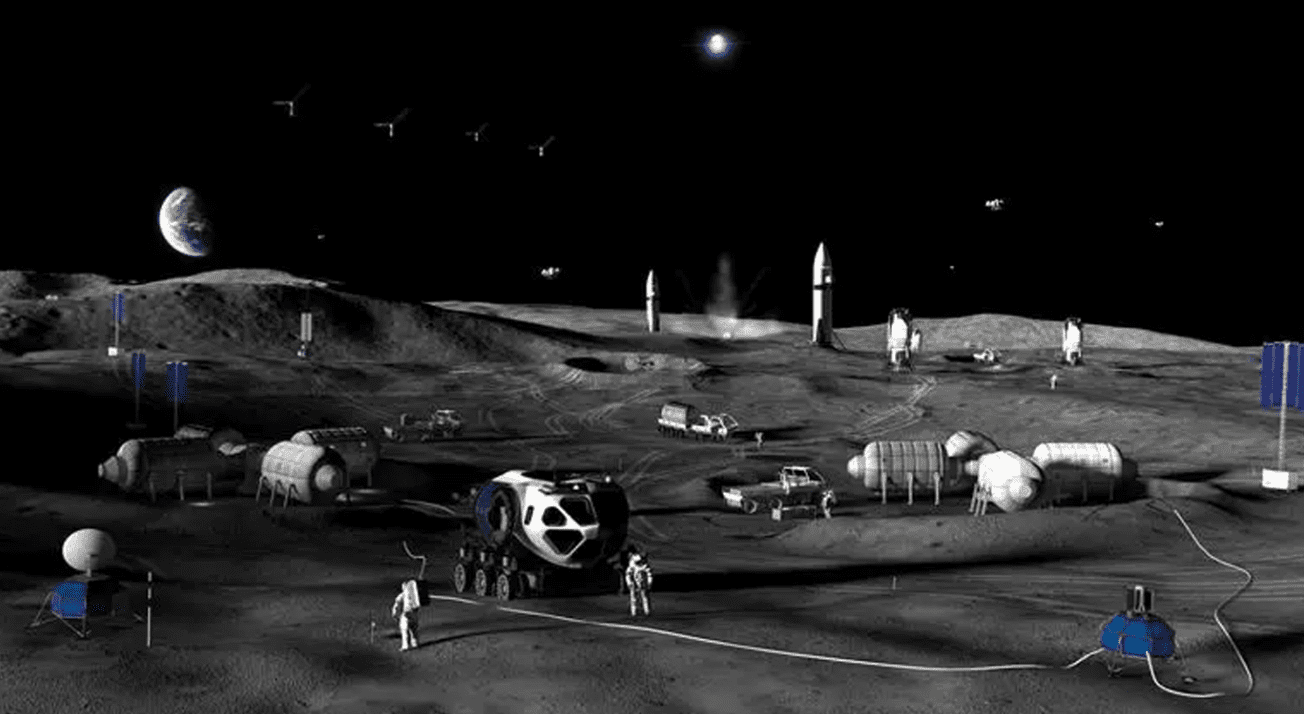
A dramatic shift in space exploration strategy is underway as NASA announces one of its most ambitious overhauls in decades. The agency is preparing to invest around $20 billion over the next seven years to establish a permanent human presence on the Moon while simultaneously advancing a groundbreaking nuclear-powered mission to Mars.
The announcement signals a bold departure from previous orbital plans and introduces a new era of deep space competition, innovation, and geopolitical pressure. With rival nations rapidly advancing their own lunar programs, the United States is accelerating its ambitions beyond Earth like never before.
NASA Moon Base Mars Spacecraft Plan Signals a New Space Race Era
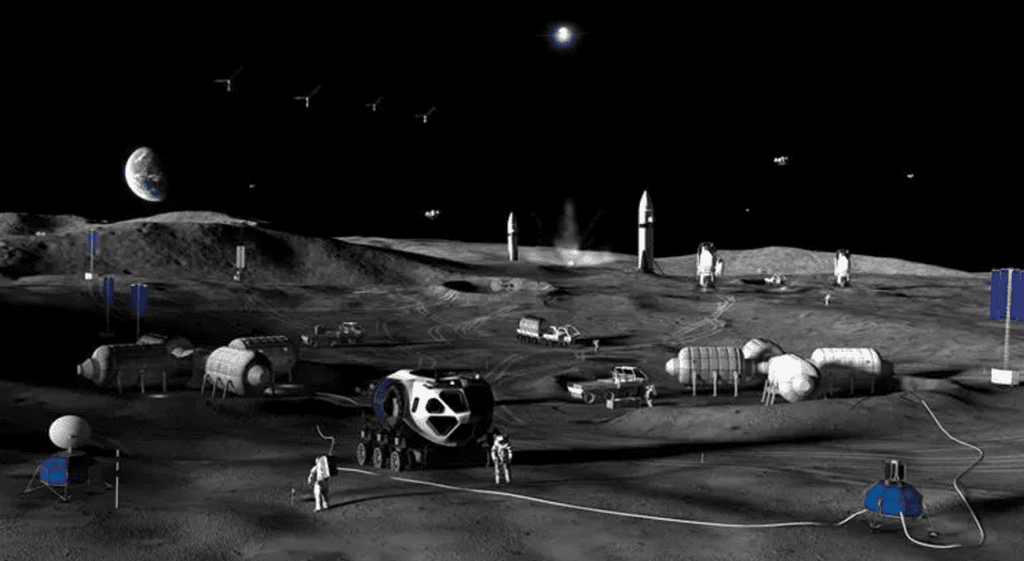
The NASA moon base Mars spacecraft plan represents a major redefinition of how humanity approaches interplanetary exploration. Instead of focusing on orbital stations, NASA is now prioritizing permanent infrastructure directly on the Moon’s surface.
A $20 Billion Lunar Commitment
NASA’s revised strategy includes:
- Construction of a permanent lunar base
- Expansion of robotic missions to prepare infrastructure
- Development of nuclear energy systems for long-term operations
- Replacement of parts of the planned lunar-orbit station with surface-based facilities
This marks a clear shift from temporary exploration missions toward sustained colonization efforts.
The goal is to establish a functioning, self-supporting research environment that can operate continuously, supporting both robotic systems and future astronaut crews.
Why NASA Is Abandoning the Lunar Gateway Concept
One of the most surprising changes in the new strategy is the scaling back of the Lunar Gateway project.
Originally, the Gateway was designed as an orbital station that would act as a staging point between Earth and the Moon. However, NASA now intends to repurpose key components of the station for direct use on the lunar surface.
Strategic Shift Explained
NASA leadership has emphasized that long-term survival and exploration are better achieved on the Moon itself rather than in orbit. This decision reflects a growing belief that:
- Surface infrastructure is more efficient
- Lunar resources can be directly utilized
- Permanent bases reduce long-term mission costs
- Direct access supports future Mars missions
This pivot also introduces uncertainty for international partners such as Japan, Canada, and the European Space Agency, who were heavily involved in the original orbital station concept.
Nuclear-Powered Mars Mission Pushes Deep Space Boundaries
Perhaps the most groundbreaking element of the new plan is NASA’s move toward nuclear propulsion technology for Mars exploration.
A spacecraft known as Space Reactor 1 Freedom is scheduled for launch before the end of 2028. Its mission is to demonstrate nuclear electric propulsion in deep space travel.
How Nuclear Propulsion Changes Space Travel
Unlike traditional chemical rockets, nuclear-powered spacecraft can:
- Travel faster over long distances
- Carry heavier payloads
- Reduce travel time to Mars significantly
- Improve mission flexibility and safety
NASA plans to use this technology to support future Mars missions, including deploying robotic systems and experimental aircraft similar to the Ingenuity helicopter that previously flew on Mars.
This development could redefine how humanity reaches and explores the Red Planet.
A New Competitive Space Environment
NASA’s announcement comes at a time of increasing global competition in space exploration. Countries like China are aggressively expanding their lunar programs, with ambitions to land astronauts on the Moon within the next decade.
The New Space Race Dynamics
Unlike the Cold War-era competition, today’s space race includes:
- Commercial space companies
- International alliances
- Private sector innovation
- Military and strategic interests
NASA’s renewed focus on the Moon and Mars is widely seen as a response to this evolving global landscape.
The agency’s leadership has made it clear that maintaining technological leadership is a top priority.
Robotic Missions Will Lead the Way
Before astronauts return to the Moon, NASA plans to rely heavily on robotic missions. These systems will:
- Map lunar terrain in detail
- Identify suitable base locations
- Test construction technologies
- Deploy early infrastructure components
These robotic explorers will act as the foundation for human settlement, ensuring safety and efficiency before crews arrive.
This step-by-step approach reflects lessons learned from earlier space missions, where robotic systems significantly improved mission success rates.
What This Means for International Space Partners
The shift toward lunar surface infrastructure instead of orbital stations introduces new uncertainties for international collaboration.
Countries that contributed to the Lunar Gateway project now face questions about their future roles. However, NASA has indicated that collaboration will still be essential for the success of its Moon-to-Mars strategy.
Potential Impact on Partnerships
- Redefined roles for international space agencies
- Possible redesign of shared mission components
- Increased emphasis on surface-based cooperation
- New opportunities for private sector involvement
Despite the changes, NASA continues to stress that global cooperation remains a key part of its long-term vision.
The Long-Term Vision: Moon as a Launchpad to Mars
At the core of the NASA moon base Mars spacecraft plan is a simple but powerful idea: the Moon is not the destination, but the launchpad.
NASA intends to use the lunar surface as a testing ground for:
- Life support systems
- Energy generation technologies
- Advanced propulsion systems
- Human survival strategies in deep space
Once these systems are proven, they will be adapted for Mars missions, significantly reducing risks for astronauts.
This phased approach is designed to ensure that humanity is fully prepared before attempting long-duration interplanetary travel.
The Return of High-Stakes Space Exploration
Space exploration is entering a new high-stakes era. Unlike previous decades, today’s missions carry not only scientific importance but also geopolitical and economic implications.
The race to establish dominance on the Moon and Mars is expected to shape:
- Future global alliances
- Technological leadership
- Energy innovation
- Commercial space expansion
NASA’s $20 billion investment signals that the United States is fully committed to leading this next chapter.
Conclusion
The announcement from NASA marks one of the most significant turning points in modern space exploration. By shifting focus from orbital stations to a permanent Moon base and advancing nuclear-powered Mars travel, NASA is redefining humanity’s future beyond Earth.
The NASA moon base Mars spacecraft plan is not just a mission update. It is a declaration that deep space exploration is entering a new, faster, and more ambitious phase.
As nations and private companies race to claim their place in space history, one thing is clear: the next giant leap for humanity is already underway.











Comments are closed.