
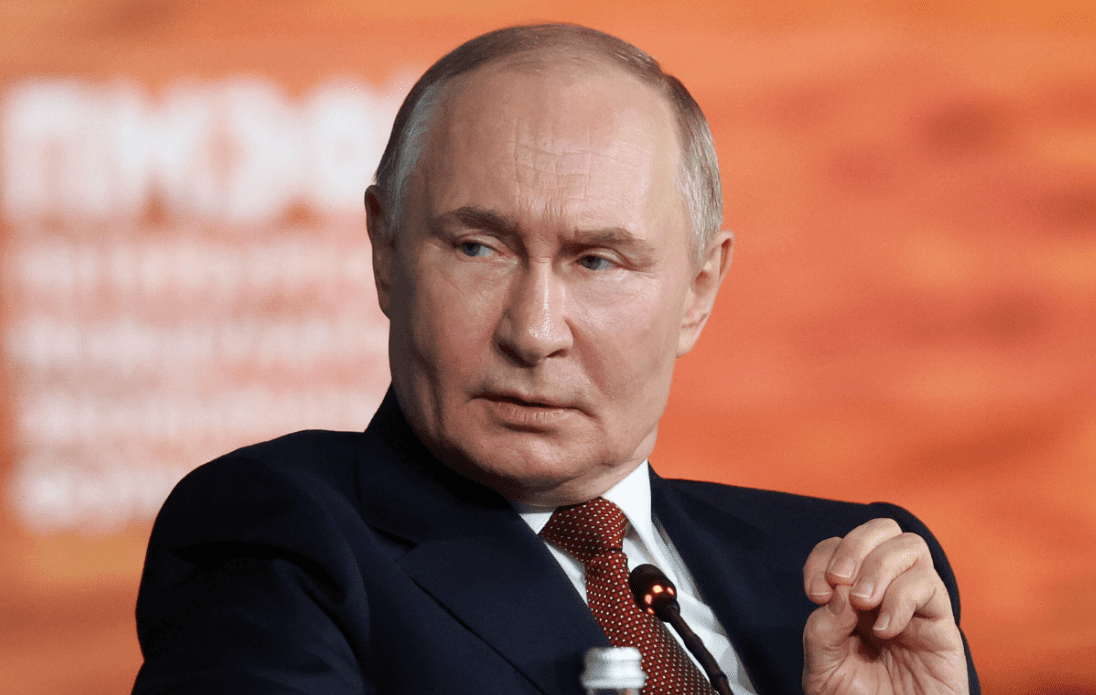
Fears of a wider global conflict intensified this week after a prominent Russian state TV figure openly listed major European cities he claimed would be “destroyed” if World War Three were to erupt.
The comments, broadcast on Russian television, have reignited anxiety across Europe as tensions remain high nearly three years after Russia’s invasion of Ukraine.
Putin Propagandist Issues Chilling WW3 Threat
Vladimir Solovyov, one of the Kremlin’s most outspoken media voices, delivered the warning during a recent broadcast, portraying potential attacks as a forced response rather than a choice.
In a segment filled with aggressive rhetoric, Solovyov named several European capitals he claimed Russia would target in the event of a global war.
Among the cities mentioned were Berlin, Paris, and Vienna—remarks that immediately sparked alarm and condemnation beyond Russia’s borders.
European Capitals Named in On-Air Warning
Speaking on his programme, Solovyov claimed Russia would once again “enter” and “destroy” major European cities, framing the scenario as historical inevitability rather than provocation.
While insisting Russia does not “want” such a conflict, he added that Moscow would act decisively if pushed, warning European nations not to “blame” the Kremlin for the consequences.
Paris and Berlin were both explicitly referenced, with Vienna also mentioned as a potential target.
Nuclear Threats Against the UK Raise Alarm
The rhetoric escalated further when Solovyov suggested that a nuclear strike on the United Kingdom would be “inevitable” under certain conditions.
Another pro-Kremlin commentator, Andrey Sidorov, echoed the sentiment during the same broadcast, claiming the death of a British paratrooper in Ukraine could be interpreted as proof that Britain and Russia are now direct enemies.
Sidorov argued that the presence of a British soldier in Ukraine amounted to justification for military escalation, even describing it as a potential casus belli.
Context: Rising Tensions Across Europe
Throughout 2025, concerns over Russian expansion have grown. NATO members have reported multiple incidents involving Russian drones and aircraft, including alleged airspace violations over Poland and Estonia.
These incidents, combined with stalled peace efforts in Ukraine and Moscow’s rigid territorial demands, have kept Europe on edge.
Despite diplomatic engagements with world leaders, including talks involving former US President Donald Trump, Russian President Vladimir Putin has shown little sign of backing down from his stated objectives.
Kremlin Officials Attempt to Distance Themselves
While the televised threats caused international concern, senior Russian officials have sought to strike a more restrained tone.
Foreign Minister Sergei Lavrov has publicly denied claims that Russia is testing NATO’s resolve or planning an attack on Europe.
In a statement earlier this year, Lavrov rejected accusations that Moscow intends to wage war against NATO or EU nations, insisting Russia has “no such intentions.”
However, he warned that any aggression toward Russia would be met with what he described as a “decisive response.”
Why the Rhetoric Matters
Although Solovyov does not speak officially for the Kremlin, his statements are widely viewed as reflecting narratives tolerated—or encouraged—by Russian state media.
For many observers, the remarks highlight how fragile the geopolitical situation remains, and how quickly hostile rhetoric can inflame fears of a broader, catastrophic conflict.
As the war in Ukraine continues with no clear end in sight, such statements are likely to keep Europe—and the wider world—on high alert.










Comments are closed.