
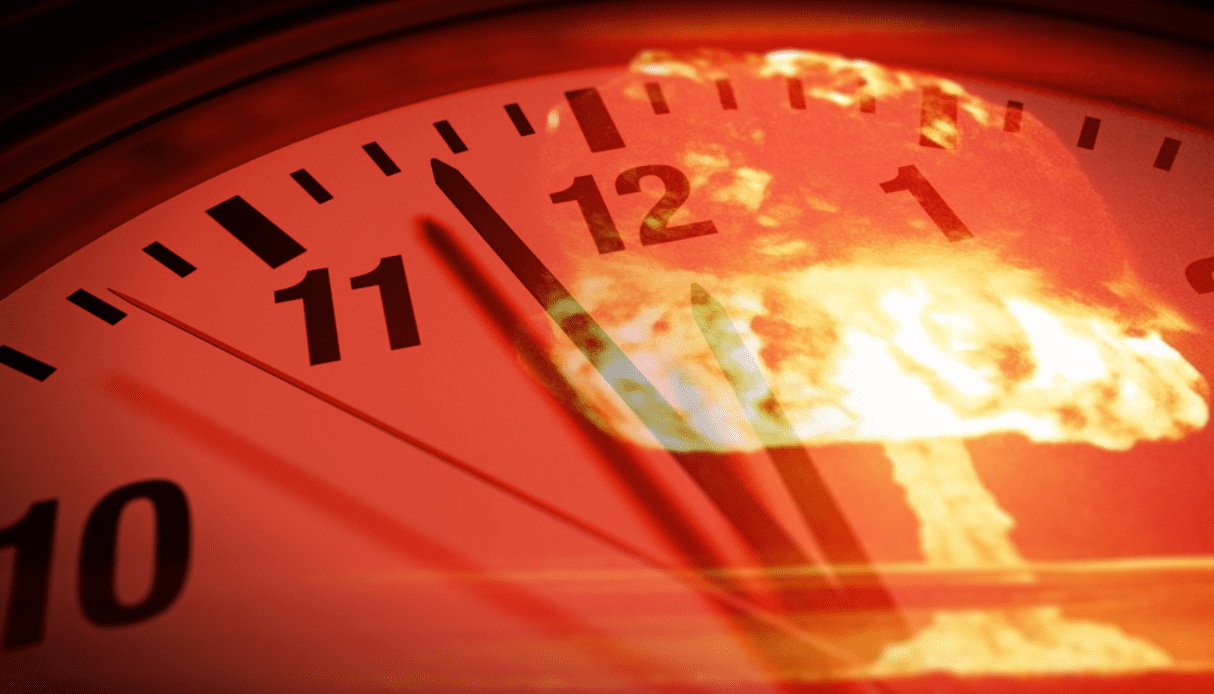
The Doomsday Clock has once again been moved closer to midnight, signaling what experts describe as humanity’s most dangerous moment in modern history. In the latest 2026 update, scientists from the Bulletin of the Atomic Scientists announced that the symbolic clock now sits at just 85 seconds to midnight.
This marks the closest the world has ever been to the metaphorical point of global catastrophe. The shift reflects rising concerns over nuclear tensions, accelerating climate change, emerging technologies, and ongoing global instability.
For decades, the Doomsday Clock has served as a powerful warning. Now, its newest adjustment has reignited worldwide debate about the future of humanity and the urgent need for action.
What Is the Doomsday Clock and Why It Matters
The Doomsday Clock is not a literal countdown. Instead, it is a symbolic representation of how close humanity is to self inflicted disaster.
A Warning Created by Leading Scientists
The clock was first introduced in 1947 by the Bulletin of the Atomic Scientists. The original design appeared on the cover of their magazine, created by artist Martyl Langsdorf.
Initially, the clock focused on the growing threat of nuclear weapons following World War II. Over time, however, scientists expanded its scope to include other global dangers.
Today, factors influencing the clock include:
- Nuclear conflict and arms expansion
- Climate change and environmental destruction
- Biological threats and pandemics
- Emerging technologies such as artificial intelligence
Together, these risks shape how close the clock moves toward midnight, the point representing global catastrophe.
Doomsday Clock Moves Closer to Midnight in 2026 Update
In the latest announcement, experts confirmed the Doomsday Clock now stands at 85 seconds to midnight.
Last year, the clock was set at 89 seconds to midnight, which was already the closest point in its history. The new shift forward by four seconds sends an even stronger message about the accelerating risks facing the planet.
Why Scientists Made the Change
According to the Bulletin of the Atomic Scientists, 2025 was described as a “bleak” year in terms of global progress.
Several major concerns contributed to the decision, including:
- Increasing nuclear arsenals among major powers
- Ongoing wars involving nuclear armed nations
- Record breaking global temperatures
- Slow international response to climate goals
- Rapid technological advancements without strong regulation
Experts emphasized that global leaders have failed to take sufficient action to reverse these dangerous trends.
Nuclear Tensions Remain a Major Threat
One of the biggest factors pushing the Doomsday Clock closer to midnight continues to be the risk of nuclear conflict.
Arms Expansion and Weakening Treaties
Scientists have pointed out that countries with nuclear weapons are actively expanding and modernizing their arsenals.
At the same time, many long standing arms control agreements have collapsed or weakened in recent years. This has reduced transparency and increased mistrust between global powers.
With active conflicts involving nuclear capable nations, the risk of escalation remains dangerously high.
Experts warn that even a limited nuclear exchange could have devastating consequences for the planet.
Climate Change Accelerates Faster Than Expected
Another key driver behind the 2026 update is the worsening climate crisis.
Record Heat and Extreme Weather
Recent years have shattered temperature records across the globe. Scientists confirmed that 2023 was the hottest year ever recorded, followed by even higher averages in 2024.
Extreme weather events have also increased in frequency and intensity, including:
- Heatwaves
- Floods
- Wildfires
- Powerful storms
Despite global climate agreements, progress in reducing emissions has been slow.
Experts stress that without immediate and large scale changes, the planet may soon pass critical tipping points.
Emerging Technologies Add New Risks
While technology offers incredible benefits, scientists warn that rapid innovation without proper oversight creates new dangers.
Artificial Intelligence and Biotechnology
Advancements in artificial intelligence, biotechnology, and other disruptive technologies are progressing faster than governments can regulate them.
Concerns include:
- Misuse of AI in warfare and cyber attacks
- Development of biological threats
- Lack of global safety standards
Experts argue that these technologies could amplify existing risks if not carefully managed.
A Look Back at the Doomsday Clock’s History
Understanding how close the clock has come before provides important context.
The Closest and Farthest Moments
Some key moments in the clock’s history include:
- 1947: Set at seven minutes to midnight
- 1953: Moved to two minutes to midnight after hydrogen bomb tests
- 1984: Set at three minutes during Cold War tensions
- 1991: Moved back to 17 minutes after nuclear treaties between the US and Russia
- 2020: Shifted to 100 seconds to midnight
- 2025: Moved to 89 seconds
- 2026: Now at 85 seconds
The 1991 setting remains the safest point in the clock’s history. Sadly, the trend since then has consistently moved closer to midnight.
What Happens If the Doomsday Clock Reaches Midnight
Midnight represents a global catastrophe that humanity failed to prevent.
This could include:
- Large scale nuclear war
- Irreversible climate collapse
- A devastating biological event
- Or a combination of multiple crises
Scientists stress that the clock is meant to motivate action, not predict an exact moment.
It serves as a warning that current paths are leading toward preventable disaster.
The Message Behind the Clock’s Latest Shift
The Bulletin of the Atomic Scientists has repeatedly emphasized that even small movements forward carry enormous significance.
Each second closer to midnight reflects worsening global conditions.
In past statements, leaders of the organization urged world governments to recognize the seriousness of the situation and take bold action to reduce risks.
They highlighted that delays in addressing these threats increase the likelihood of global catastrophe.
Can Humanity Still Turn the Clock Back
Despite the alarming update, scientists believe change is still possible.
Steps That Could Improve the Outlook
Experts suggest that progress in several areas could help move the clock away from midnight:
- Renewed nuclear arms control agreements
- Stronger global climate policies
- Investment in clean energy
- International cooperation on technology regulation
- Conflict resolution and diplomacy
History shows that positive political action, such as the end of the Cold War, can significantly reduce global risk.
However, it requires cooperation, urgency, and leadership.
Why the 2026 Update Should Be a Wake Up Call
The fact that the Doomsday Clock moves closer to midnight in 2026 more than ever before highlights how serious the current global situation has become.
Rather than being a symbol of hopelessness, the clock is designed to spark awareness and inspire action.
Scientists hope that public attention will pressure leaders to confront these dangers before it is too late.
Conclusion
The Doomsday Clock’s latest update placing humanity just 85 seconds from midnight is a stark reminder of the growing risks facing the world. Rising nuclear tensions, accelerating climate change, and rapidly advancing technologies without regulation have all pushed the clock closer than ever before.
While the warning is alarming, it also carries a message of possibility. History has shown that when nations work together, progress can be made.
The clock is not a prediction. It is a call to action.
Whether humanity steps back from the brink now depends on the choices made in the coming years.






Comments are closed.