
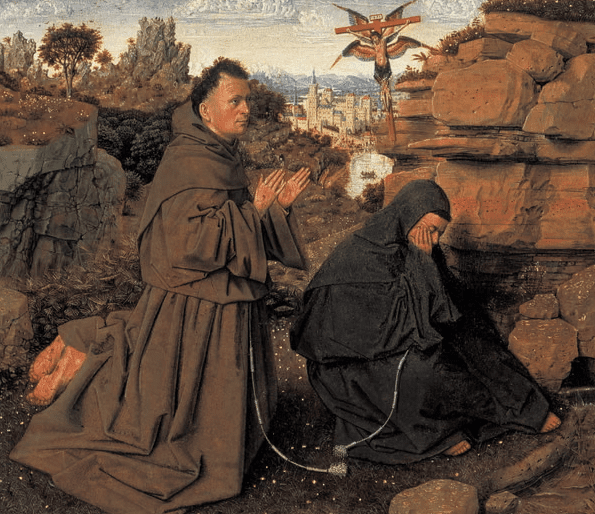
A groundbreaking artificial intelligence investigation has shaken the art world, suggesting that two paintings long attributed to Jan van Eyck, one of the most revered painters of the 15th century, may not be the master’s own work. The near-identical pieces, Saint Francis of Assisi Receiving the Stigmata, are housed in the Philadelphia Museum of Art and the Royal Museums of Turin. According to the AI analysis, both works are more likely to be studio copies, created by Van Eyck’s workshop rather than by his hand — a revelation that has stunned collectors, historians, and museum curators alike.
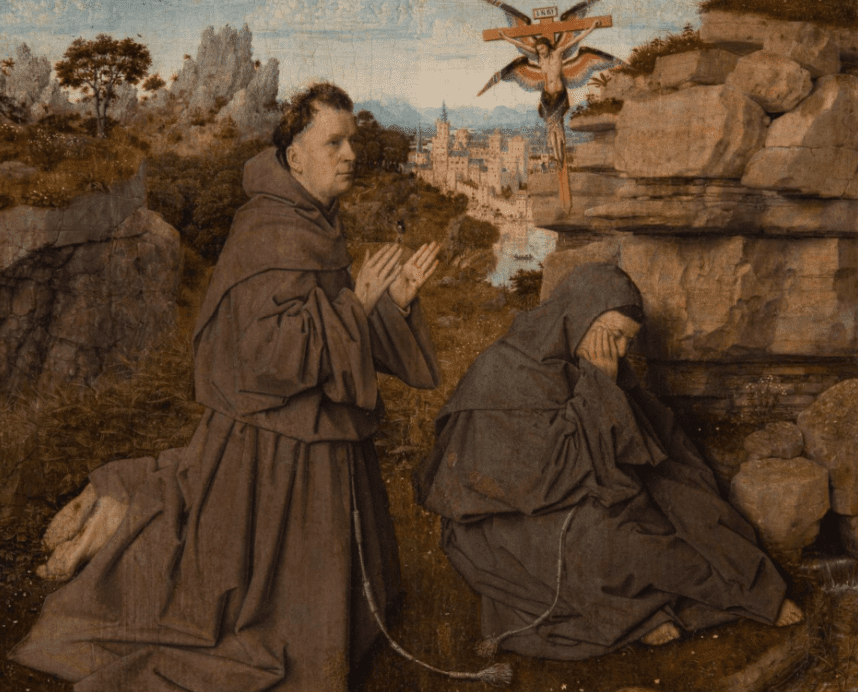
This finding not only challenges centuries of scholarly consensus but also raises bigger questions about how AI technology is transforming art authentication in the 21st century.
AI Technology Puts Van Eyck’s Legacy to the Test
The analysis was conducted by Art Recognition, a Swiss company that collaborates with Tilburg University in the Netherlands. Using advanced AI, the team examined brushstroke patterns to detect the unique signature of Van Eyck’s hand. The results were dramatic:
- The Philadelphia painting was flagged 91% negative for Van Eyck authenticity.
- The Turin version scored 86% negative, suggesting a strong likelihood that it was not painted by the Flemish master himself.
Dr. Carina Popovici, CEO of Art Recognition, called the results “particularly dramatic.” She added that she had expected one of the two paintings to confirm Van Eyck’s authorship. “But no, both came out negative,” she told.
Experts Weigh In on Studio vs. Original
Leading Van Eyck scholar Till-Holger Borchert, director of the Suermondt-Ludwig-Museum in Aachen, said the AI findings reinforce a long-standing theory that these paintings were produced in Van Eyck’s workshop, possibly under his supervision but not executed entirely by him. Borchert described the discovery as “surprising,” but emphasized that it opens the door for further research into workshop practices in the early Renaissance.
Art historian Dr. Noah Charney highlighted that AI has previously provided highly accurate results in authentication tests. He said the negative outcomes for both paintings suggest the possibility of a lost original — a version fully painted by Van Eyck that may no longer exist. Charney explained, “A studio work does not necessarily mean Van Eyck painted every surface himself. The idea of a lone genius working in isolation is a modern misconception.”
Van Eyck’s Impact on Art History
Jan van Eyck is widely celebrated for perfecting oil painting techniques, transforming Western art by achieving unprecedented realism and luminosity. Each of his surviving works is known for hyper-detailed surfaces, where even reflections in glass and the smallest textures of hair and stone shimmer with clarity. Fewer than 20 paintings are universally accepted as fully by Van Eyck’s hand, making authenticity a critical concern for museums and collectors alike.
The revelation about the Saint Francis paintings raises broader questions about attribution: how much of the “hand of the master” is present in works from historical workshops, and how many masterpieces might actually be highly skilled reproductions?
How AI is Changing Art Authentication
This is not the first time Art Recognition’s AI has disrupted traditional understandings of art. The technology has been used to:
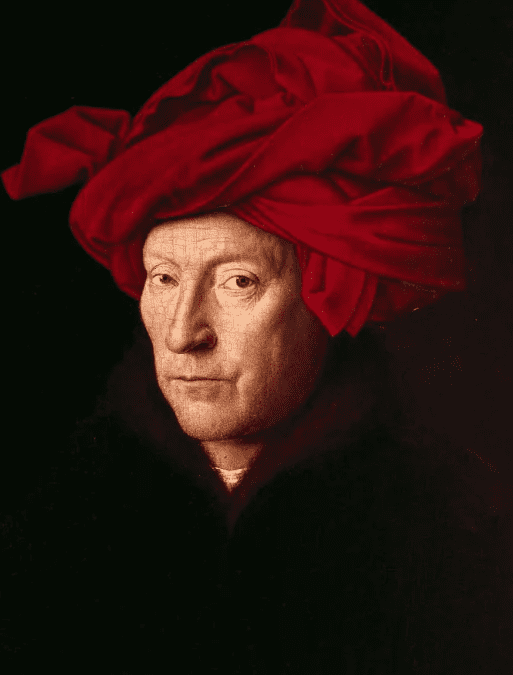
- Confirm The Arnolfini Portrait as authentic with 89% likelihood.
- Suggest that Rubens’ Samson and Delilah in London’s National Gallery was 91% negative, supporting long-held doubts about its provenance.
- Detect up to 40 fake paintings being sold on eBay in 2024, preventing fraudulent sales.
AI works by analyzing brushstroke patterns, color layering, and texture in ways that human eyes cannot always detect. Critics, however, warn that factors like restoration, canvas aging, or previous repairs can influence AI results. Museums must balance this technological insight with traditional art historical methods.
Implications for the Art World
The potential reclassification of these two paintings could have major implications:
- Museums may need to update catalog entries and interpretive materials.
- Art collectors could face revised valuations, as works formerly considered originals may now be deemed workshop copies.
- Scholars may need to reconsider how much of Van Eyck’s oeuvre survives in its “pure” form.
For museum-goers, the Philadelphia and Turin paintings remain visually stunning examples of Flemish Renaissance artistry, even if they are not fully by Van Eyck’s hand. “They offer a window into Van Eyck’s studio practice and his influence on assistants,” Dr. Charney said.
The Mystery of the Lost Original
If these are indeed copies, the question arises: where is the original Saint Francis of Assisi Receiving the Stigmata? Some experts speculate it may have been destroyed, lost, or remains hidden in a private collection. If found, it could redefine the historical understanding of Van Eyck’s artistic development and Renaissance workshop practices.
This AI-driven inquiry has highlighted the collaborative nature of Renaissance art, where workshops often produced multiple versions of the same composition, sometimes leaving the master to add finishing touches. It challenges the romantic notion of Van Eyck as a solitary genius and underscores the complexity of attributing works in a pre-modern studio system.
Looking Ahead: Exhibitions and Future Research
The National Gallery in London is planning a Van Eyck exhibition in November 2026, focused on his portraits. It is expected that the findings from AI studies will play a role in framing the exhibition, providing visitors with a new understanding of authenticity, artistic process, and the role of technology in art scholarship.
Researchers anticipate that AI will continue to complement traditional methods, offering unprecedented insight into brushwork, material composition, and stylistic analysis, ultimately helping museums and collectors navigate the often murky waters of attribution.
Conclusion
The recent AI analysis of Saint Francis of Assisi Receiving the Stigmata underscores a turning point in the intersection of art and technology. While it may be shocking to learn that these two iconic paintings are likely workshop copies, they remain culturally and historically significant. The findings provoke questions about Van Eyck’s true legacy, the role of his workshop, and the growing importance of AI in uncovering the hidden truths of art history.
As museums, scholars, and collectors digest these revelations, one thing is certain: the art world is entering a new era where digital tools and human expertise converge to challenge long-held beliefs about authenticity and creative genius.













Comments are closed.